After luxury sports watches became a huge hit and became a standard, dress watches are gaining attention as a new trend. This classic genre, which was once difficult to use, has now dramatically evolved to become more practical. We revisited this new era of dress watches in the January 2024 issue (Vol. 110) of Chronos Japan. This feature article has been republished on webChronos. In this second installment, we define dress watches from the perspective of their exterior finish. What is the finish seen in dress watches in recent years that has "clearly changed the way things are done"?
Photographs by Eiichi Okuyama, Yu Mitamura
Tomoe Kase and Masamasa Hirota (this magazine): Interview and text
Text by Tomoshige Kase, Masayuki Hirota (Chronos-Japan)
Edited by Tomoshige Kase, Yukiya Suzuki (Chronos-Japan), Yuto Hosoda (Chronos-Japan)
[Article published in the July 2024 issue of Kronos Japan]
New Era Dress Watches Chapter 2 Finishing
We've often featured the finishing of luxury watches in this magazine. Flagship dress watches naturally feature unique and excellent finishing that characterizes each manufacturer. However, dress watches since 2010 have taken on a distinctly different trend. There's been a revival of elaborate dials, cases that use finishes repurposed from luxury sports watches, and high-quality hands.
①Dial
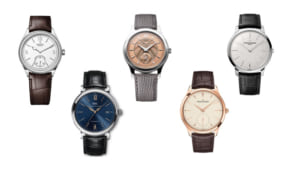
In the 2010s, or more specifically, since 2015, watchmakers have been putting more effort into dial finishing. In addition to classic techniques like plating and lacquering, they have also been experimenting with unprecedented approaches like PVD, DLC, and electroplating, giving luxury watch dials colors and three-dimensional effects that were previously impossible to reproduce. Dress watches with thin bezels and wide dial openings provided the perfect canvas for these new dial styles.
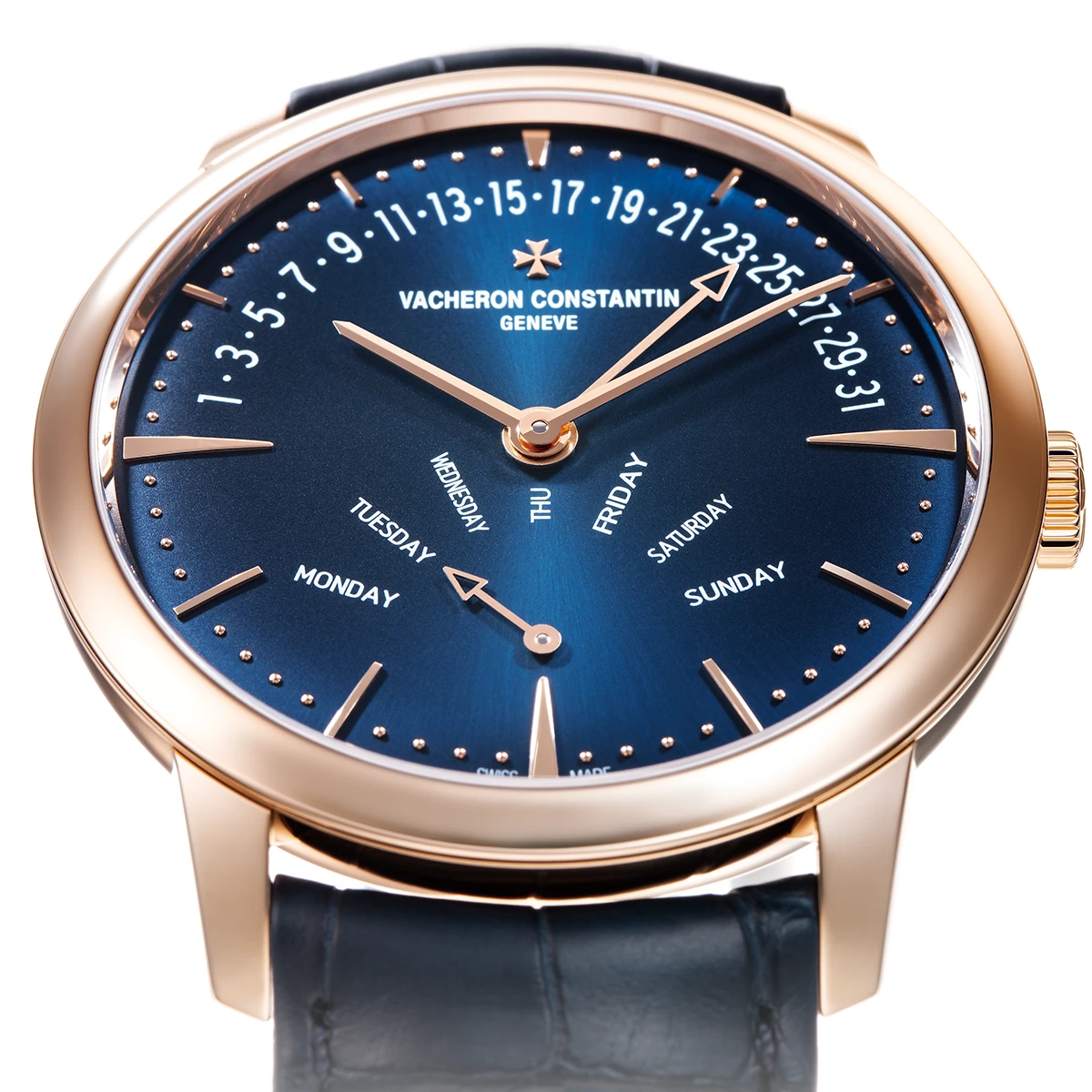
This model's vibrant blue plating catches the eye. The color itself is standard, but the vividness of the color is typical of Vacheron Constantin. The indexes are attached to the domed dial and are completely in contact with the dial. The dial is also adorned with cabochon-shaped minute indexes, which are rare for a wristwatch. Engraved indexes are often seen, but it is extremely rare to see separate parts fixed on the dial. This is a model unique to Vacheron Constantin, which places great emphasis on the dial. (Inquiries) Vacheron Constantin Tel. 0120-63-1755
A standard feature of dress watches is the narrow bezel that holds the crystal in place, making the dial appear larger. This design was created because waterproofing was not required, but it ultimately expanded the possibilities of dress watches. In other words, it was the perfect "canvas" for displaying colorful dials.
Attempts to add new colors to dress watches began as early as the 2000s. IWC was undoubtedly the pioneer. Georges Kern (now Breitling's CEO) gave new models a vibrant blue dial. Despite internal opposition, the experiment was a success, and IWC subsequently began incorporating a variety of colors into its dress watches.
Further advances came from the mid-2010s. In addition to the painting and plating that had been used up until then, techniques such as DLC and PVD, which were originally used for movements, have made it possible for watches to have dials in a variety of colors. Even Rolex Day-Date and Audemars Piguet Royal Oak now use PVD treatment rather than plating for some of their blue dials.
These changes have prompted even manufacturers that were once considered conservative to make changes. Good examples are Cartier and Vacheron Constantin, the brand we'll be looking at here. Both companies previously favored plain, plated dials. However, in recent years, what's become more prominent are vibrant dials that rival even mid-range models. This is proof that blue, at least, has become a standard color for dress watches, unlike 20 years ago. The Patrimony Retrograde shown in the photo is a masterpiece that catches the eye with its unique movement and vibrant dial.
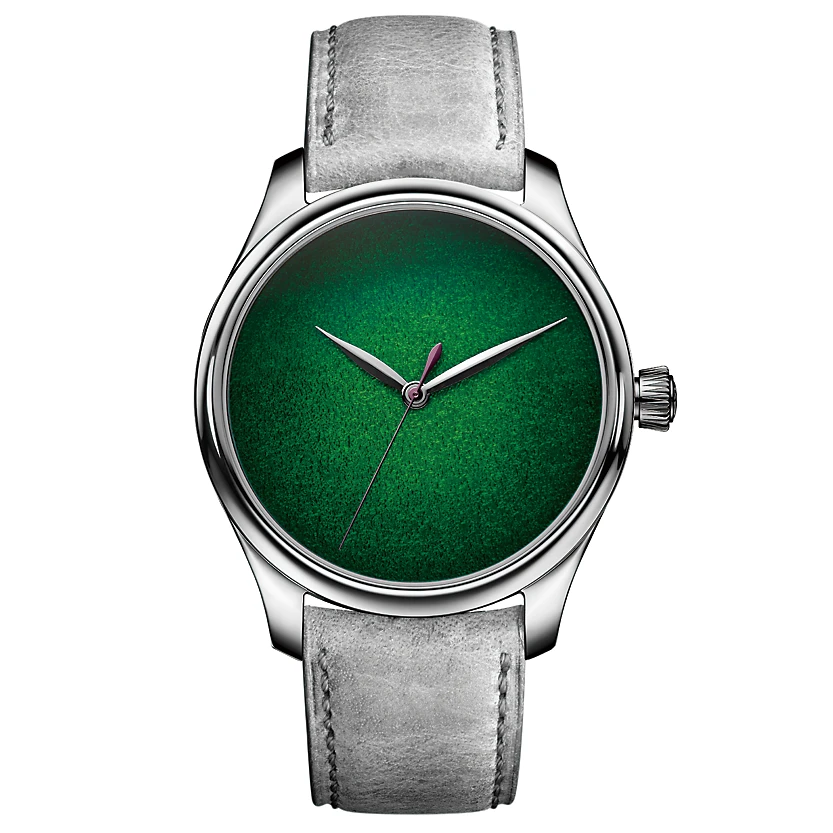
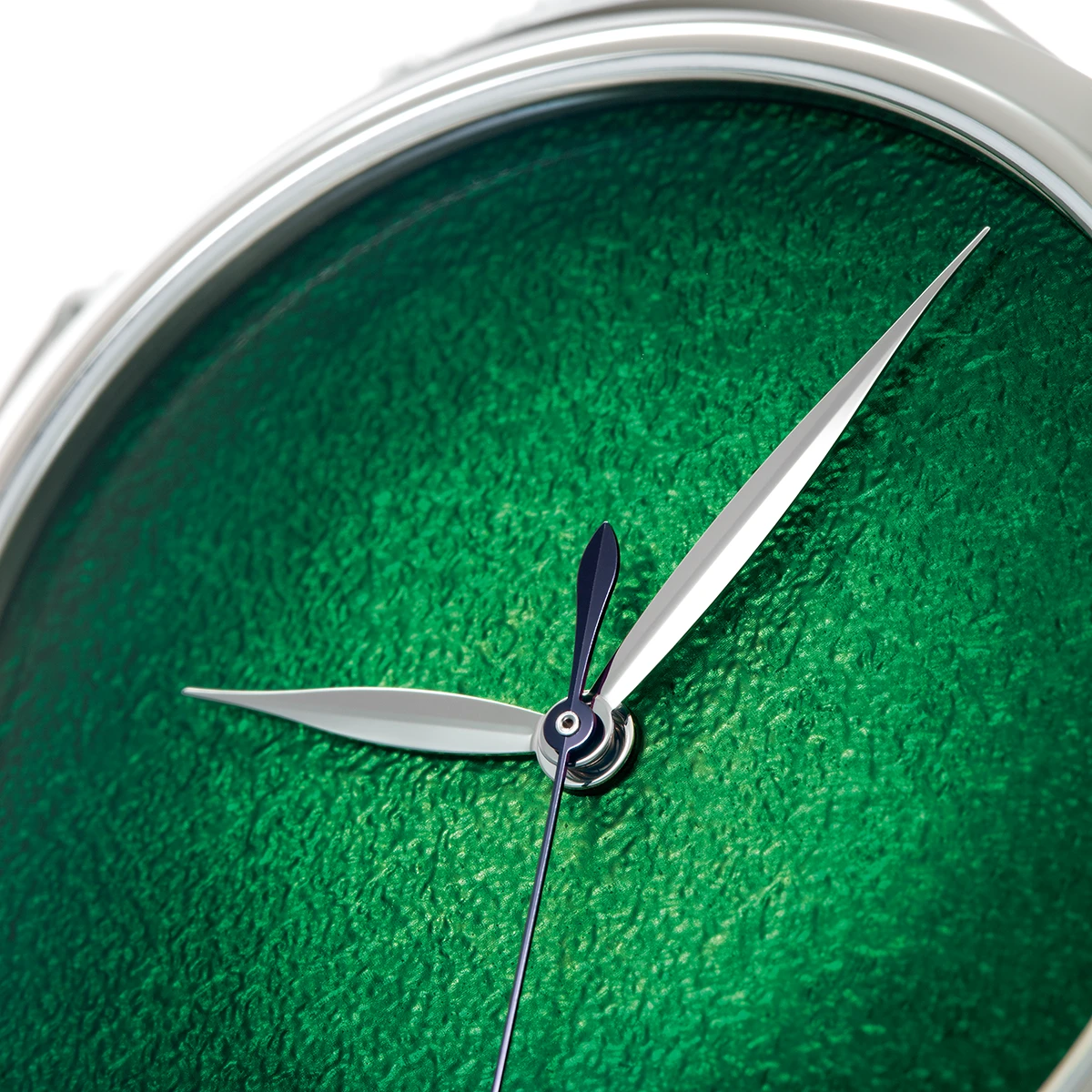
The gradient green dial, combining Grand Feu enamel and hammered finish, offers a modern finish. The minimalist dial has no indexes, and three hands quietly indicate the time. The in-house manufactured Caliber HMC 200 is equipped with a double hairspring to prevent deviations in accuracy due to positional differences. Automatic winding (Caliber HMC 200). 27 jewels. 21,600 vibrations per hour. Power reserve approximately 72 hours. Stainless steel case (diameter 40mm). Water resistant to 3 bar. (Inquiries) Exes Tel. 03-6274-6120
When it comes to unique dials, H. Moser & Cie. is ahead of the industry. Gradient lacquered dials (known as "fumé dials") have become a standard in luxury watches, and their extremely refined designs have influenced emerging micro-maisons. Now, the company is working on enamel fumé dials. While it was once difficult to even adopt enamel dials, the increase in suppliers and craftsmen has made it possible to incorporate new forms of expression into enamel dials.
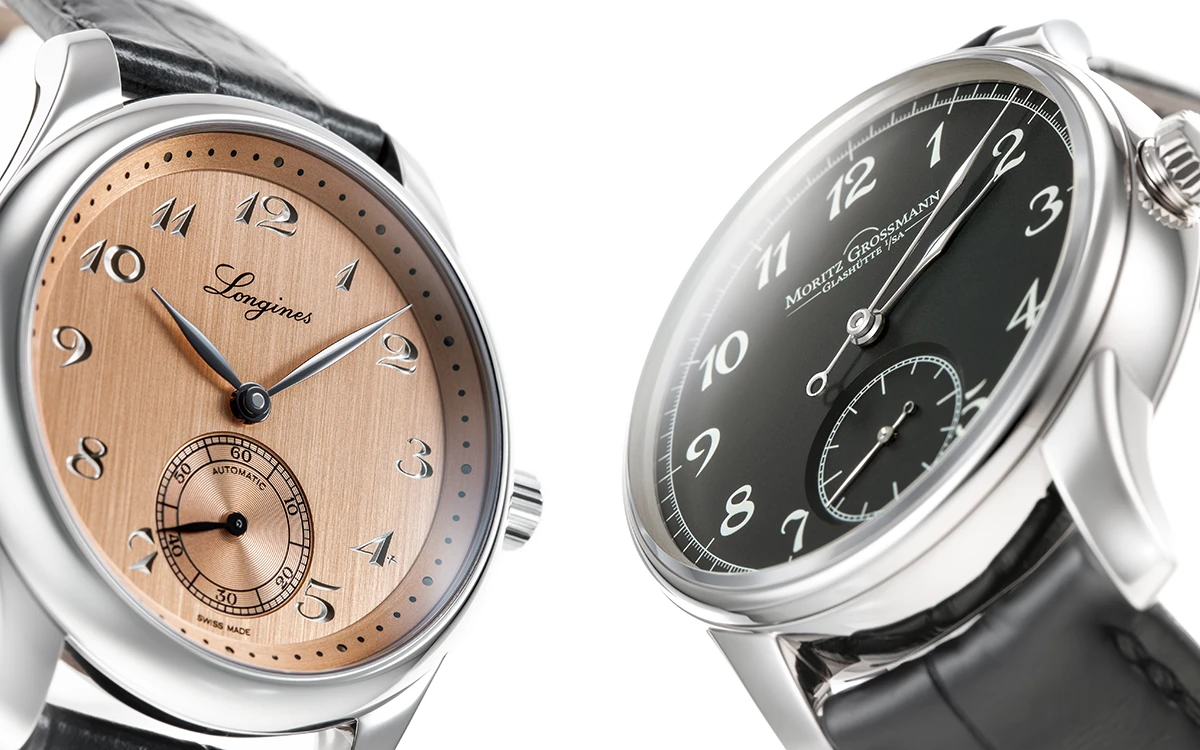
There are many excellent dials in the mid-range. This field was once dominated by Seiko, but now the Swatch Group, led by Longines, is in hot pursuit. The small seconds model in the "Longines Master Collection" not only uses the trendy salmon color for the dial, but also has deeply engraved indexes using a micromachining machine (!). Who would have expected that a mid-range Longines would adopt a neutral color that is said to be difficult to achieve with plating?
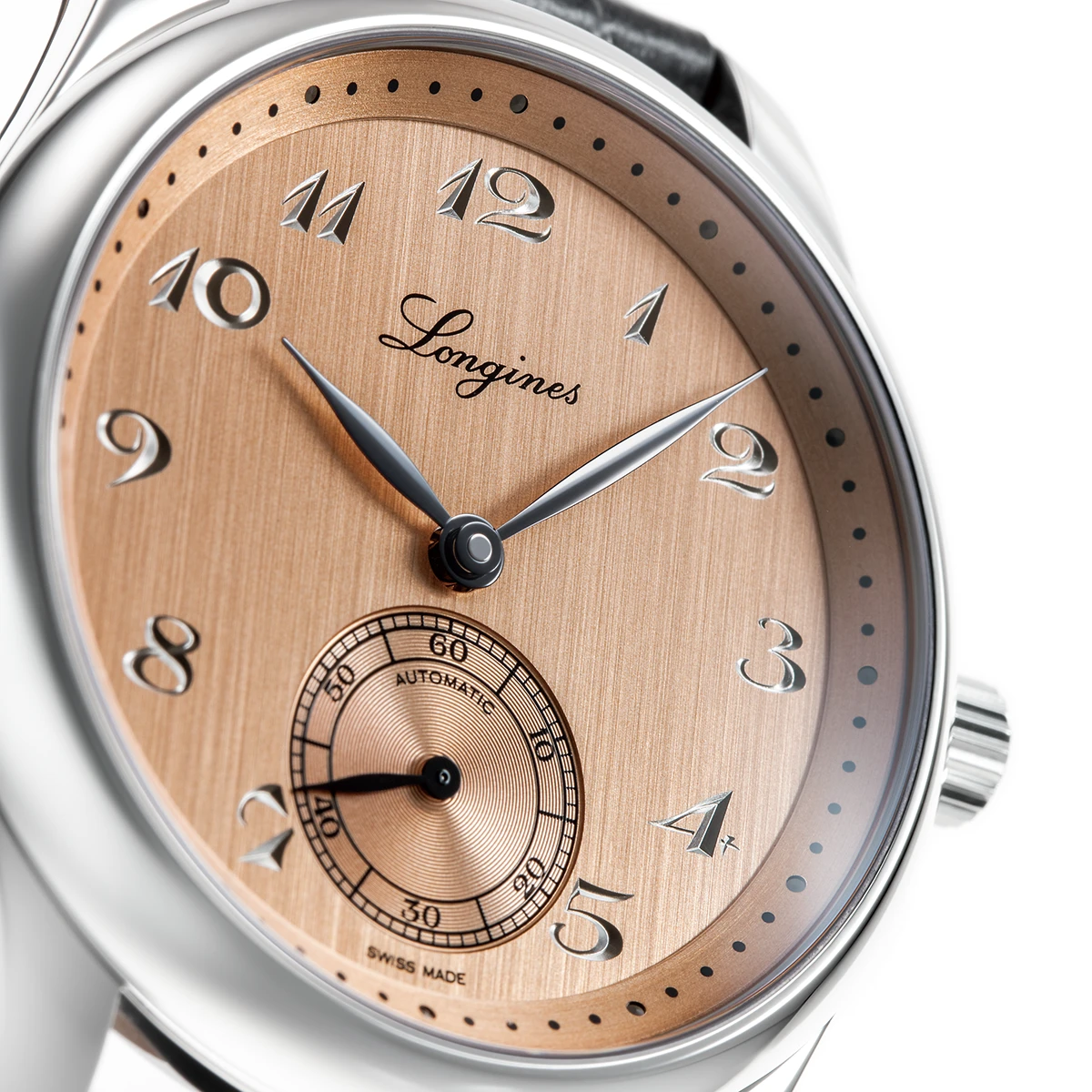
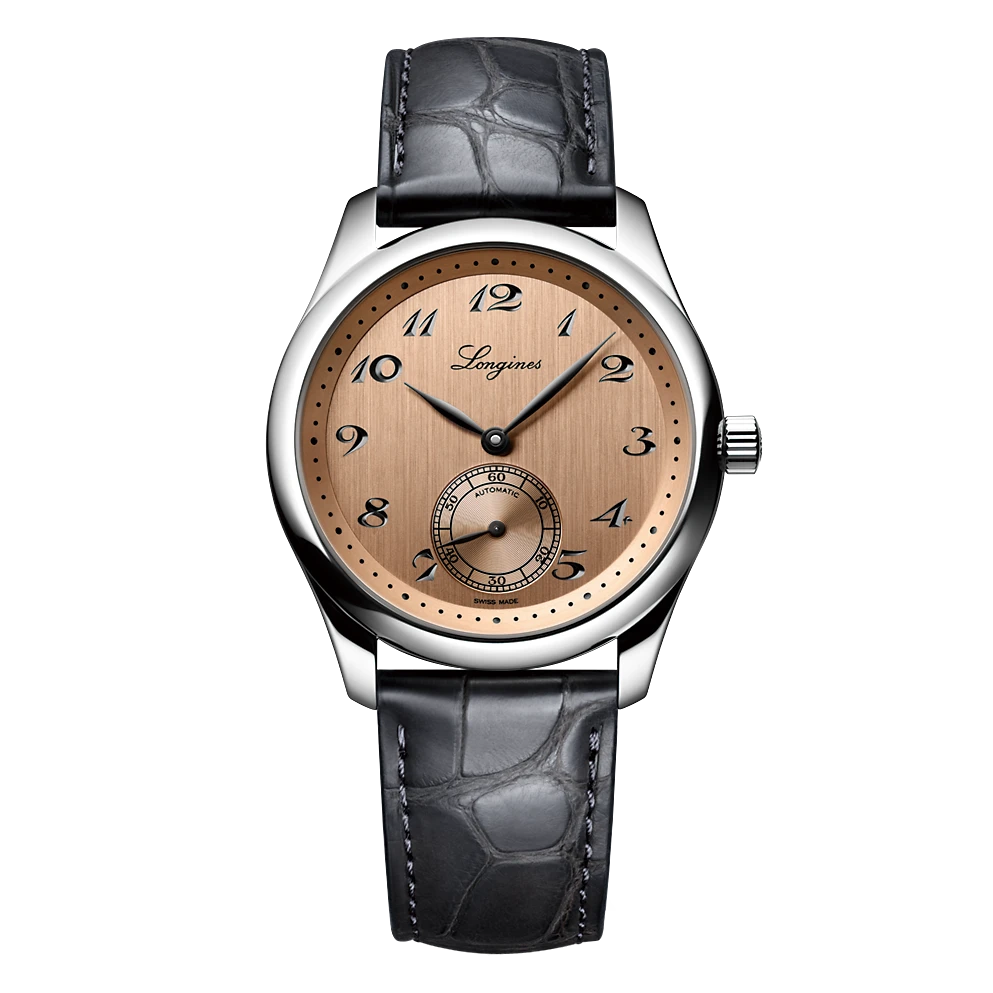
The well-balanced small seconds and salmon-colored dial exude a vintage feel. The logo and indexes on the dial are engraved using the latest CNC machines. The elegant, primarily polished case is equipped with a movement that uses a silicon balance spring. Automatic winding (Cal. L893). 26 jewels. 25,200 vph. Power reserve of approximately 72 hours. Stainless steel case (diameter 38.5 mm, thickness 10.2 mm). Water resistant to 3 bar. (Inquiries) Longines Tel. 03-6254-7350
②Hands & indexes
It is precisely because the elements are simple that details such as the hands and indexes become important. This is even more so now that legibility is required even for dress watches. For a while, most watches were plain with diamond cuts, but in recent years, there has been an increase in watches with unprecedented details, especially from Micro Maison. Good examples are Moritz Grossmann's "37 Arabic" and Credor's latest product, the "Quon." Both are eye-catching with their unique designs that are based on excellent manufacturing techniques.
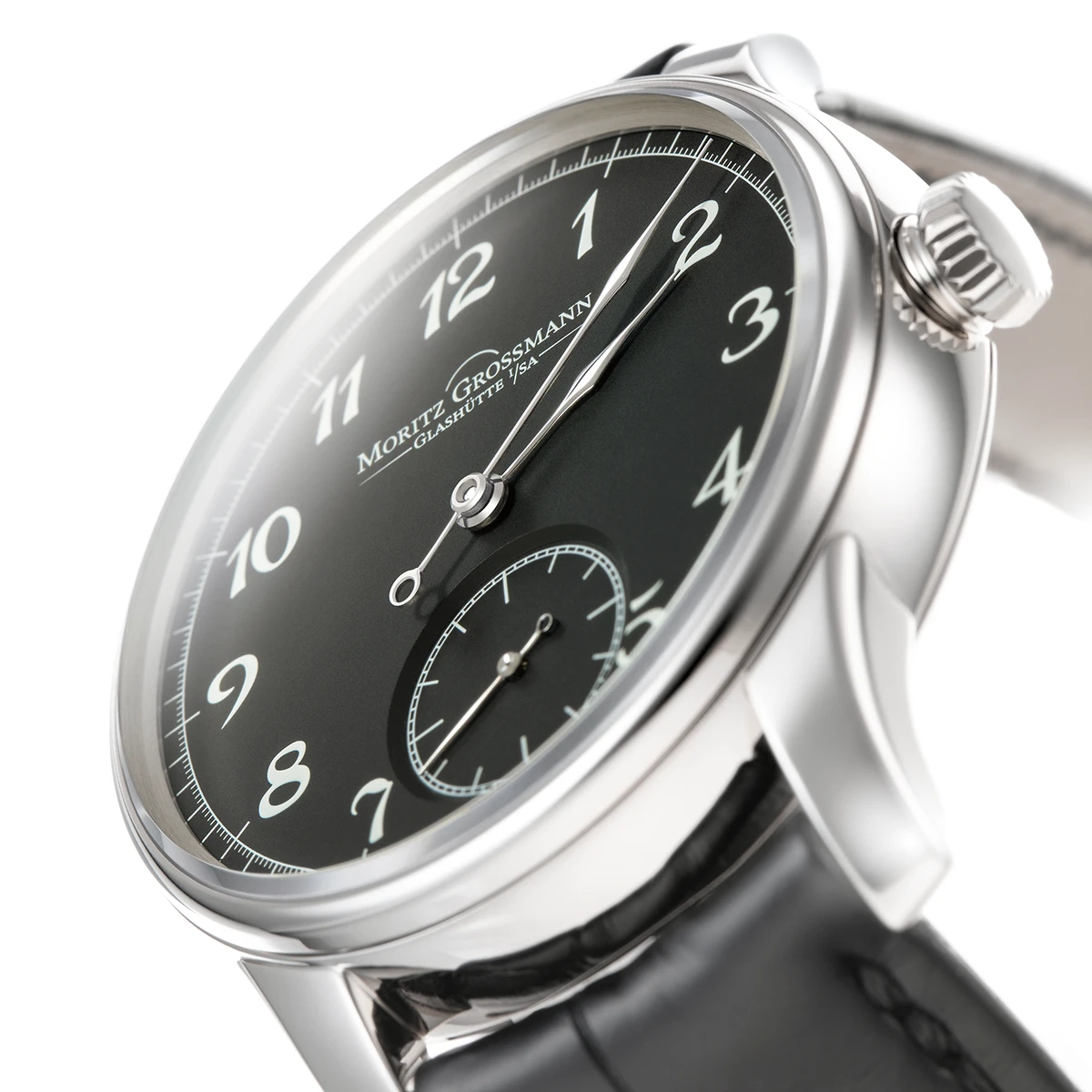
From the 1960s onwards, dress watch hands became noticeably plainer, giving way to flat diamond-cut hands rather than the three-dimensional shapes seen earlier.
There are two reasons for this. One is that watch designs have become more modern. Three-dimensional hands would not suit the sharp designs of dress watches. The other is cost-cutting. To cope with rising labor costs, manufacturers began to lower the quality of the details. However, high-end models from luxury watch manufacturers continued to feature three-dimensional hands. However, to cut costs, it was not uncommon for them to be reused across multiple models.
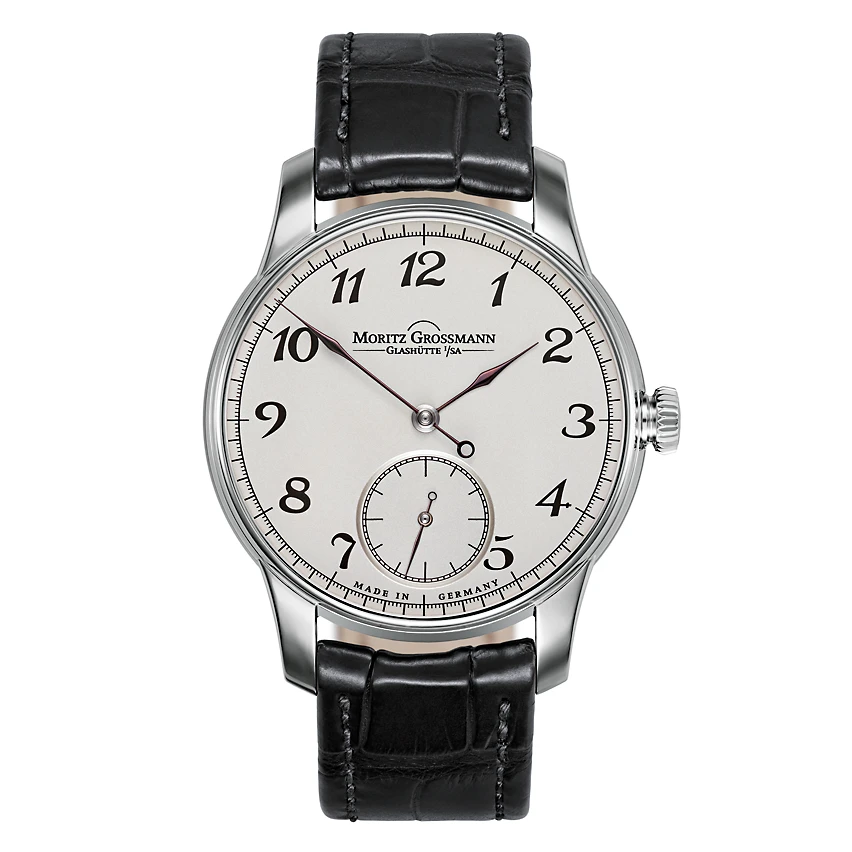
The softly typed Arabic numerals and brown-violet tempered hands give the dial an elegant finish. The case is 37mm in diameter, but the narrow bezel prevents it from appearing small. The thick, sturdy lugs and the movement's three-fifth plate are typical of German watches. Manual winding (Cal. 102.1). 22 jewels. 21,600 vph. Power reserve approximately 48 hours. 18KWG case (37mm diameter, 9.2mm thick). Water resistant to 3 bar. (Inquiries) Moritz Grossmann Boutique Tel. 03-5615-8185
Since the revival of mechanical watches, some suppliers have begun to reproduce the three-dimensional hands appropriate for high-end dress watches. The most well-known of these is Universo, now part of the Swatch Group, which is responsible for Breguet's continued excellence in hands.
However, even after the quality of cases and dials improved, some watch manufacturers continued to distance themselves from improving the quality of hands. One reason is that hands have to be replaced every time a watch is serviced. There is no point in spending money to make hands if they have to be replaced every time a watch is repaired. Another reason is that a stable supply cannot be expected. If the quality of the hands suddenly drops when a supplier changes, the stability of the product cannot be maintained. This is why improvements to hands have been slow to occur, despite the wishes of designers.
However, as the refinement of dials and cases has improved, other companies have begun to try to improve the quality of their hands. Micro-maisons are at the forefront. Moritz Grossmann, pictured here, uses wire EDM and hand polishing to achieve highly three-dimensional hands reminiscent of 19th-century pocket watches. The same can be said for Lang & Heyne. While these are extreme examples, some micro-maisons are using three-dimensional hands to differentiate themselves from their competitors.
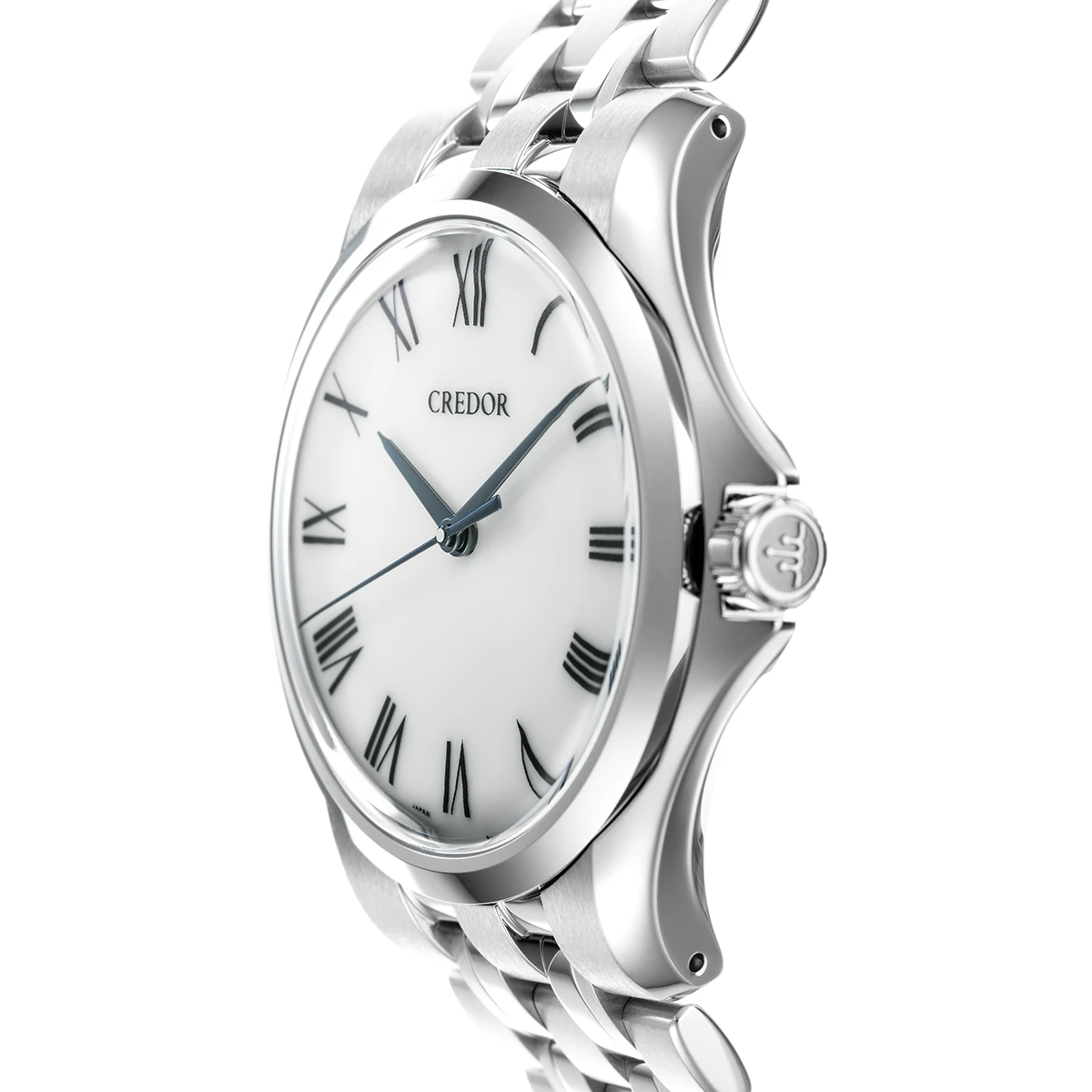
Meanwhile, major manufacturers continue to struggle to obtain high-quality hands. However, even major manufacturers do have dress watches with good hands. The Credor Quon shown in the photo has hands that have been tempered blued in-house at Seiko Epson. Nowadays, PVD-treated hands have a color that rivals tempered blue, but blued steel hands are still a detail worthy of a luxury watch. The same goes for Cartier. The tempered blue hands used by the company are generally produced in their own factory in La Chaux-de-Fonds.
Now that the exteriors of dress watches have improved significantly across all price ranges, the next thing manufacturers will undoubtedly be looking at is the hands.
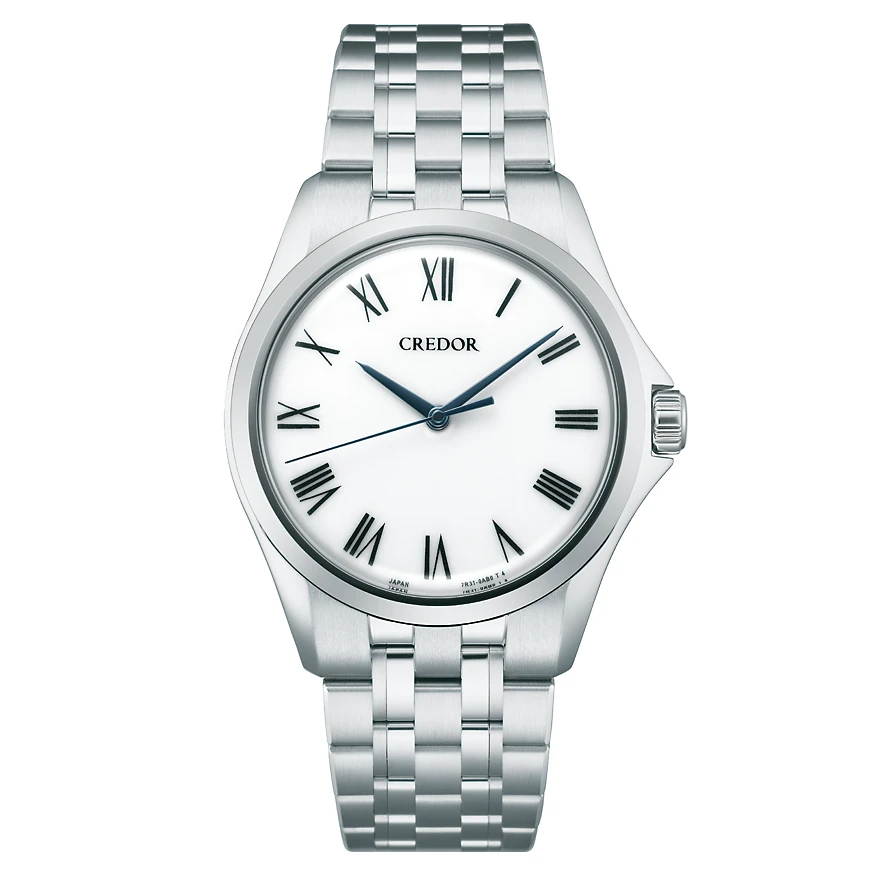
The bracelet-integrated case has a form that evokes the flow of water. The porcelain dial features newly designed Roman numerals with black overglaze enamel. The case back reveals the wavy finish on the bridge and the power reserve indicator. Manual winding Spring Drive (Cal. 7R31). 30 jewels. Power reserve of approximately 72 hours. Stainless steel case (diameter 39mm, thickness 10.8mm). Water resistant for everyday use. (Inquiries) Seiko Watch Customer Service (Credor) Tel. 0120-302-617
③Case & Bracelet
Perhaps the biggest difference between the old and new dress watches is the case and bracelet. The high manufacturing precision made possible by the latest machinery has given dress watch thin cases high water resistance and airtightness. In addition, this has made it possible to precisely control the subtle play of bracelets, which previously had to be relied on the intuition of craftsmen. The two models we will look at here are dress watches of a new era, made possible by technological advances.
Perhaps the biggest change in the new era of dress watches is the case and bracelet. In the past, it was considered difficult to make a thin case airtight, but with the spread of CNC cutting in case manufacturing and the increased precision of the processing, even thin cases can now achieve airtightness on a par with that of previous waterproof cases.
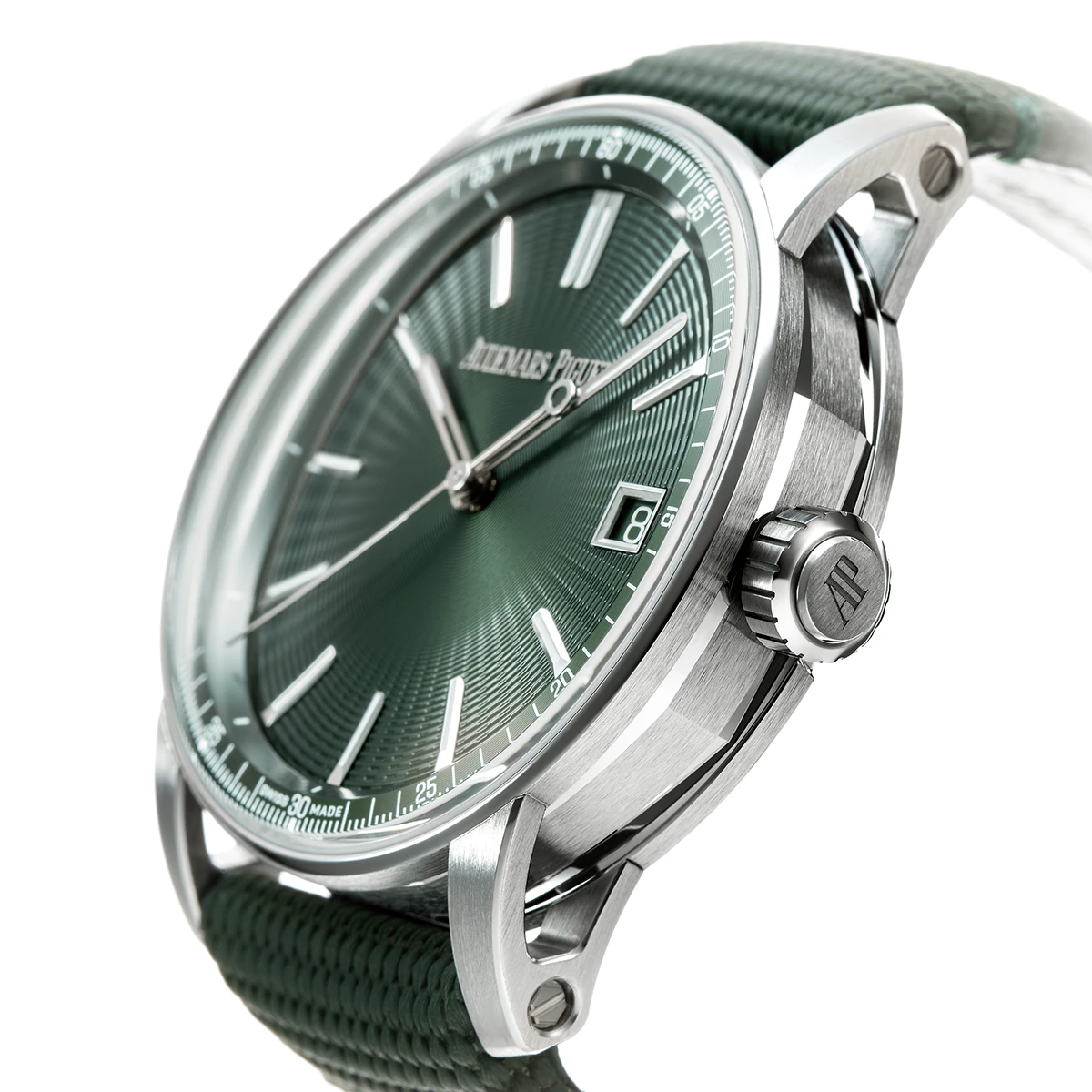
Additionally, with the spread of cutting, some dress watches began to be constructed from multiple components, meaning they could have extremely three-dimensional cases. A good example of this is the Audemars Piguet Code 11.59 by Audemars Piguet Automatic. The idea of constructing a case from multiple components was popularized by Hublot's Big Bang. Audemars Piguet adapted this technique, which had become widespread in the world of sports watches, to dress watches.
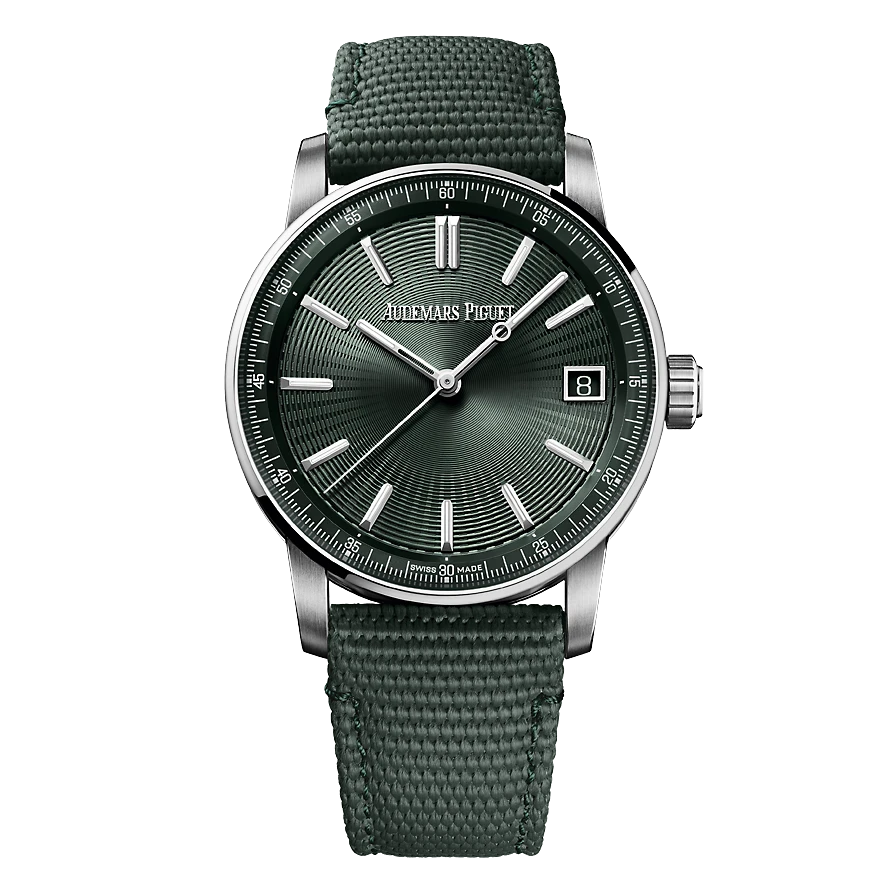
The new 2023 model features bar indexes and a concentric patterned dial, creating a completely different impression. The case, which has undergone detailed design revisions, is the first in the collection to be made from stainless steel. While seemingly simple, the octagonal middle case and double-curved sapphire crystal reveal a variety of different expressions depending on the angle. Automatic (Cal. 4302). 32 jewels. 28,800 vph. Power reserve of approximately 70 hours. Stainless steel case (diameter 41mm, thickness 10.7mm). Water resistant to 3 bar. (Inquiries) Audemars Piguet Japan Tel. 03-6830-0000
In the past, cases with this type of construction were never popular due to their lack of airtightness, but technology has now advanced to the point where they can be used in dress watches without any problems.
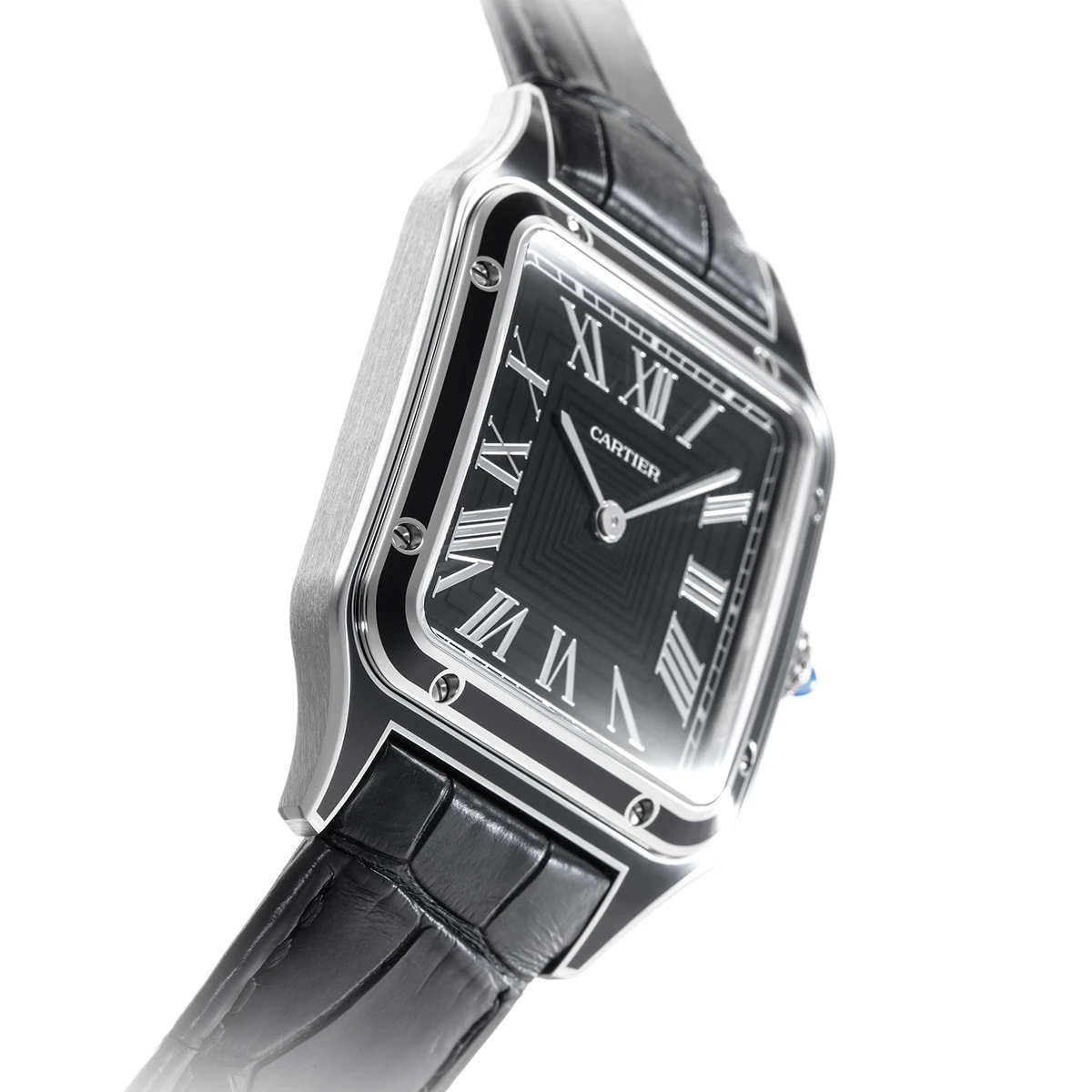
Another example is Cartier's Santos-Dumont. The model pictured has engraved cases and bezels, which are then filled with lacquer. From the 1990s to the 2000s, designers such as Alain Silberstein used cases with lacquer inlays. However, the lacquer used at the time could hardly be described as high quality, and would peel off over time. In contrast, the lacquer on Cartier's new Santos-Dumont is firmly fixed to the case, ensuring no problems even with long-term use. It's thanks to advances in processing and paint that it's now possible to take on challenges that were once considered risky.
The same is true for metal bracelets, which are still rarely used in dress watches. Previously, bracelet link adjustments had to be done by hand, but thanks to improvements in machining precision, it has become possible to reduce the play with a great deal of precision. This means that watchmakers can now control to a certain extent the play between the left and right sides of the bracelet, an element that previously relied on craftsmen.
However, given the constraints of being a dress watch, there have been few new attempts at cases and bracelets. However, as this genre gains attention, new cases and bracelets suitable for a new era of dress watches will surely be released by various manufacturers.
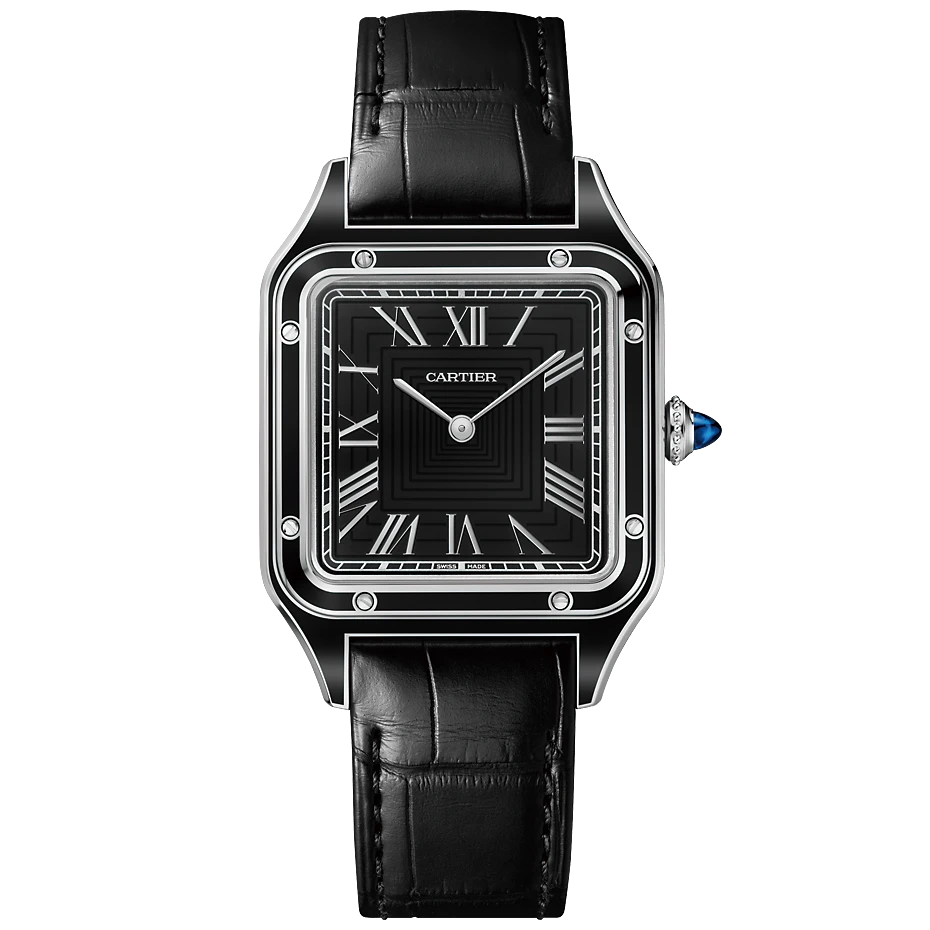
The Santos-Dumont is a watch that closely resembles the design of the original Santos, which was born in 1904. The case of this watch is finished in a two-tone color scheme, with lacquer poured into stainless steel and then hand-polished. This watch combines traditional style with a modern touch. Manual winding (Cal. 430 MC). 18 jewels. 21,600 vph. Power reserve of approximately 38 hours. Stainless steel (43.5mm x 31.4mm, 7.3mm thick). Water resistant for everyday use. ㉄ Cartier Customer Service Center 0120-1847-00
If you're looking for a finishing touch, Micro Maison is also recommended.
The latest dress watches have seen major improvements to the details, especially the dial. It is true that large, well-capitalized manufacturers tend to produce high-quality watches, but when it comes to fine finishing, there are also many attractive watches from micro-maisons.
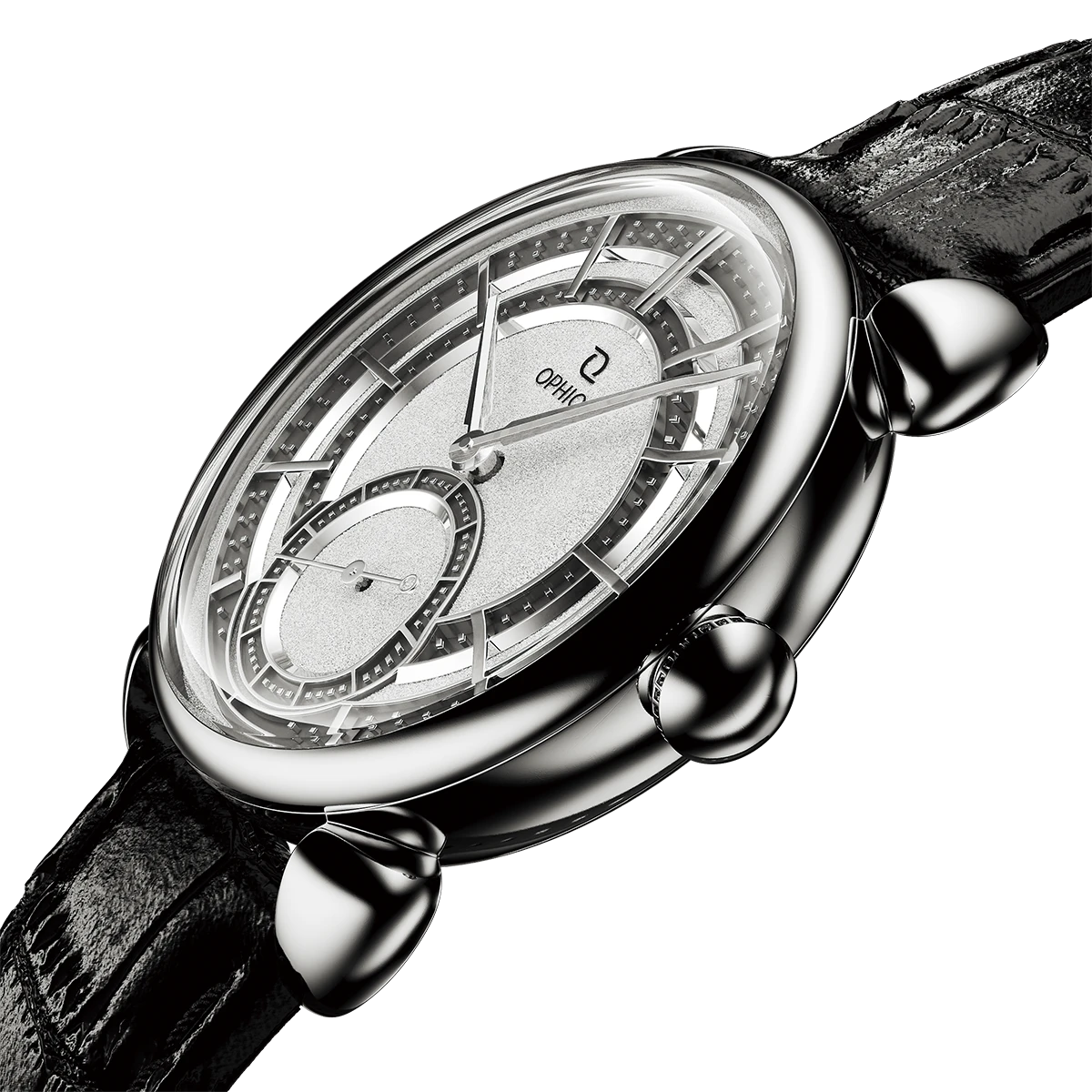
As befits an up-and-coming micro-maison, this watch has gone all out with its exterior. The basic structure is the same as the previous "786 Velous," but it has an extremely three-dimensional dial. Automatic winding (Cal. Schwarz Etienne ASE200 base). 28,800 vph. Power reserve of approximately 86 hours. Stainless steel case (39mm diameter). Water resistant to 50m. Price: 7950 euros.
Dress watches, which have few components, inevitably require high-quality finishing. However, most watches are industrial products, and how much cost is allocated to each component is determined by the overall balance. This is especially true for watches equipped with expensive in-house movements. In this respect, micro-maisons have greater freedom in allocating costs. The approach of deliberately using ébauches and spending that money on elaborate exteriors has brought success to many micro-maisons. Ming, Kikuchi Nakagawa, and NAOYA HIDA & CO., which are highly regarded by watch enthusiasts, are good examples.
The two watches mentioned here are from micro-maisons with elaborate designs. Founded in 2014, Ophion boasts exceptionally good designs for its price range. Its latest model, the OPH-411 Vesper, features a matte-finished dial with polished bar indices and cube-shaped micro-indices. The case is also made by Voutilainen-Katun, a company founded by Kari Voutilainen. Judging from the company's other models, the finish is quite good. Normally, adding such an element would skyrocket the price of a watch. Ophion, on the other hand, kept production costs down by using a modified Schwarz Etienne Caliber ASE200 movement. Honestly, I'm not sure whether this model can be considered a dress watch, but given the comfortable fit of its thin case and its excellent design, it could easily be included in the new generation of dress watches.
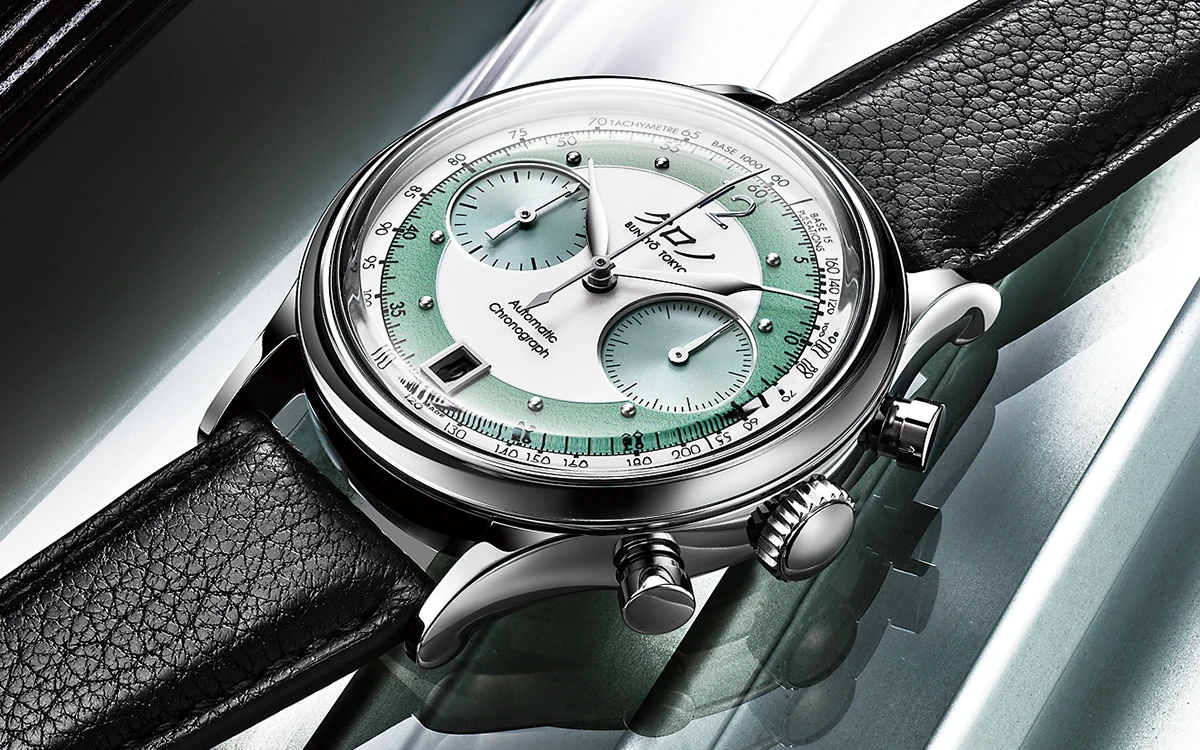
An attempt to add a unique and dressy touch to a chronograph. The use of the ébauche NR86 movement keeps the price low despite the intricate details. Automatic winding. 34 jewels. 28,800 vph. Power reserve approximately 45 hours. Stainless steel case (39mm diameter, 11.7mm thick excluding crystal). Water resistant to 3 bar. Sold out.
Although it's not a dress watch, Chrono Bunkyo Tokyo's "Chronograph 3 HISUI" also makes a good addition to this category. The jade-green dial is eye-catching. Subtly changing the color of the dial and subdials adds character to the watch, a feat achieved by Hajime Asaoka. While suppliers are usually reluctant to undertake such a complex request, it's likely out of respect for Asaoka's insight. Such an endeavor is only possible with the carefully polished hands and case. The understated indices, the tapered lugs on the sides, and the MK.2 case, which doesn't feel too thick, all add to the watch's appeal.
Thanks to advances in exterior processing technology, dress watches are seeing a resurgence in popularity. Micro Maison watches have likely been the biggest beneficiaries of this trend. From now on, Micro Maison watches will undoubtedly become a popular choice when buying a dressy watch.