The "Laurel," Japan's first domestically produced wristwatch, was born in 1913. This watch, a crucial milestone not only for Seiko but also for Japanese watchmaking, has inspired a new model in the Seiko Presage collection. In particular, the combination of Arabic numeral indices and an enamel dial, reminiscent of the Laurel's design, is a first for a regular model. What were the developers' intentions behind this?
Photograph by Yu Mitamura
Nabata Politics: text
Text by Masaharu Nabata
[Article published on January 4, 2026]
The "Laurel," the origin of Seiko watches, now has a tribute model that is available as a regular product.
The origin of Seiko watches and an unforgettable model in the history of watchmaking in Japan: the "Laurel," Japan's first wristwatch, was born in 1913 (Taisho 2).
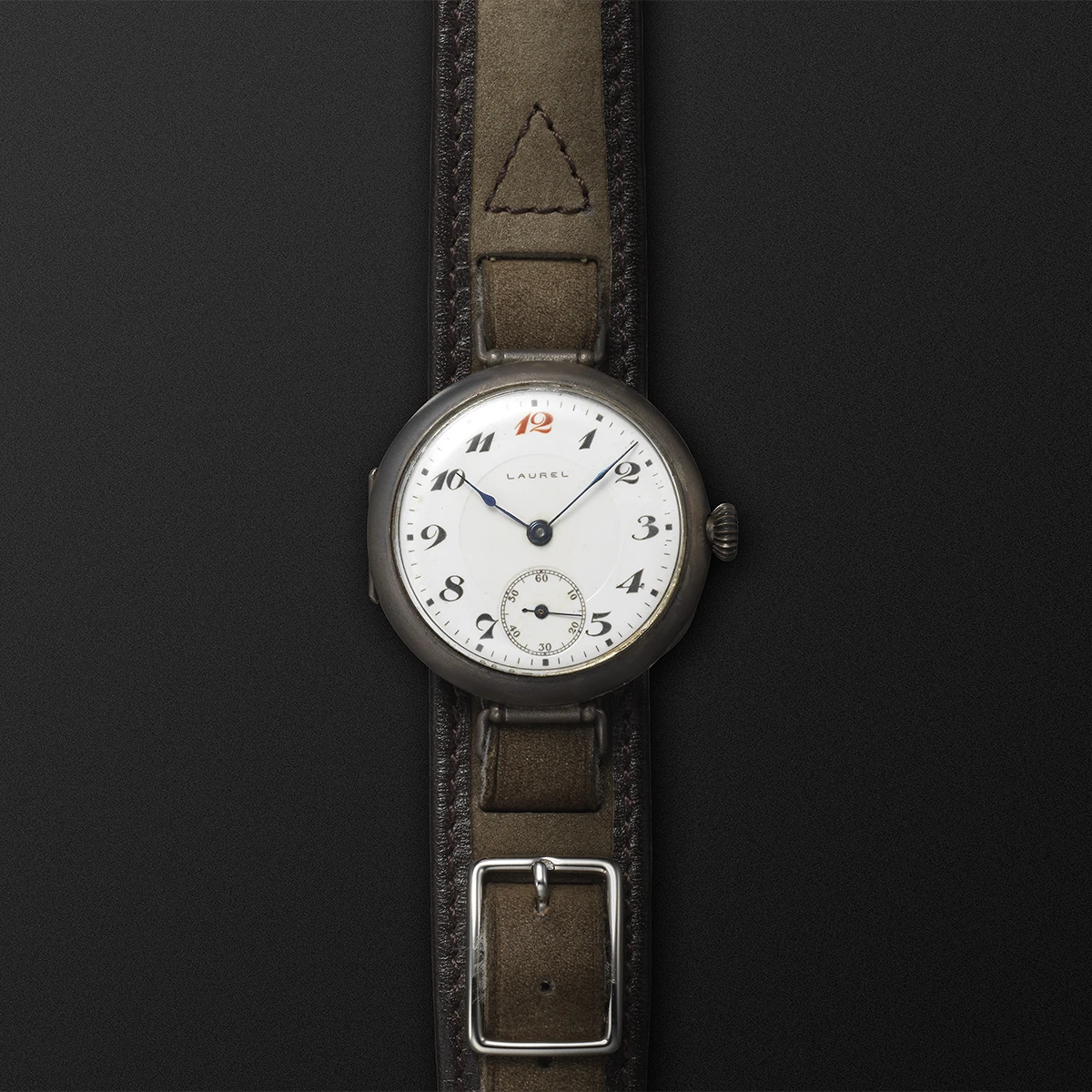
Its size was 12-inch. This meant it was a model with a case diameter of approximately 30mm and a small movement with a diameter of approximately 26mm. However, it was significantly smaller than previous pocket watches, making it difficult to manufacture, and it is said that at the time, the limit was 30 to 50 pieces per day.
However, the significance of the Laurel goes beyond simply creating a wristwatch with a small movement. Seiko succeeded in domestically producing hairsprings in 1910 (Meiji 43). By 1913, when the Laurel was released, they had also succeeded in manufacturing enamel dials in-house, so it is believed that these were used in the Laurel wristwatch. In other words, it left a significant mark as a model that incorporated in-house manufactured parts.
A model paying homage to the Laurel has appeared as a regular model in the Seiko Presage line. What exactly was the story behind this?
The Seiko Presage product designer involved in its development said that by releasing the Laurel design, which is the origin of Seiko's watchmaking, as a regular model rather than a limited edition, they wanted to make it accessible to a wider audience. They also explained that by having this new model tell the story of Seiko's history, they wanted to broaden opportunities for people to learn about the appeal of Seiko's watchmaking.
The long-awaited regular release. An enamel model that inherits the design of "Laurel".
What's noteworthy about this new regular release is that it's the first time the combination of Arabic numeral indices and an enamel dial, which are symbolic of the Laurel, has been adopted for a regular model.
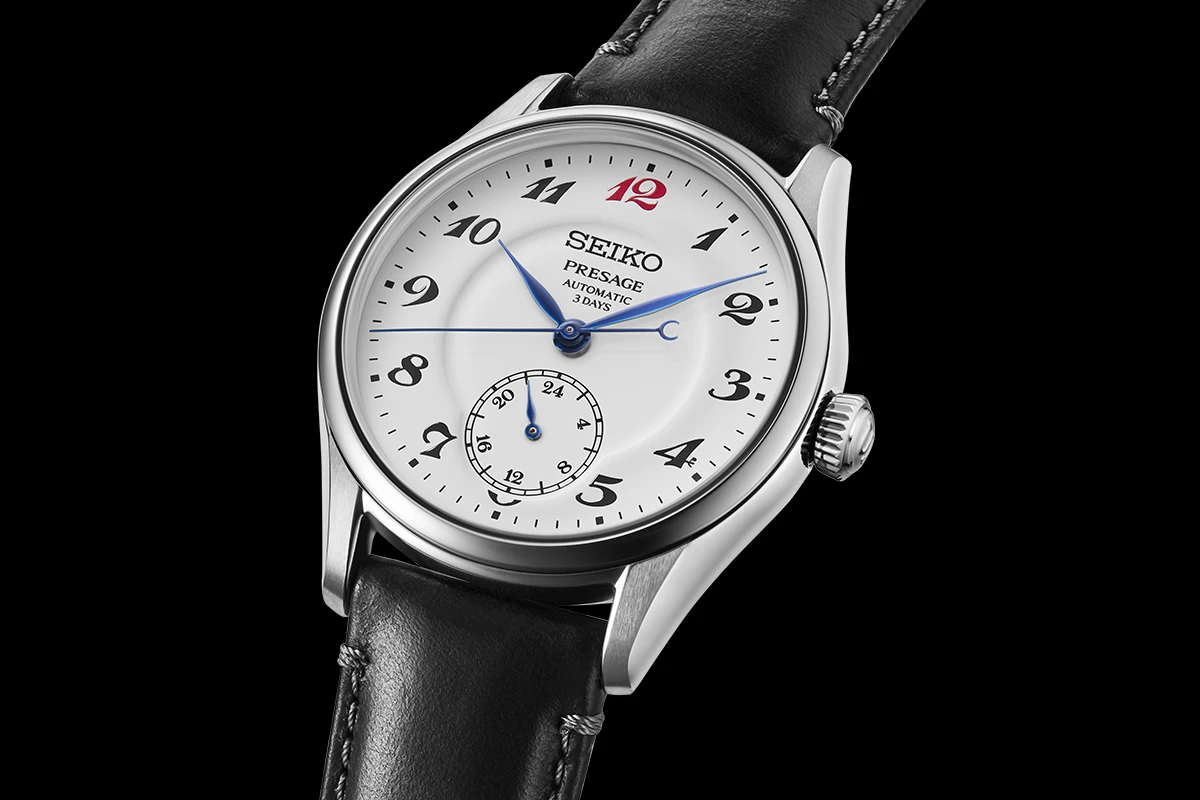
The new "HCC005J" features an enamel dial manufactured by a specialized factory in Japan. The "Laurel," released in 1913, was available in two versions: one with all-black Arabic numeral indices and another with red only at the 12 o'clock position. This time, the iconic red-indexed version is used. Automatic winding (Cal. 6R5H). 24 jewels. 21,600 vibrations/hour. Power reserve of approximately 72 hours. Stainless steel case (diameter 39.6mm, thickness 12.4mm). 3 ATM water resistance. 179,300 yen (tax included). Scheduled for release in September 2026.
Furthermore, the red 12 o'clock marking, a defining feature of the Laurel, has been adjusted to a slightly darker shade to blend in with the overall tone of the dial.
Each enamel dial is fired at high temperatures, resulting in a unique texture and finish that varies depending on the firing process. No two dials have the same texture, making each one a one-of-a-kind encounter.
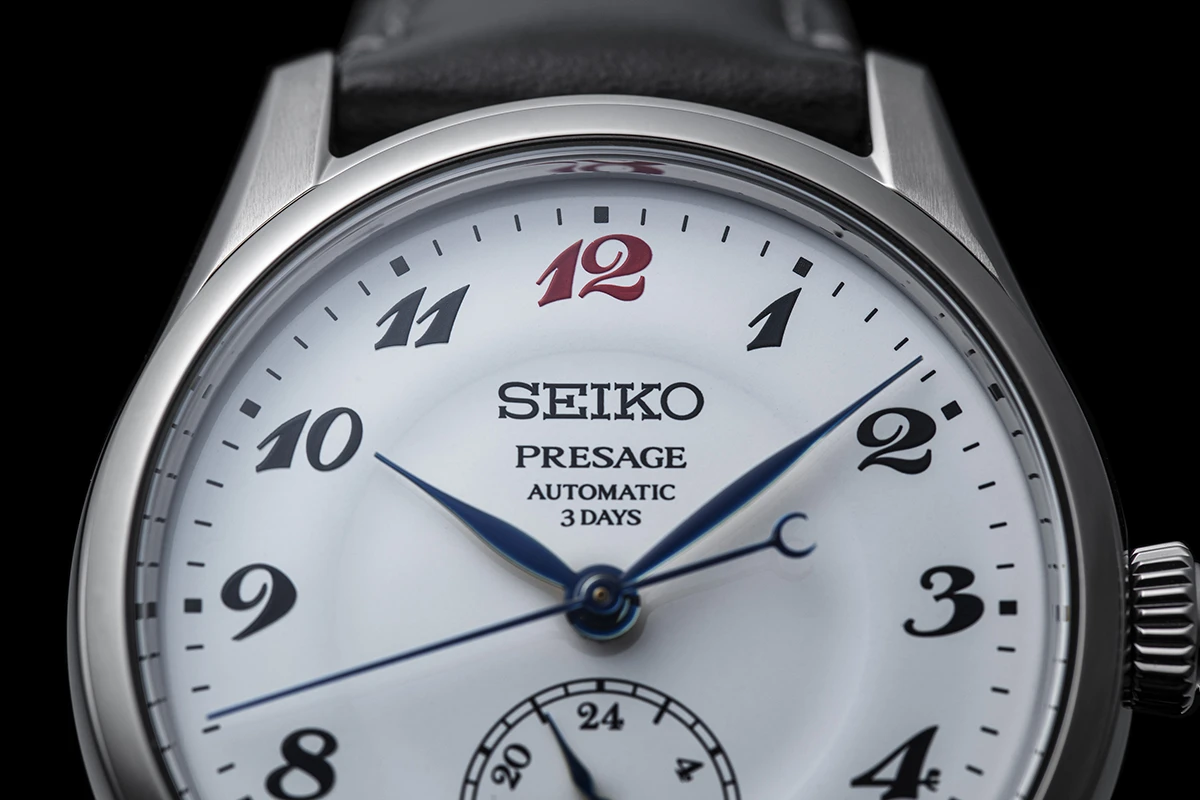
A traditional craft that symbolizes Japan. Vibrant expression using lacquer.
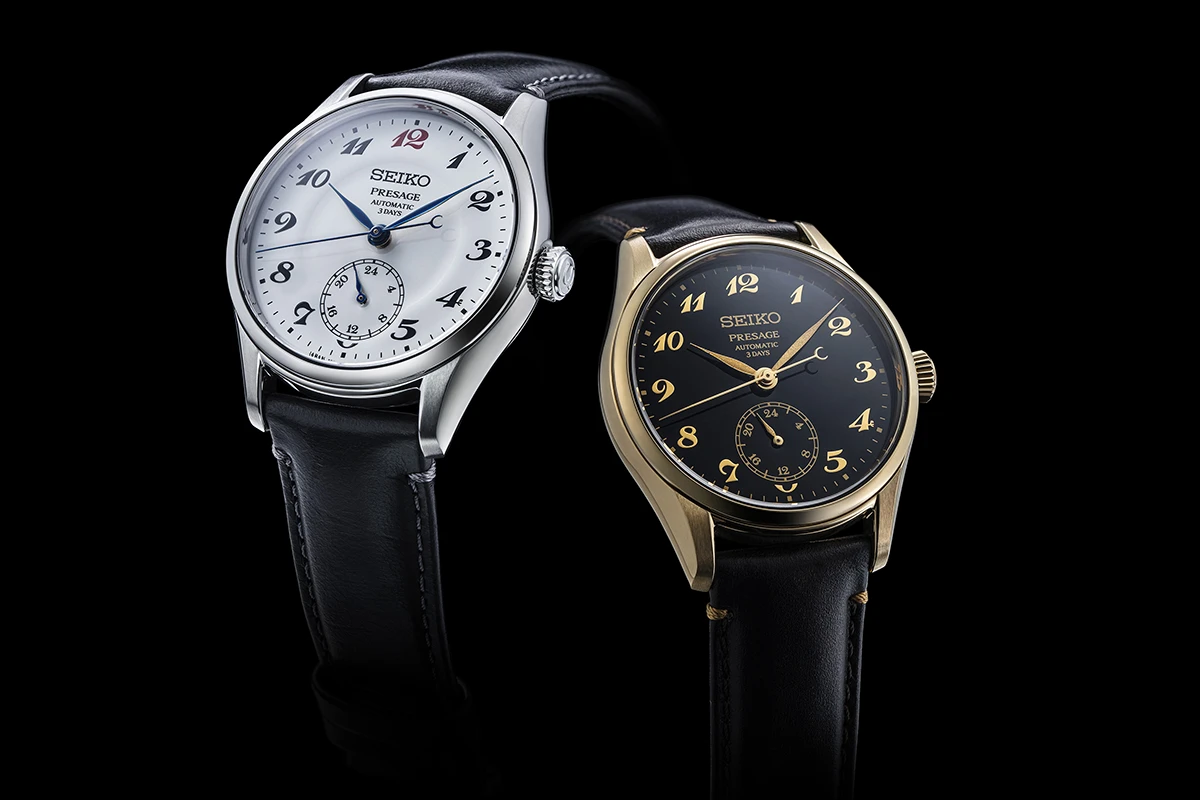
The Seiko Presage collection includes models with dials made using traditional Japanese crafts, not just enamel, but also lacquerware and Arita porcelain. This time, in addition to the enamel dial, a model with a black lacquer dial will be released. The vivid contrast between the white enamel and the black lacquer is one of the highlights.
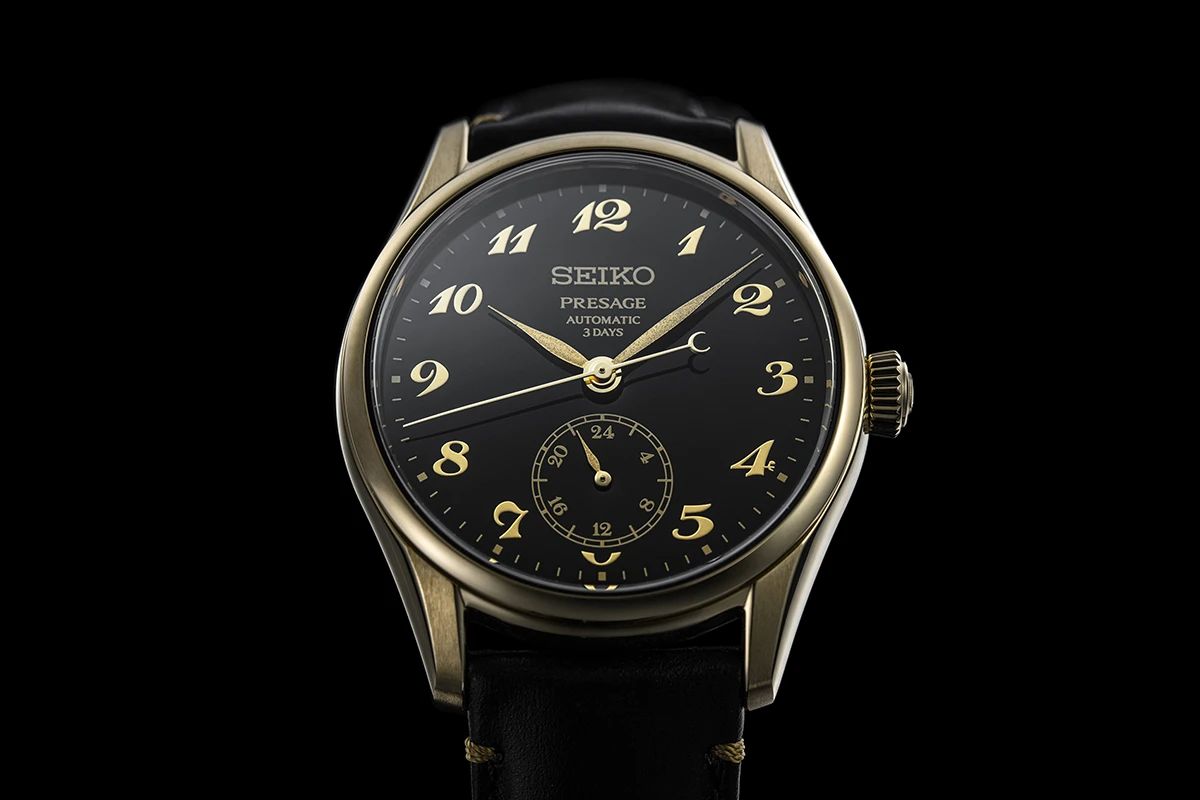
Both the enamel dial and lacquer dial models maintain a sense of unity, appearing as the same laurel design, while utilizing the unique properties of each material to express Arabic numeral indices in different ways. One features black indices that complement the whiteness of the enamel dial, while the other uses gold indices that enhance the lacquer dial.
Of course, it goes without saying that various efforts and ingenuity were employed to maximize the appeal of both enamel and lacquer.
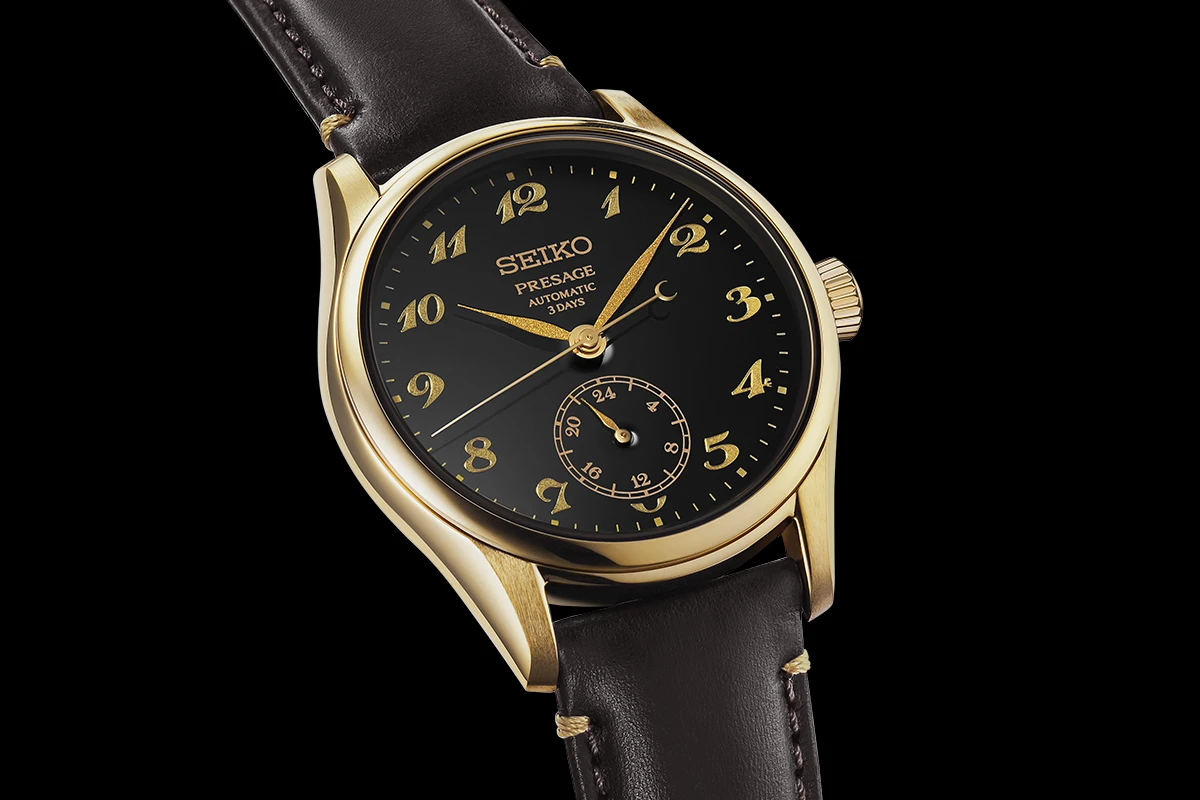
The "HCC006J" features a dial made with lacquer supervised by Kazufune Tamura, a leading figure in Kanazawa maki-e (lacquerware with gold or silver inlay). The dial's gold color was meticulously crafted to achieve a look that is both striking and understated against the deep black background, with careful attention paid to the details of the indices and hands. It features an automatic movement (Cal. 6R5H), 24 jewels, 21,600 vibrations per hour, and a power reserve of approximately 72 hours. It has a stainless steel case (39.6mm diameter, 12.4mm thickness) and is water-resistant to 3 atmospheres. Priced at 209,000 yen (including tax), it is scheduled for release in September 2026.
Particular ingenuity went into the placement of the indices on the lacquer dial. While enamel allows for printing that emphasizes a three-dimensional effect by utilizing the thickness of the coating, lacquer, due to its black color, inevitably tends to sink in. Therefore, a technique was adopted in which a metal plate was attached to the jet-black base to reproduce the luster of gold. Even then, it was extremely difficult to achieve a shine that was not simply glittery, but rather a radiance within a matte finish.
Furthermore, the hands initially appeared to be recessed within the dial. However, a matte finish would make the surface powdery and lose its metallic texture, so the "hakama" (skirt) at the center of the hands is polished to a mirror finish, and the part beyond that is printed in gold to create a contrast in texture and prevent them from appearing recessed.
Incidentally, Seiko Presage began using lacquer dials around 2013. The quality of the lacquer dials has improved year by year, and the recent black lacquer has an indescribable smoothness and increased luster, making it very beautiful.
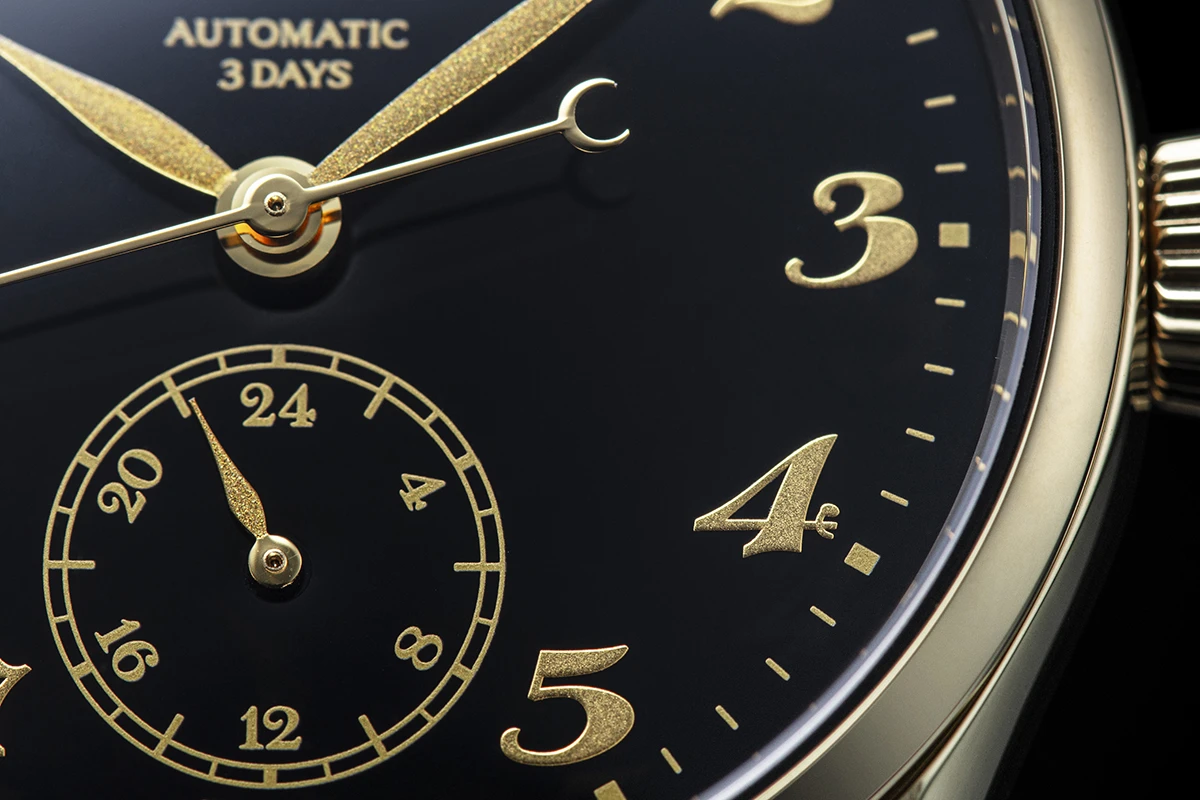
However, the thickness of the dial itself differs between enamel and lacquer. In other words, the enamel dial is thicker, while the lacquer dial is thinner in comparison. As a result, the distance from the crystal to the dial surface is longer with the lacquer dial, so care was taken to make the bezel's inner bezel appear wider by making the bezel's inner bezel disappear.
A distinctive feature of this enamel dial is the step between the outer edge where the indices are drawn and the center. This step gives it a smooth, almost ethereal look, which is part of its charm, but deciding where to place it was a challenge. However, completely eliminating the step would make the dial too plain and eliminate any sense of depth or shadow. Therefore, the design was carefully considered while looking at models from that era.
Smoothly refined case lines
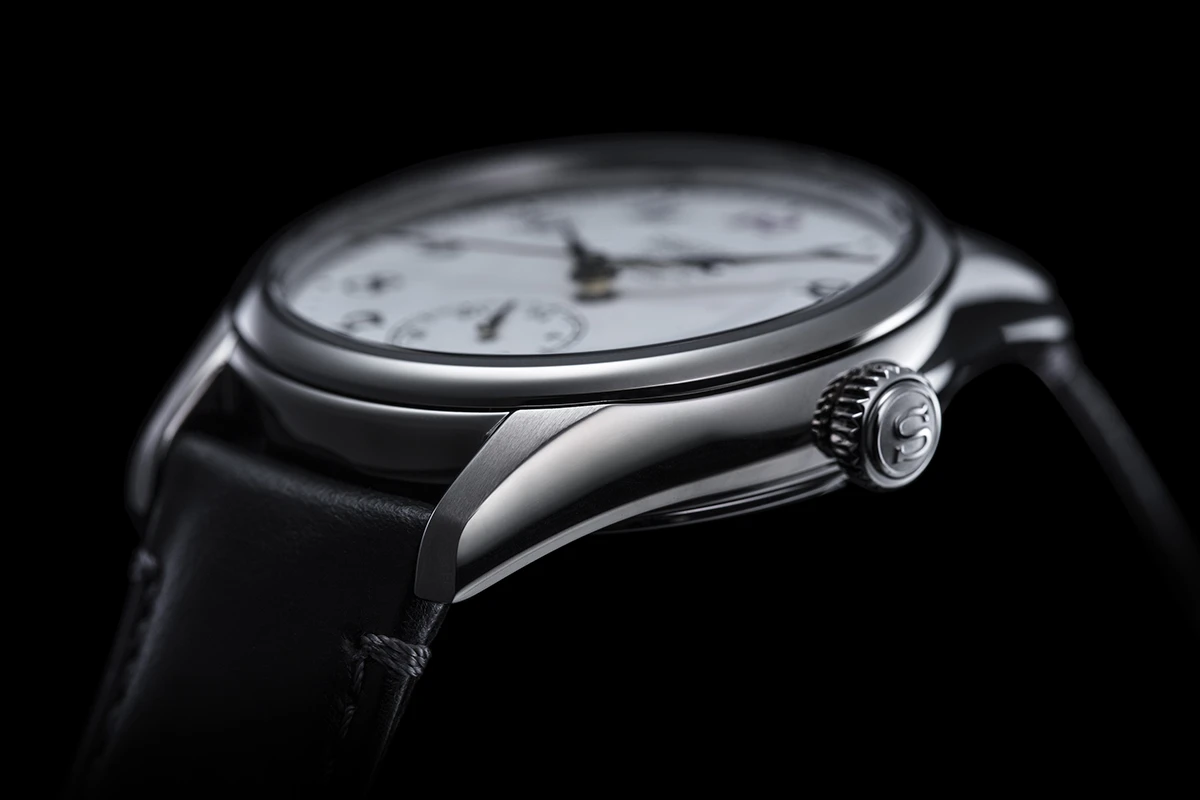
Another key feature of this new model is the case shape, which is integrated with the lugs. This approach maximizes the beauty of the dial, which is the main focus. This new model pursues proportions befitting the refined appearance of the original Laurel. By narrowing the bezel, the dial appears more spacious, and by using a gently curved crystal, the metal part of the case has been made thinner, and the bezel has been widened, emphasizing a light and airy impression.
Previously released masterpieces that pay homage to the "Laurel"
The Laurel, the origin and icon of Seiko watches, became one of Seiko's extensive product lines and continued to be manufactured after the war. Models inspired by the enamel dial of the Laurel have been produced numerous times. For example, the "Laurel SV925" from 1995 and the "4S28-0040" from 2000 are examples of such models.
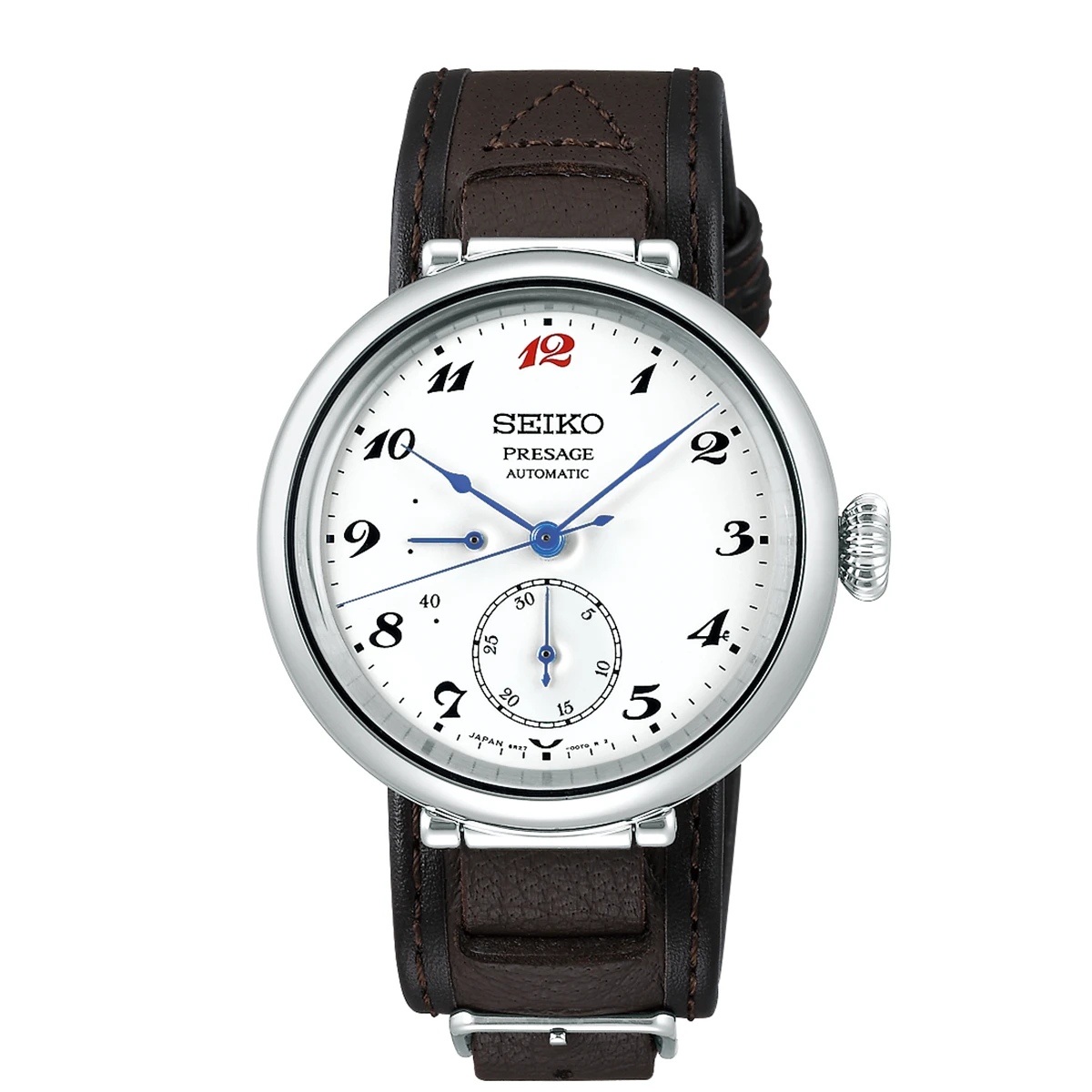
Automatic movement (Cal. 6R27). 29 jewels. 28,800 vibrations/hour. Power reserve approximately 45 hours. Stainless steel case (37.5mm diameter, 12.6mm thickness). 5 ATM water resistance. Discontinued.
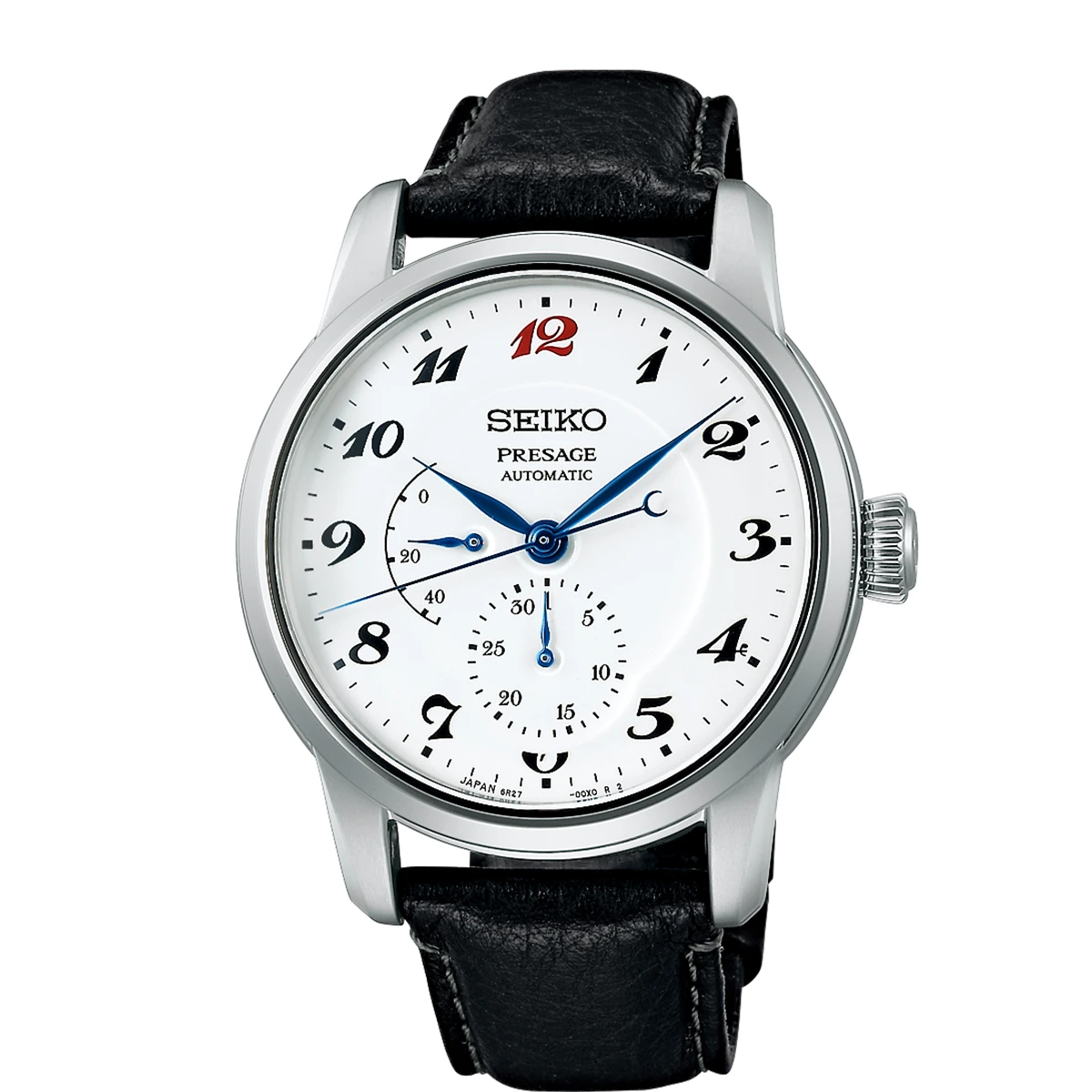
Automatic movement (Cal. 6R27). 29 jewels. 28,800 vibrations/hour. Power reserve approximately 45 hours. Stainless steel case (40.20mm diameter, 12.80mm thickness). 10 ATM water resistance. Discontinued.
Then, in 2013, to commemorate the 100th anniversary of Seiko watches, the "SARW005" and "SARX011" models featuring enamel dials were released from the Seiko Presage collection. Furthermore, in 2023, to commemorate the 110th anniversary of Seiko watches, the "SARW065" and "SARW071" models were released, reinterpreting historical designs in a modern style, incorporating red into the Arabic numeral font and the 12 o'clock marker.
The "Timekeeper" pocket watch. A design imbued with another set of roots.
The models released prior to the enamel and lacquer dial models, which are based on Seiko's original "Timekeeper" watchmaking line, also showcase unique creativity and ingenuity.
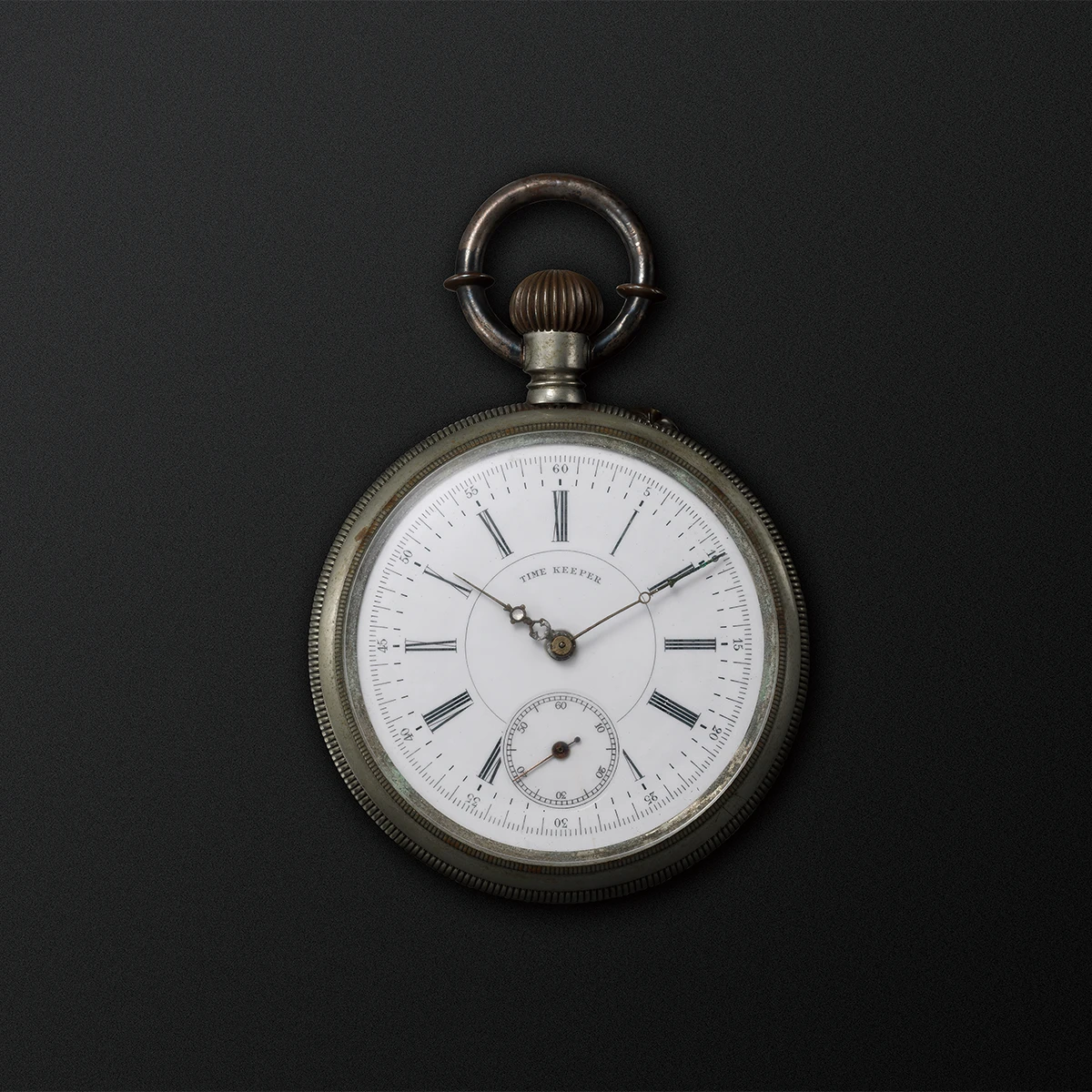
This model also features enamel and lacquer on the dial. The indices use Roman numerals reminiscent of the original Timekeeper. These indices are so delicate that they appear as bars from a distance, and this design was also used when developing the Seiko Watch 100th Anniversary model. However, this time, the lines of the numerals have been made slightly thicker to achieve a balance between beauty and modernity, taking into consideration the overall balance.
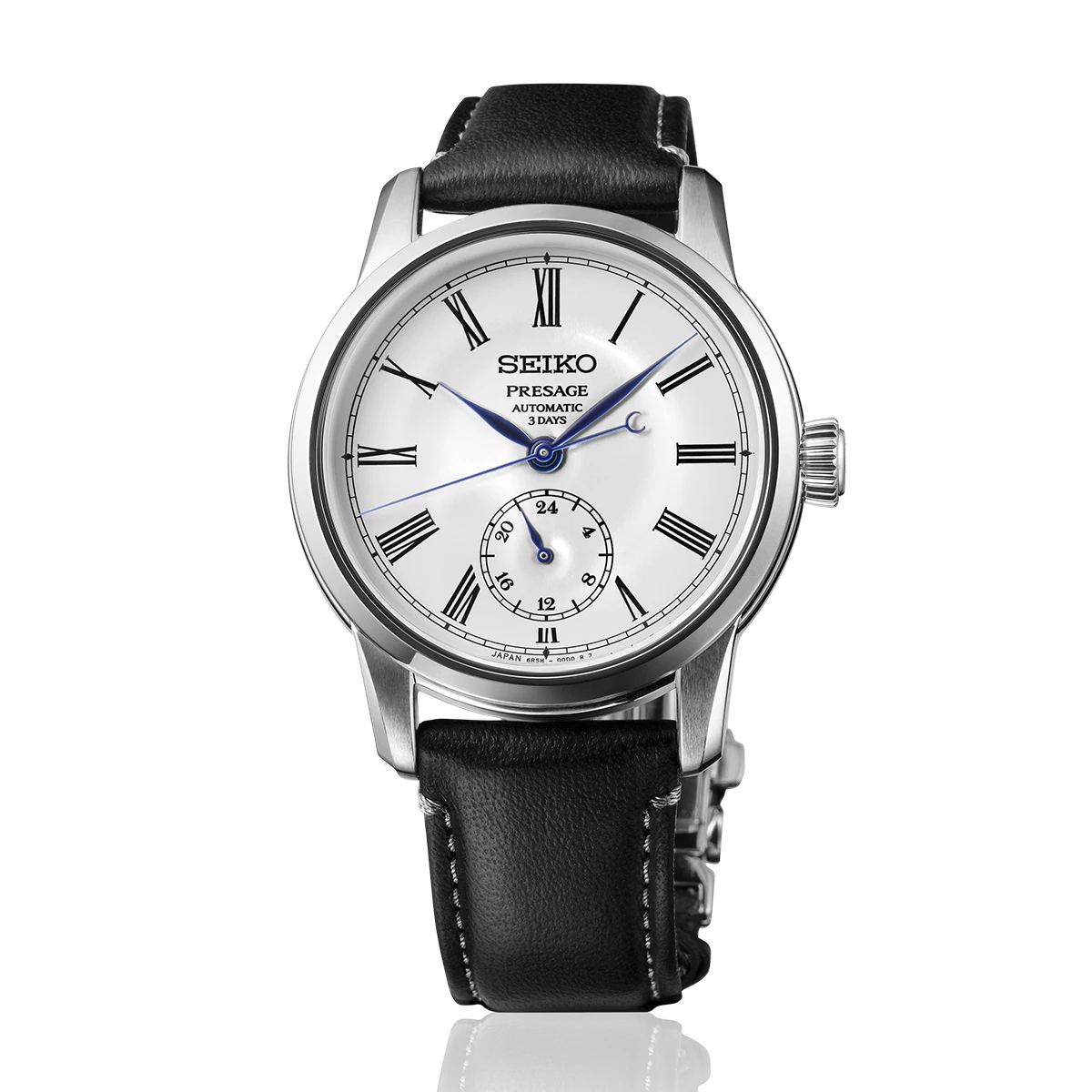
Automatic movement (Cal. 6R5H). 24 jewels. 21,600 vph. Power reserve approximately 72 hours. Stainless steel case (diameter 40.2 mm, thickness 12.1 mm). Water resistant to 10 bar. Price: 259,600 yen (tax included).
The hands feature a thick, long leaf shape, characteristic of mechanical movements, and are colored blue on enamel dials and gold on lacquer dials.
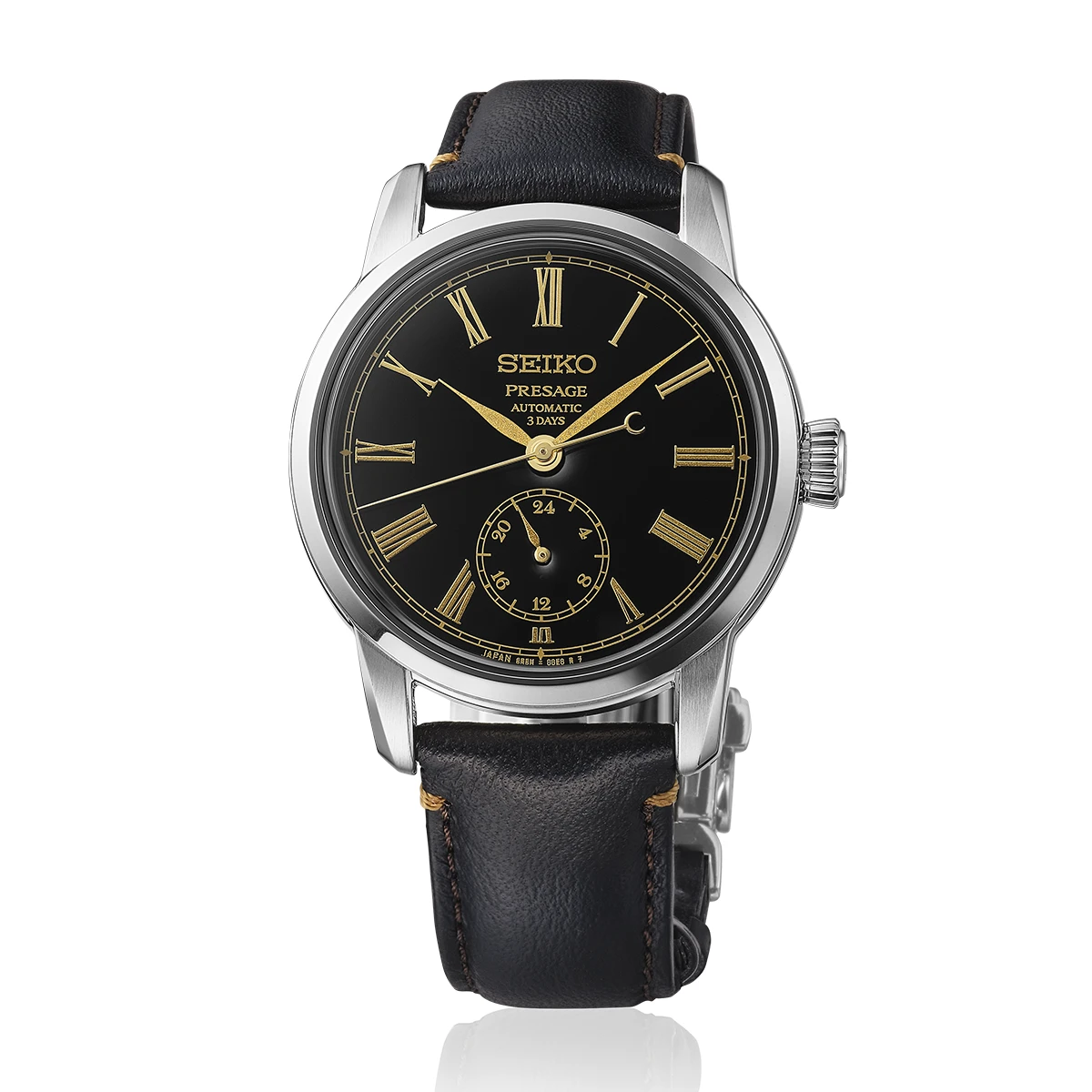
Automatic movement (Cal. 6R5H). 24 jewels. 21,600 vph. Power reserve approximately 72 hours. Stainless steel case (diameter 40.2 mm, thickness 12.1 mm). Water resistant to 10 bar. Price: 259,600 yen (tax included).
In both models, the dial is the face of the watch. Because it's a watch you look at every day, the designers say they eliminated anything that might feel "a little restrictive" and pursued a comfortable feel that makes you want to keep looking at it. In that respect, both the Laurel and the Timekeeper have something in common.
The craftsmanship and the developers' passion embodied in this new product
This new model, developed using these iconic models that have graced Seiko's history as inspiration, embodies the following sentiment from the development team: "We hope that those who hold this watch in their hands will understand the excellence of craftsmanship and that it will become a timepiece they cherish for a long time."
This reflects respect for the craftsmen who work on the watch faces. The designer says that creating a good design that inspires craftsmen to want to make it, and that this motivates the craftsmen, is key to creating a better product.
The designer's responsibilities go far beyond simply creating product illustrations. They also visit production sites to deepen their knowledge of craftsmanship, such as enamel and lacquerware techniques, and material properties. The trust built through close communication with artisans and technical departments enables them to propose designs rooted in the technology of the manufacturing site.
Currently, there is a renewed appreciation for craftsmanship that prioritizes long-term use. Enamel dials are one example of this. However, there are only a few enamel craftsmen who can create these dials, and the company has decided to continue producing enamel dials as a regular model, partly to train future generations of artisans.
This deep collaboration between developers, designers, and craftsmen on the factory floor, along with their high level of motivation, is the key to creating more beautiful and appealing products.
First of all, why go through this process to incorporate a variety of traditional craft techniques?
This is the background behind Seiko's launch of "Seiko Presage" as a globally unified brand. The concept of this brand is to infuse mechanical watches with "Japanese beauty." In order to realize beautiful dials that reflect this aesthetic sense, they developed models using lacquer and enamel.
Moreover, Seiko Presage allows for the continuous production of a substantial number of watches, which is a major advantage as it enables the preservation of traditional craft techniques that are in danger of disappearing. The development team says that they developed and created the enamel, lacquer, cloisonné, and Arita porcelain in collaboration with on-site technicians, and that they intend to continue improving and evolving these techniques in order to pass them on to future generations.
Furthermore, the goal is for watch enthusiasts to pick up a Seiko Presage watch, feel "Enamel is so beautiful," and "Lacquer is so wonderful," thereby spreading the appeal of craftsmanship to the world through watches and creating fans of those crafts themselves.
In fact, if an overseas brand were to produce a watch incorporating such traditional craftsmanship, the price range would undoubtedly be much higher. It is precisely because it is Seiko Presage that it remains within an affordable range. In that sense, I can confidently say that the significance and value of this collection, not just the new model featuring the laurel, are immeasurable.