KM, who inherited the title of the eighth head of the Nagauta shamisen school in 2012, boasts a 230-year history. One might expect a traditional Japanese setting to be the natural progression for a shamisen player, but KM completely disregards such preconceived notions. His collection box is filled with an unusual lineup, mainly featuring Louis Moinet and Hysek. Rather than functionality, he is captivated by the artistry inherent in the watches, and he cherishes above all the connections woven between the watches and their surrounding environment. For him, watches are a driving force for continuous self-improvement.
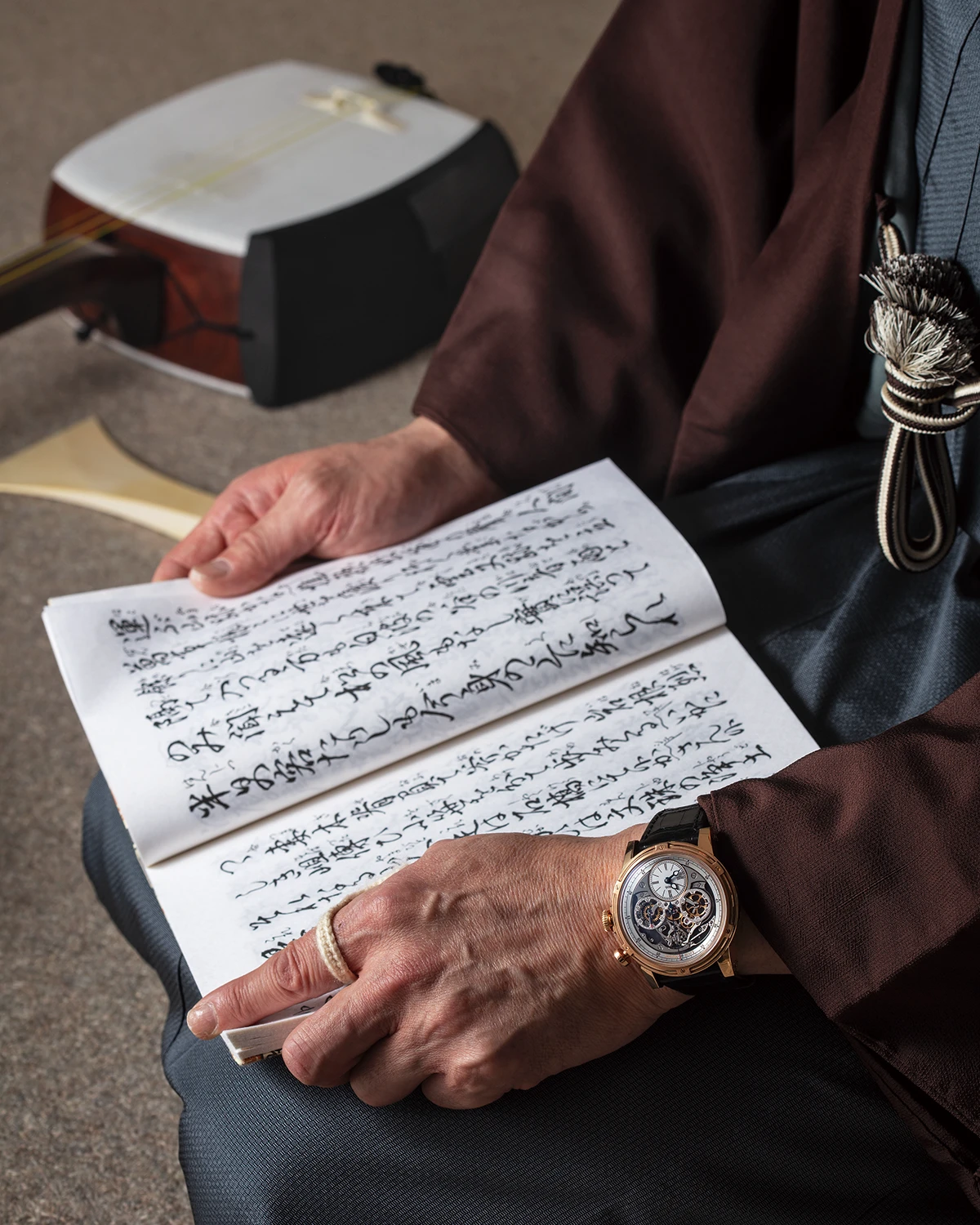
Born in Taito Ward, Tokyo in 1966. He was captivated by Nagauta (traditional Japanese narrative music) that he heard on the radio while in high school, and entered the world of shamisen (a three-stringed Japanese instrument) at the age of 18. In 2012, he succeeded to the eighth generation of Nagauta shamisen players, a tradition that has continued for 230 years. Around 2018, he began to develop an interest in watches, and amidst the adversity of the COVID-19 pandemic, he started seriously collecting watches. He is currently the Japanese person who owns the most Louis Moinet watches.
Photographs by Yu Mitamura
Hiroyuki Suzuki: Interview and text
Text by Hiroyuki Suzuki
Edited by Yukiya Suzuki (Chronos-Japan), Yuto Hosoda (Chronos-Japan)
[Article published in the July 2025 issue of Kronos Japan]
"Art is not tangible, it's intangible. That's why artistry resides in the process of getting there. I want to continue to be chosen by watches."
For watch enthusiasts, and collectors in general, every encounter is unique and fleeting. When collecting based on a specific theme, one's antenna for that specialized field becomes sharper, increasing the accuracy of information gathering. This tendency is particularly strong among core collectors who meticulously read this magazine. However, there are also a certain number of collectors who feel chosen by the watches themselves. Mr. M, who owns the most Louis Moinet watches in Japan, is undoubtedly the latter.
The interview took place in an apartment close to one of Tokyo's busiest districts. In the room closest to the entrance, which had a walk-in closet, we were greeted by a gentleman in traditional Japanese attire who looked impeccably presentable. His polite responses to the detailed requests of the interview team, who were all likely younger than him, were evident in his courteous manner, each time saying "I have received your request."
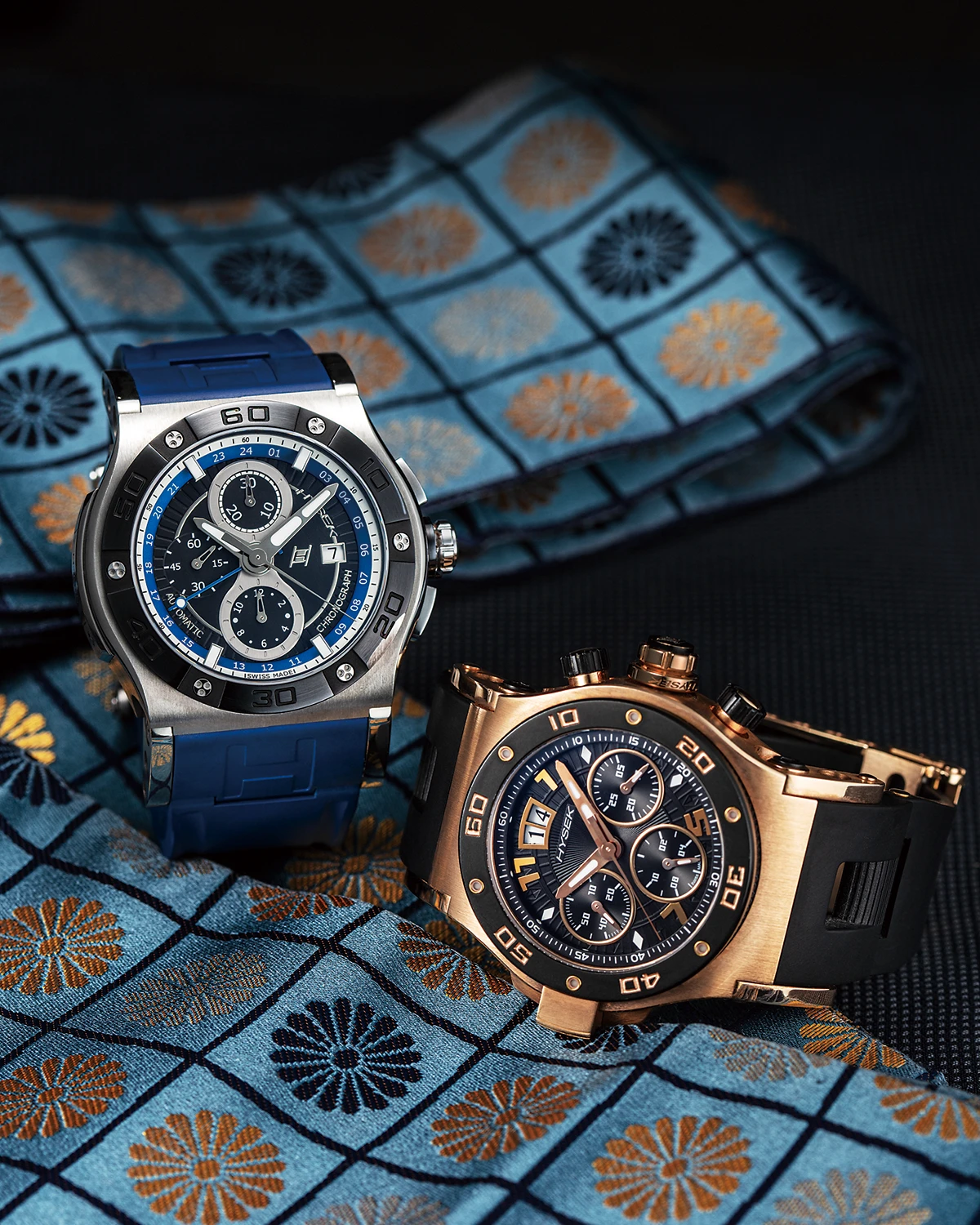
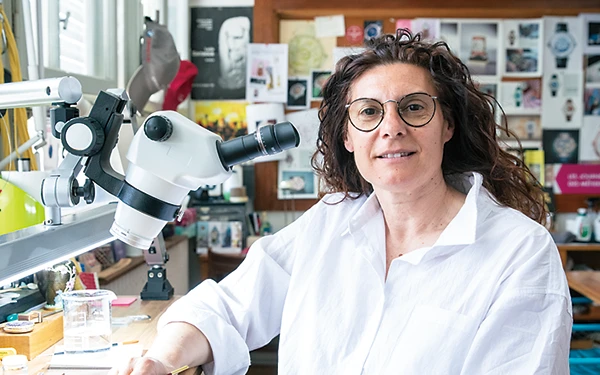
Ms. M's profession is a shamisen player of nagauta (a type of Japanese classical music). She is the eighth generation to inherit the prestigious name of a school that has been in operation for 230 years. I learned that this room is used as both a dressing room and a practice space, but there is absolutely no traditional Japanese decor to be seen. Two collection boxes of watches are placed alongside framed Western paintings, containing watches from Louis Monet, as well as Hysek, Rado, and Minase. In a typical interview with a watch enthusiast, Ms. M would then begin to eloquently describe her deep love for Louis Monet, but let me preface this by saying that this interview will not delve into that topic. Ms. M is not what you would call a watch enthusiast.
M's entry into the world of the shamisen began when, at the age of 18, she heard its melody on the radio. Completely captivated by the nagauta she heard for the first time, M immediately became an apprentice to the seventh generation shamisen player, who would later become a Living National Treasure. This was in 1982. Two years later, in 1984, she joined the music department of a certain theater company as a shamisen player. After being promoted to lead shamisen player (tate-jamisen) in 2002, her achievements through numerous performances were recognized, and in December 2012, she inherited the name of the eighth generation shamisen player. In 2015, she became the head of the music department, which prompted her to move to her current residence and practice space. The following comment was left in an interview with M in Weekly Gendai at the time.
"I didn't want to be bound by preconceived notions that shamisen music is inherently Japanese. (omitted) Since starting to live here, I feel that my lifestyle and fashion have become more refined. I didn't intentionally try to change, but I naturally started choosing interiors and clothes that suited this house. This house has changed me. (omitted) People with ambitions should choose a house that is a little above their means. The house will guide the person living in it to reach their goals."
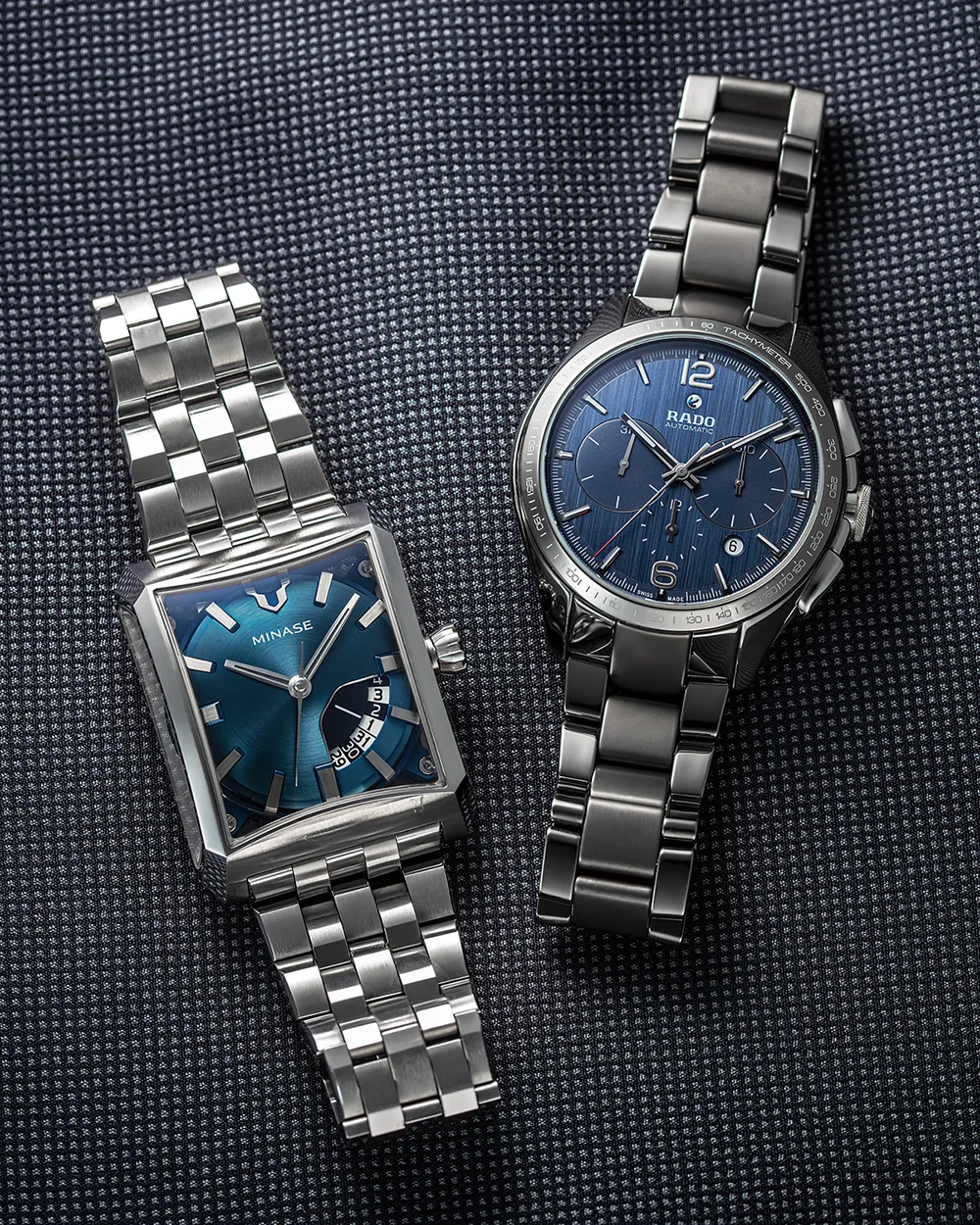
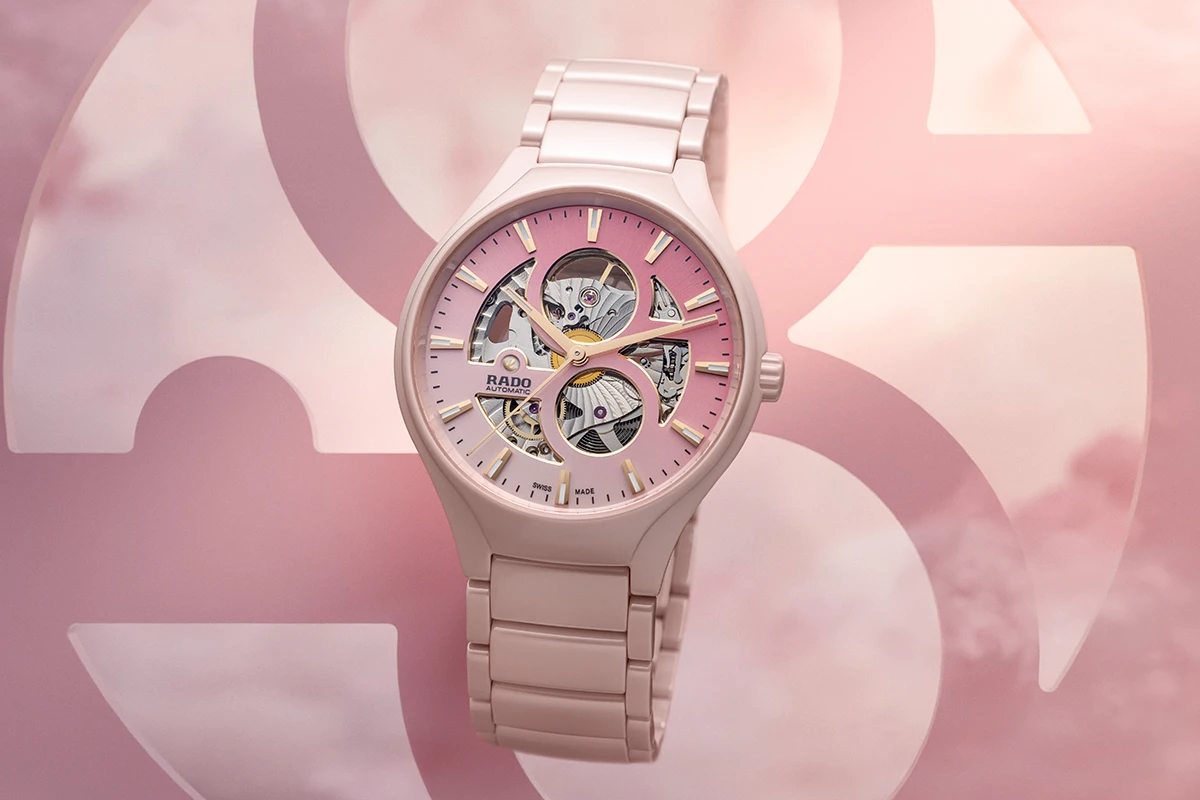
It would be just a few years later that Mr. M would encounter his first watch. First, a Minase, then a stainless steel Hysek from Rado. Mr. M met the magazine's editor-in-chief, Masayuki Hirota, at some event and was persuaded (or rather, encouraged) by his words, "A watch is a symbol of good fortune in society," to dive into the world of watch collecting with an all-gold Hysek. And that's when he fell into his first rabbit hole.
"The watches we choose aren't Rolex or Omega, or anything like that, for speculative purposes. Those are... a frenzy, aren't they? We're not like that. We choose watches that have a beautiful face. Watches that we truly feel are good watches. That's the kind of watches we've always chosen."
While all this was going on, the COVID-19 pandemic hit, and people in the entertainment industry, including M, suffered a devastating blow. At first, M wondered what would happen to him now that he had bought such an expensive watch. But strangely enough, his work continued to come in. He seemed to be able to weather the difficult times without even touching the loan from the Japan Finance Corporation that he had set aside for emergencies. It was around this time that M encountered his first Louis Monet watch. This was in 2020. The pandemic was still in full swing, and the future was uncertain. At the time, De Bethune was apparently popular among M's acquaintances, but for some reason, M was strongly drawn to Louis Monet. And with a "reverse thinking" approach, he decided to buy the Louis Monet watch. He even used his government stimulus payment to buy it. And strangely enough, his work started to come in smoothly again.
"Everyone around me seemed to think I would run out of steam by now, but that wasn't the case at all. It's strange, isn't it?"
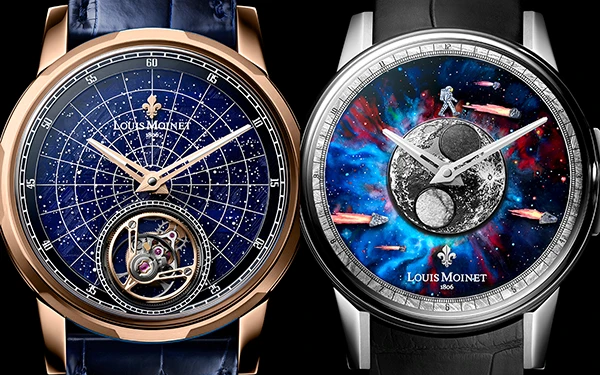
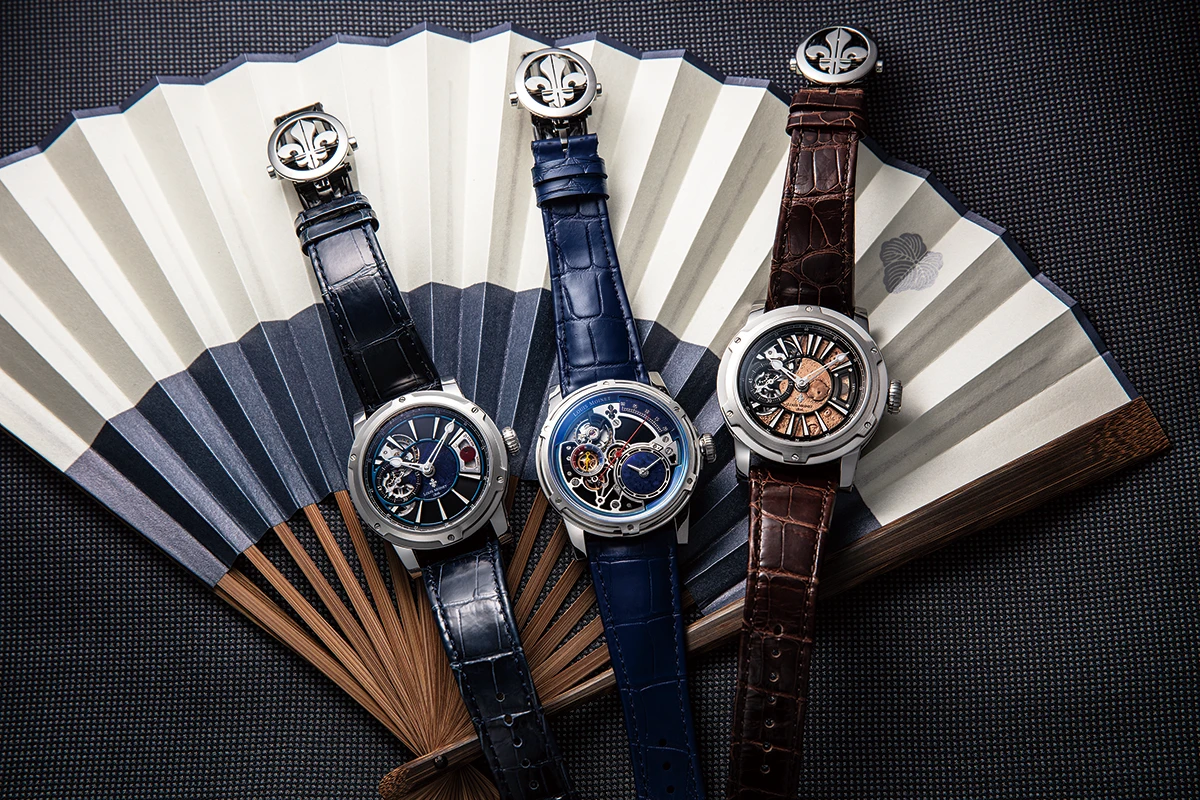
The Louis Moinet watch that Ms. M encountered at this time was the "Memoris," released in 2014 to commemorate the company's 10th anniversary. To mark the 200th anniversary of the "Contour de Tiers," a 1/60th of a second counter invented by 19th-century watchmaker Louis Moinet (which was recognized by Guinness World Records in 2016 as the first chronograph ever), the watch features an original chronograph movement developed in collaboration with the brand's ébauche manufacturer. Even if one were to wish to acquire a Memoris now, it would likely be impossible. With variations in case material and dial, a total of 12 different Memoris models were produced, each a rare limited edition of only 12 pieces. Due to their rarity, they almost never appear on the secondary market.
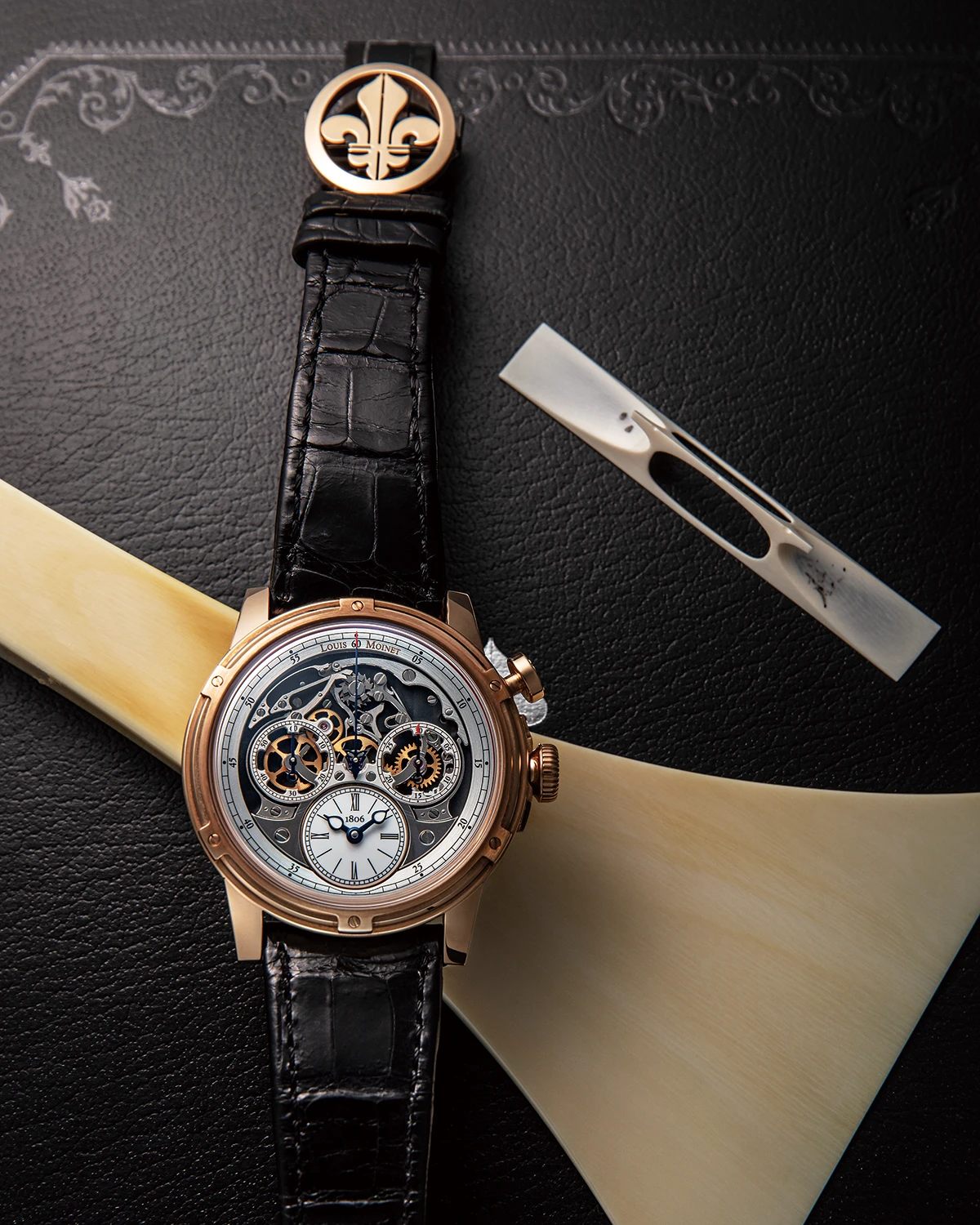
"Since acquiring this watch, I've realized something. Why do royalty, nobility, and people who have achieved great success and fame—those ultra-luxury people—choose Louis Moinet? It must be because they understand the power that watches possess. There are only 12 of these Memoris watches in the world. That means only about one in 6 million people will get one. It's not something I could ever obtain, even if I wanted to. So why is it here? It's because the watch chose me. I feel a strange connection, as if it sensed that I would treat it well, or that it wanted to treat me well. Of course, it's a luxurious watch, but to me, it's not a luxury item at all. You see, I don't drink alcohol, so I don't go out on the town at night. But I always wear this watch to important occasions like my professional debut ceremony or concerts, where I would normally wear formal attire. It's a mysterious watch."
For Ms. M, her encounter with the "Tempograph Neo Lapis Lazuli," her fourth Louis Monet, was surely a fated encounter. Louis Monet produces only about 500 watches annually. More than half of these are ordered by the royal family and other elites, leaving only about 200 on the market, with Japan receiving at best only 10%. Given this situation, the question arose: how many Louis Monet watches does the person with the most in Japan own? At that point, Ms. M and another person were tied with three watches each. One more would make her number one in Japan. As already mentioned, Ms. M's mentor, the seventh generation, was a Living National Treasure, essentially the number one in Japan. For Ms. M, the eighth generation, becoming number one is the next height she aspires to reach. Just as these two "number one" titles were about to converge, the Tempograph appeared before Ms. M. It was only natural that she would then decide to purchase it.
"These kinds of watches aren't something you can just find by wishing for them. No matter how hard you search, they won't come to you. We can only wait calmly and patiently. For that, daily effort is essential."
What Ms. M truly admires about Louis Moinet watches is their inherent elegance. Ben Affleck once wore a similar Memoris watch with a black tie at the Academy Awards. Although there are differences between Western and Japanese attire, Ms. M says that she would be overshadowed by the watch's elegance if she wasn't dressed formally.
On the other hand, the watches produced by the Louis Monet brand are also known for their high level of technicality. The theme of "Mechanical Wonders," backed by the historical story of being the progenitor of the chronograph, is one example that demonstrates how functional value can be elevated to the level of art. However, it seems that Mr. M is more strongly attracted to the artistic spirit that lies behind the functionality itself. Mr. M describes the mechanical beauty created by the functional parts as being like an arabesque.
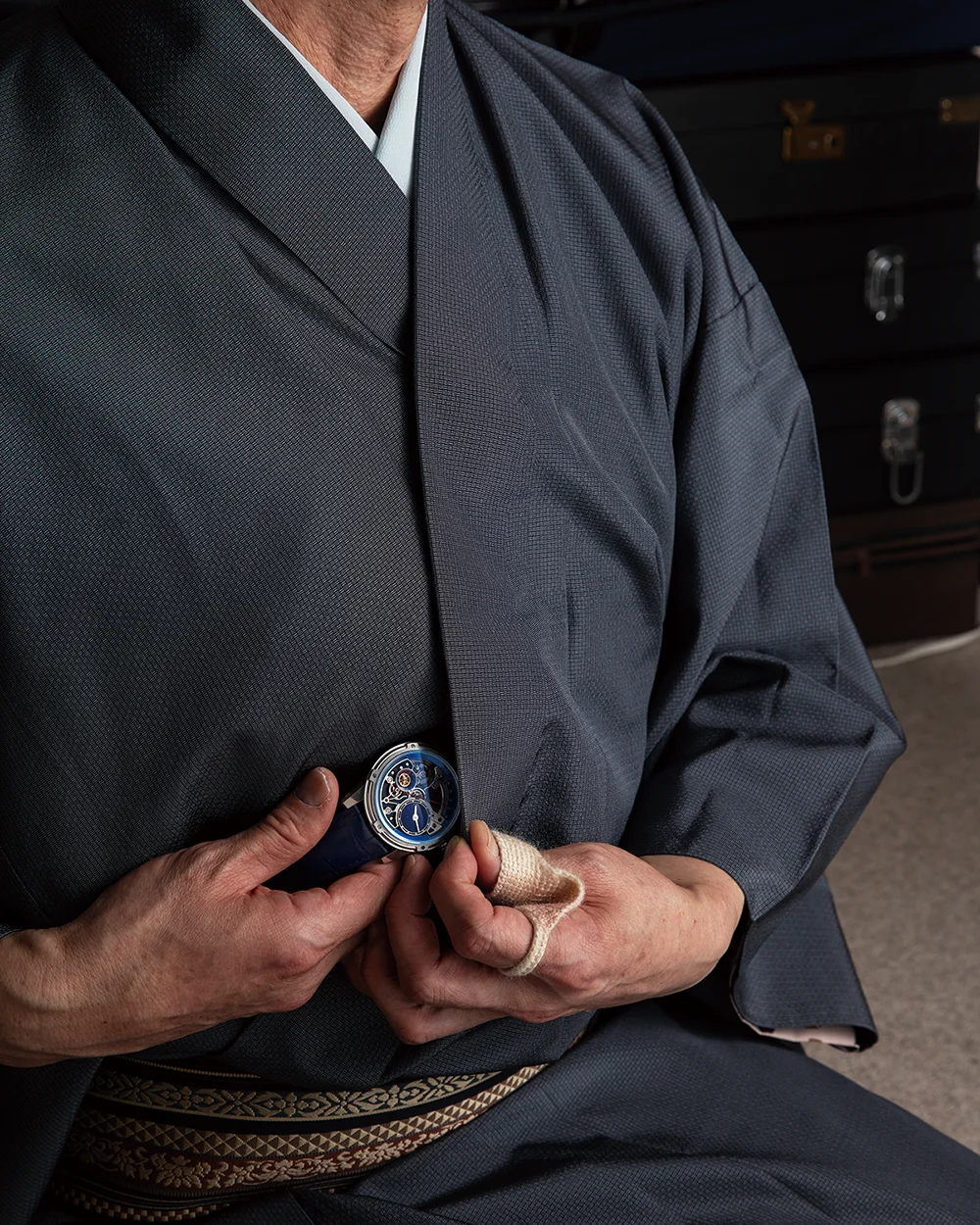
"Our world is not tangible, but intangible. Sound disappears the moment it's made. What can we evoke in that fleeting moment of disappearance? How much preparation can we put in for that? Artistry is nothing more than the accumulation of such things. Functions and numbers remain in the mind, but passion and words remain in the heart. Owning a good watch adds a touch of elegance. When you dive into owning a watch, you feel like your own rank goes up by one level. You don't buy a watch because you've become successful. The timing comes to the watch. To achieve that, you have to constantly improve yourself and be prepared for the right moment. I've always wanted to be chosen by watches."
Choosing a watch to commemorate something is an act of affirming one's past self. In contrast, Ms. M chooses a watch to elevate her future. This, too, must be an expression of the power that watches inherently hold.