
The "Suiyo Kyugi" (pendulum orb), created during the Edo period to accurately measure the timing of astronomical phenomena, is a precision instrument that uses a uniquely Japanese mechanism to accumulate and display the oscillations of a pendulum. Currently, only eight of these instruments are known to exist worldwide. One of them was donated to Omi Jingu Shrine in 1966. In 2026, the 60th anniversary of the donation, Taisuke Someya and Mitsutoshi Ito, teachers and clockmakers at the Omi Clock School, took on the challenge of fully restoring and restarting the instrument. This article follows the repair process that brought this rare astronomical observation device back to life, as they faced the unique challenges of handling a cultural artifact.
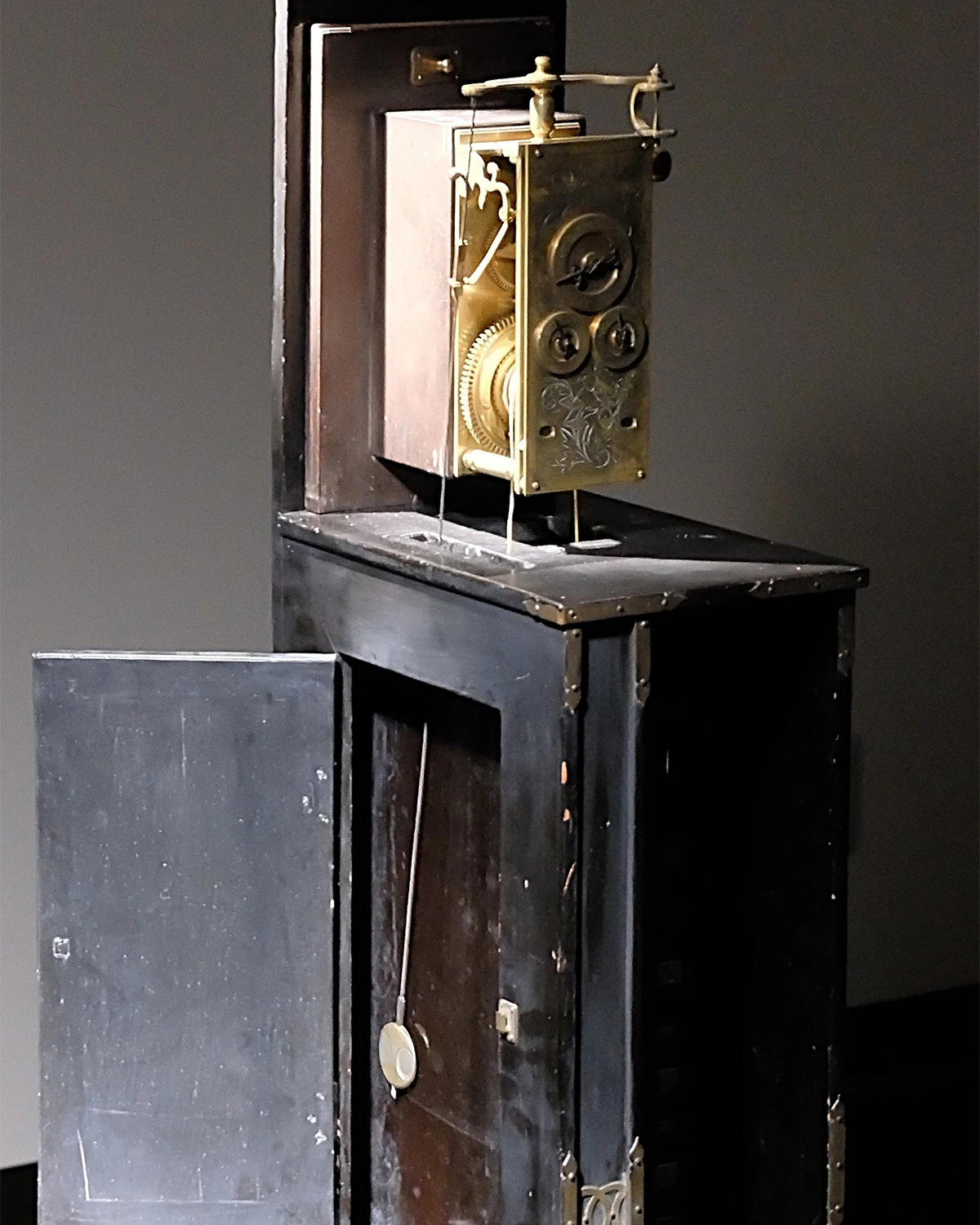
The "Suiyo Kyugi," an Edo-period astronomical observation instrument owned by Omi Jingu Shrine, has been restored by the Omi Clock School.
Text by Tomoyo Takai
[Article published on January 30, 2026]
A pendulum globe created for astronomical observation.
Omi Jingu Shrine in Otsu City, Shiga Prefecture, houses the main hall dedicated to Emperor Tenji, the Omi Watchmaking School (officially known as the Omi Watchmaking, Eyewear and Jewelry College), and a watch museum. In honor of Emperor Tenji, who is said to have created the first water clock (clepsydra) in Japan, the museum houses and displays valuable clocks, including traditional Japanese clocks.
Among its collection, the "Suiyo Kyugi" (pendulum orbicularis) is particularly unique. This precision instrument for astronomical observation, manufactured in the late Edo period, is said to be one of only eight known to exist in the world. "Suiyo Kyugi" is the Edo period term for a pendulum, and the Suiyo Kyugi is a device that utilizes its isochronism to automatically accumulate and display its oscillation frequency.
It is believed that in the 1770s, Goryu Asada, who was studying Western astronomy in Osaka, and his disciples Yoshitoki Takahashi and Shigetomi Hazama devised this device for measuring the timing of astronomical phenomena. The device was manufactured by Tosaburo Toda, a metalworker from Kyoto.
At the time, when measuring the timing of astronomical phenomena such as "stellar occultations" (when the moon obscures stars or planets), a pendulum was swung starting at noon (when the sun reached its highest point in the sky), and the frequency of the oscillation at the moment the phenomenon occurred was recorded. By comparing this with the total frequency of oscillations throughout the day, the exact time of day when the astronomical phenomenon occurred was determined numerically. However, continuously counting the oscillations for long periods of time without making mistakes was a great burden for the observer.
The pendulum oscillator was devised to reduce the burden on the clock by mechanically accumulating the oscillation frequency. One swing of the pendulum is counted as one oscillation, and the one in the collection of Omi Jingu Shrine counts approximately 60,000 oscillations in 24 hours. The front has three dials and two small windows. The large dial shows 1 to 100, the small dials show 100 to 1000 and 1000 to 10,000, and the small windows show 10,000 to 1,000,000 in Chinese numerals. In other words, the characteristic of this device is not simply that it uses a pendulum as a clock regulator, but that it has a mechanism that "counts" the oscillation of the pendulum itself.
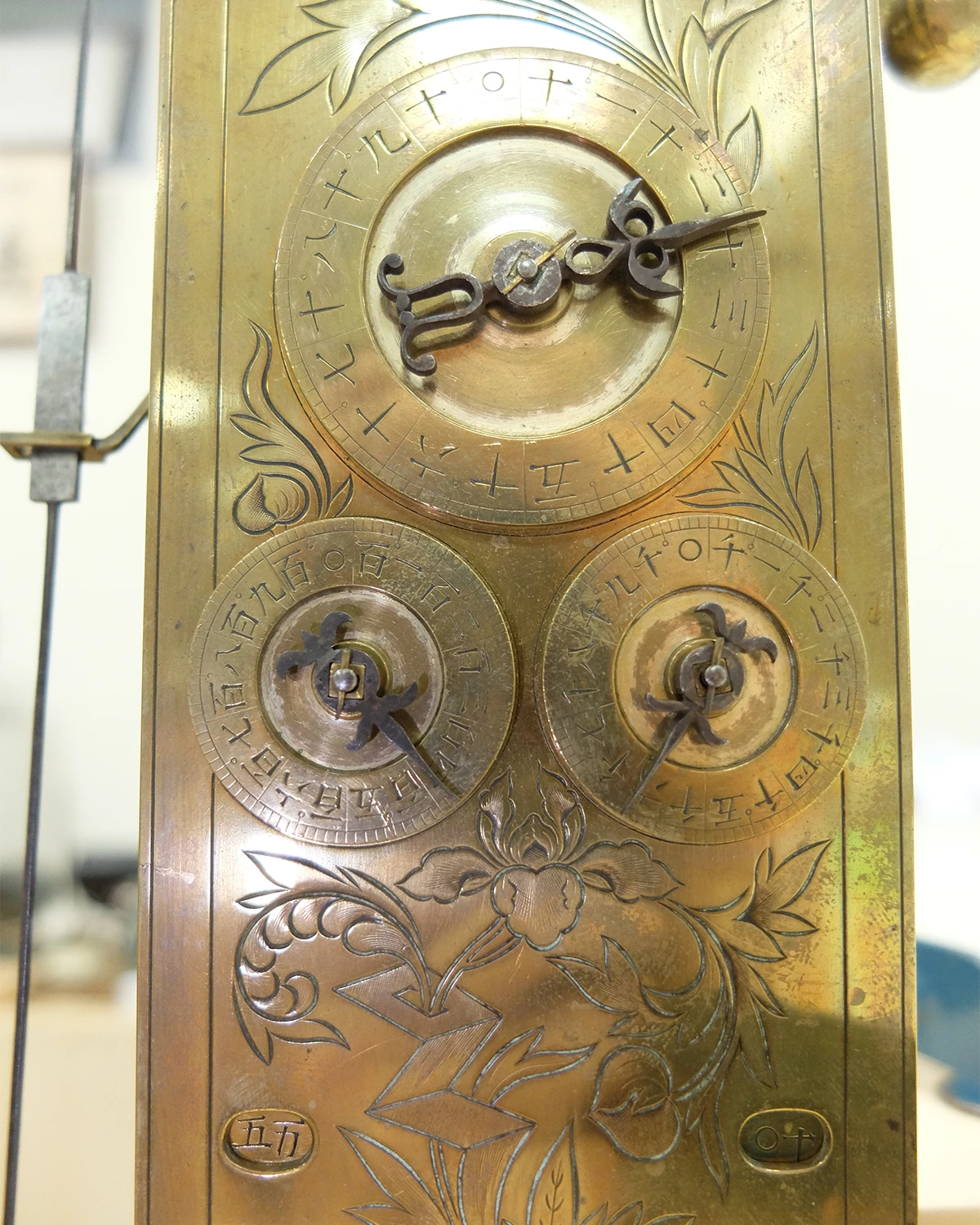
The front of the pendulum orb sphere. Three dials and two small windows display the cumulative frequency of the pendulum's oscillations in decimal form.
According to Kazuo Murakami, who researched mechanical technology in the Edo period and authored "Complete Translation of the Illustrated Compendium of Karakuri," there are several types of the eight pendulum ores that have been confirmed to exist. These include those that were portable and used for astronomical observations in various locations, those that were primarily stationary and equipped with a shaku-dokei (a type of Japanese clock that displays the time according to the length of day and night), and the "shōjiban futenki" type, which was uniquely used in the timekeeping system of the Kaga Domain. Among these, a common technical feature is the unique escapement mechanism that displays the cumulative value of the pendulum's oscillations in decimal form.
A typical Western crown escapement uses a single odd-toothed crown gear to act on two pallets. In contrast, a pendulum escapement uses two even-toothed crown gears, each with 10 teeth, facing each other. A pawl transmitted from a pendulum acts between them, converting the pendulum's motion into a decimal gear rotation. The pendulum's reciprocating motion is accumulated through this mechanism and transmitted to the subsequent gears.
This uniquely Japanese mechanism is what distinguishes the pendulum globe from a mere pendulum clock, characterizing it as a precision instrument for astronomical observation.
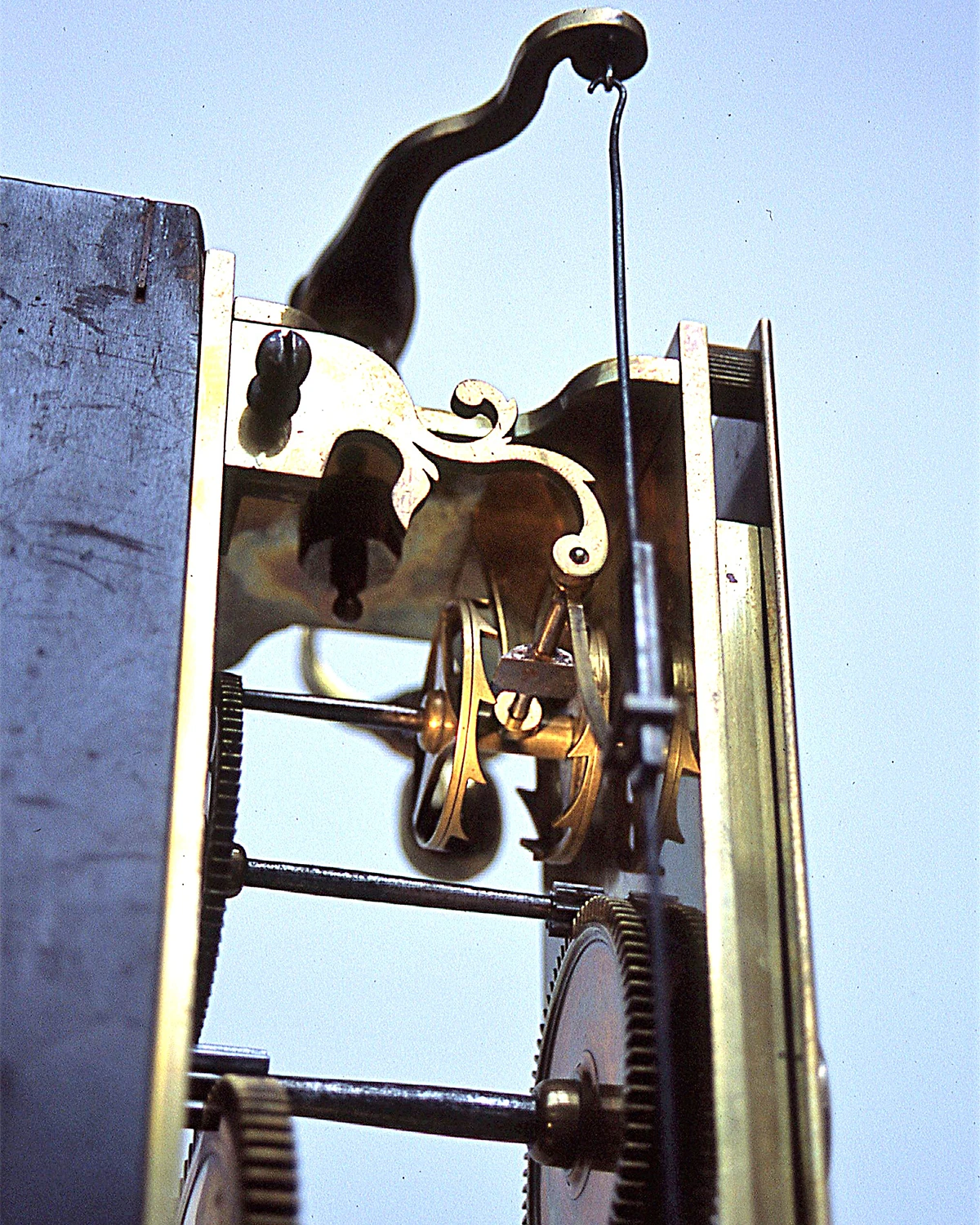
The unique escapement mechanism of the pendulum-type sphere uses two 10-tooth crown-shaped gears facing each other, with a pawl transmitted from a pendulum acting between them.
One of the eight remaining floats at Omi Jingu Shrine
The pendulum orbital, now in the possession of Omi Jingu Shrine, was discovered in April 1966 at an antique shop in Kyoto by Hadley Wheeler, a member of the Tokyo chapter of the National Association of Clock Collectors (NAWCC). It was purchased through donations from members of the Tokyo chapter and donated to Omi Jingu Shrine that same year.
This particular specimen is a type that has a ruler clock mounted on the lower part of the pendulum orbital body. The appearance, including the casing and the ruler clock, is identical to that depicted in the "Kansei Calendar Book" published in 1844, and this specimen is considered to be the only surviving example that retains the same type of casing.
The scale clock section is equipped with a mechanism related to the time display using the irregular time system of the Edo period. The time on the scale clock is indicated by a pointer attached to a weight that is the power source for the pendulum sphere body. However, the current weight is not original. It is a repurposed spring-driven clock thought to have been made after the Meiji period, and has been replaced with a weight that is integrated with a striking mechanism that rings the time signal bell.
Full-scale restoration in preparation for the 60th anniversary of the donation.
Because this pendulum orbiter is a valuable cultural artifact, it has been stored in a way that minimizes the operation of its mechanism. In the 1970s, brief operational checks were conducted during two disassembly inspections, but there have been no opportunities to confirm stable operation over a long period since then.
Therefore, in 2025, the following year, 26, marked the 60th anniversary of the donation, and a plan was made to put it back into operation. The goal was to publicly display a working pendulum sphere at the 60th anniversary water clock festival. It was Mr. Kazuo Murakami who spearheaded this project.
However, because it had not been operated for a long period of time, none of the current personnel had actually confirmed that this particular unit was functioning properly and continuously. When they tried winding up the power source weight and moving the pendulum, the mechanism did not work.
The people put in charge of the repairs were Taisuke Someya and Mitsutoshi Ito, teachers and watchmakers at the Omi Watchmaking School, which is affiliated with Omi Jingu Shrine.
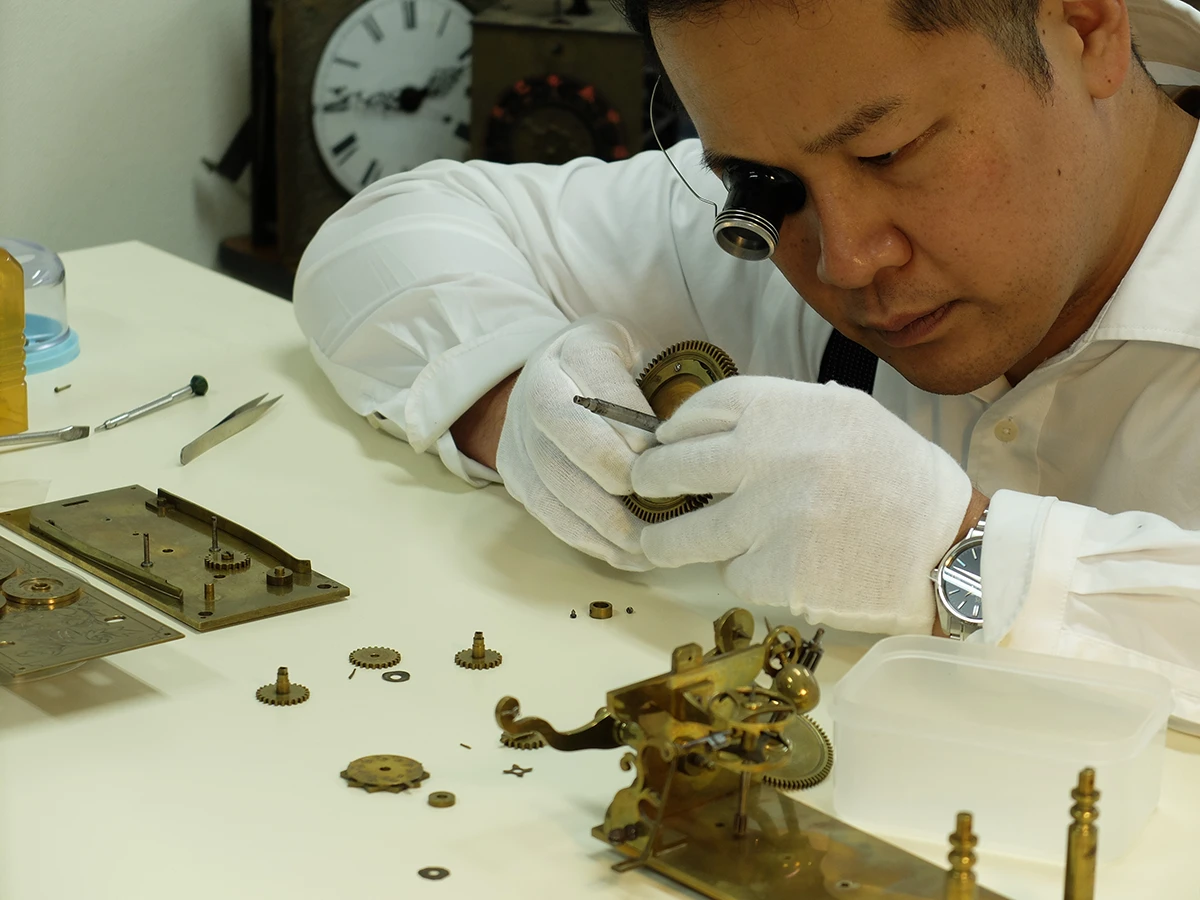
Taisuke Someya checks the condition of the gears. Mr. Someya is a watchmaker who obtained the CMW (the highest class of watch repair qualification certified by the Japan Watchmakers Association) in his twenties. Furthermore, in his thirties, he was selected as a "Contemporary Master Craftsman," becoming the youngest recipient at that time, demonstrating his exceptional skills.
The biggest challenge is "not destroying it."
According to Mr. Someya, the most difficult part of this repair was "doing the work without breaking anything."
The old wooden casing had insect damage and peeling paint, and the glass covering the machine was made up of thin frames, so extreme care was needed during relocation to avoid damaging the joints and paint.
Handling the pendulum also presented a challenge. It needed to be removed for transport, but the swinging rod was made of thin steel, approximately 1.5mm in diameter, and had to be bent during attachment and detachment. The progression of rust and the condition of the steel (※editor's note) were unknown, and applying excessive force could damage the swinging rod or mounting points.
*Tempering: A heat treatment process that involves "quenching" and "tempering" of metal to optimize the balance between hardness and toughness.
Inside the mechanism, the meshing height of the gears on the back of the dial was adjusted. On the other hand, wear and tear was deliberately left unrepaired by polishing or other methods, prioritizing the preservation of the original shape.
Furthermore, regarding the weights and striking mechanism, which are thought to have been modified in later periods, the policy was adopted to preserve them in their current state rather than restoring them to their original form. Modifications for the striking mechanism were also found on the back of the clock, and it is said that Katsuhiro Sasaki, an honorary researcher at the National Museum of Nature and Science, advised that it would be desirable to preserve these as well.
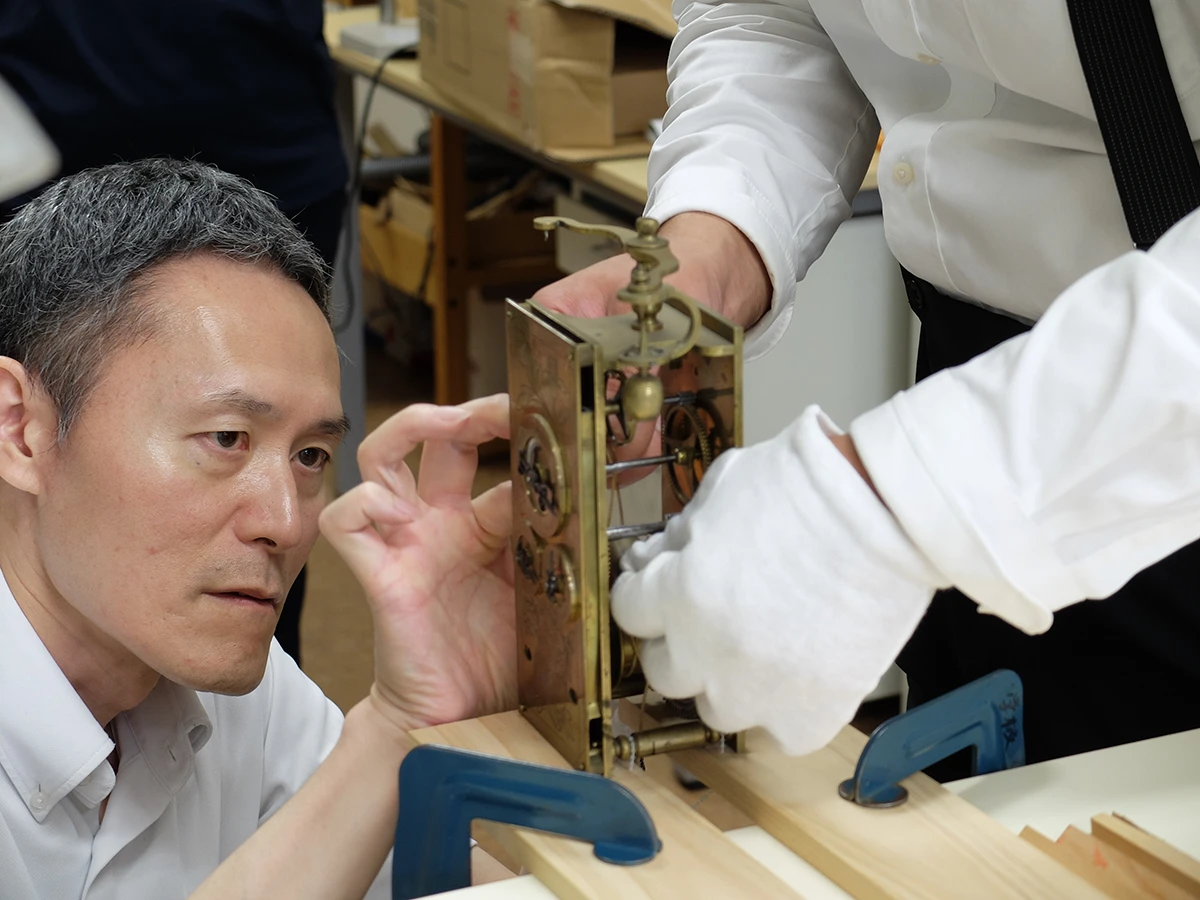
Mr. Mitsutoshi Ito checks the movement of the assembled main body. The striking mechanism (a time signaling mechanism that rings the bell according to the time), which is thought to have been installed after the Meiji era, was also disassembled and repaired during this repair.
In other words, this repair required not just restoring the machine to a "working condition," but ensuring its safe operation again while respecting its current state as a cultural artifact. Thus, careful inspection and adjustment were carried out in the clock museum's workshop, and the pendulum sphere, which had been stopped for a long time, was once again in a stable working state.
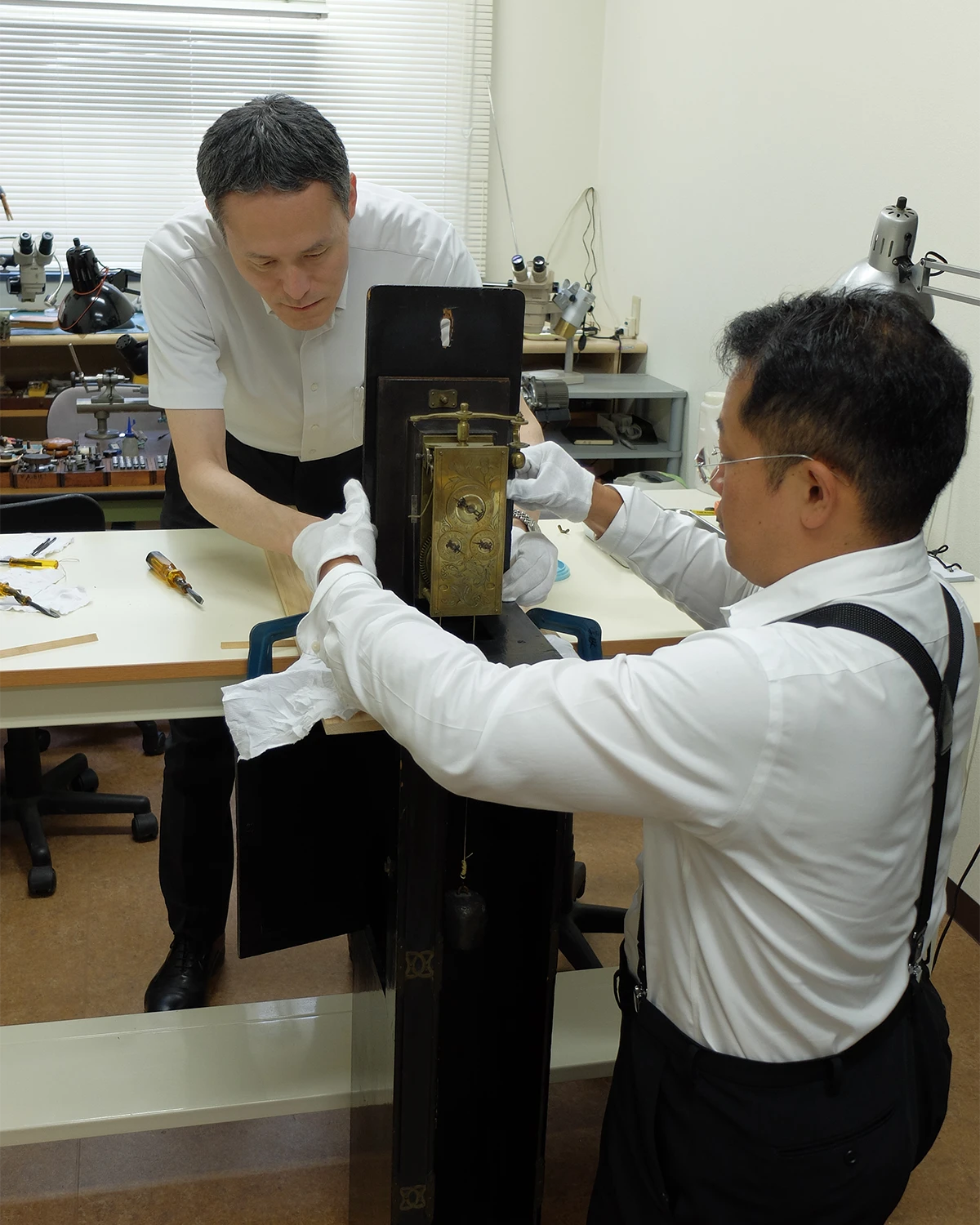
The main unit was removed from the casing, and the condition of each component, including the gears, was checked, disassembled, cleaned, adjusted, and reassembled. The horizontal level was adjusted to check the movement of the pendulum, and the unit's condition was also checked through 24 hours of continuous operation. This series of tasks was carried out carefully by Taisuke Someya and Mitsutoshi Ito over a period of about a year.
Passing on watchmaking technology to the next generation
In modern times, opportunities to repair not only Japanese clocks but also pendulum clocks and mechanical mantel clocks are decreasing. In this context, the significance of a clockmaker taking up a pendulum sphere, an astronomical observation instrument from the Edo period and of which only eight are known to exist in the world, and getting it working again is immense.
And what must not be forgotten is that the restoration was carried out by teachers from the Omi Watchmaking School, and the students were able to observe the process firsthand. Seeing how technicians made decisions as they repaired this historical machine, the students, aspiring to become the next generation of watchmakers, were able to witness this process firsthand, which will undoubtedly contribute to the transmission of valuable skills.
The pendulum orbital will continue to be on display at the Clock Museum in Omi Jingu Shrine. If you have the opportunity to visit Omi Jingu Shrine, be sure to see the real thing and experience the history of this uniquely Japanese astronomical observation instrument and the value that has been passed down to future generations through restoration.
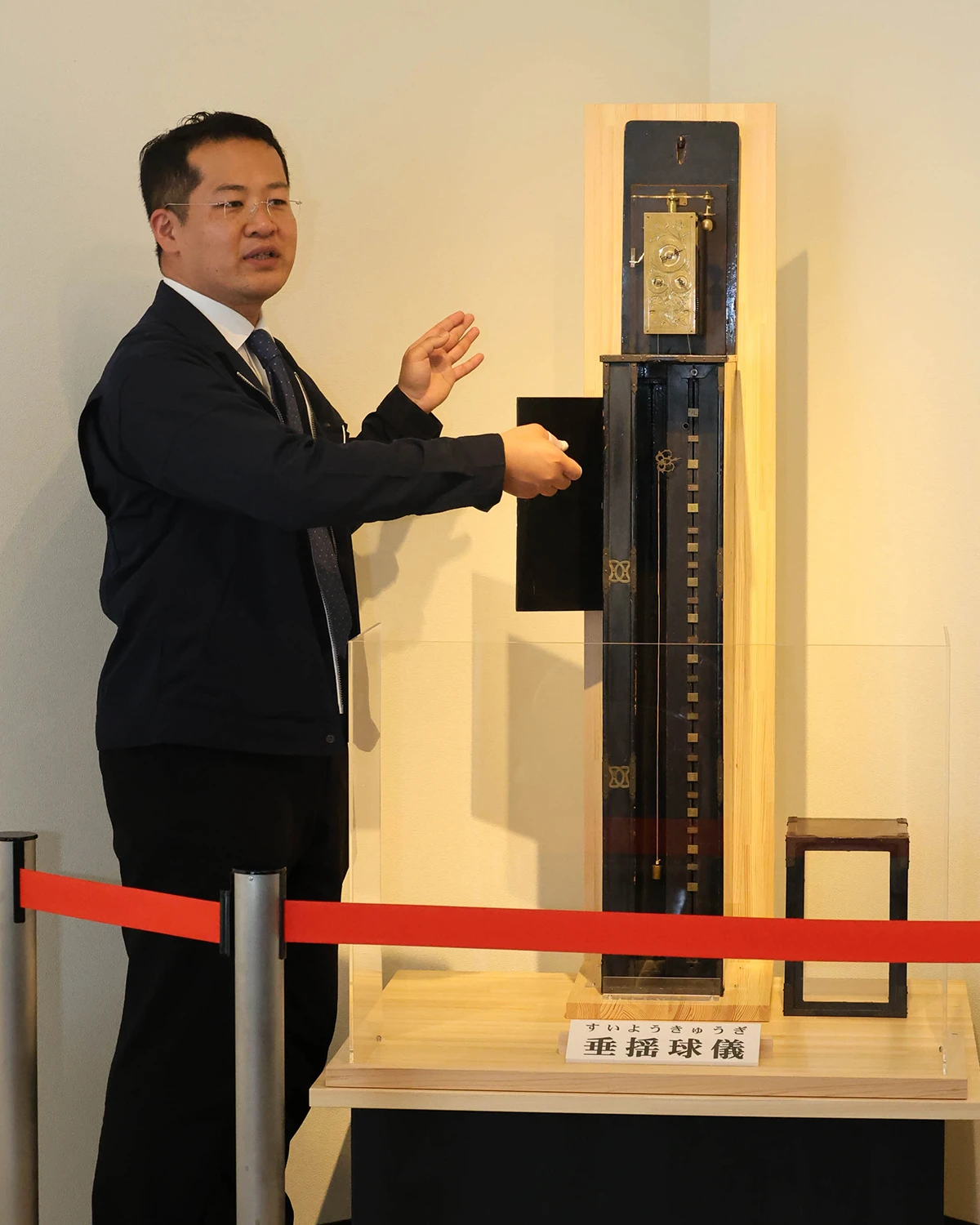
We would like to express our sincere gratitude to Mr. Taisuke Someya, Mr. Mitsutoshi Ito, and Mr. Kazuo Murakami for their invaluable assistance in conducting this interview. (Mr. Murakami also contributed to the webChronos Members Salon.)https://www.webchronos.net/member/(However, under the handle name "teacup," we have received valuable contributions from him regarding Tanaka Hisashige's perpetual clock, etc.) We express our sincere gratitude to the three of them and everyone involved.