Orient has unveiled its new 2026 collection, the "Orient Flusso." This new collection draws inspiration from the company's popular "SK" series from the 1970s and 80s, reimagining its distinctive design in a modern way. Rather than a simple reissue, the appeal of this model lies in its bold redesign of the dial and bracelet while retaining the essence of the SK.
Text by Tsubasa Nojima
[Article published on February XX, 2026]
The sophisticated bracelet-integrated watch, "Orient Flusso"
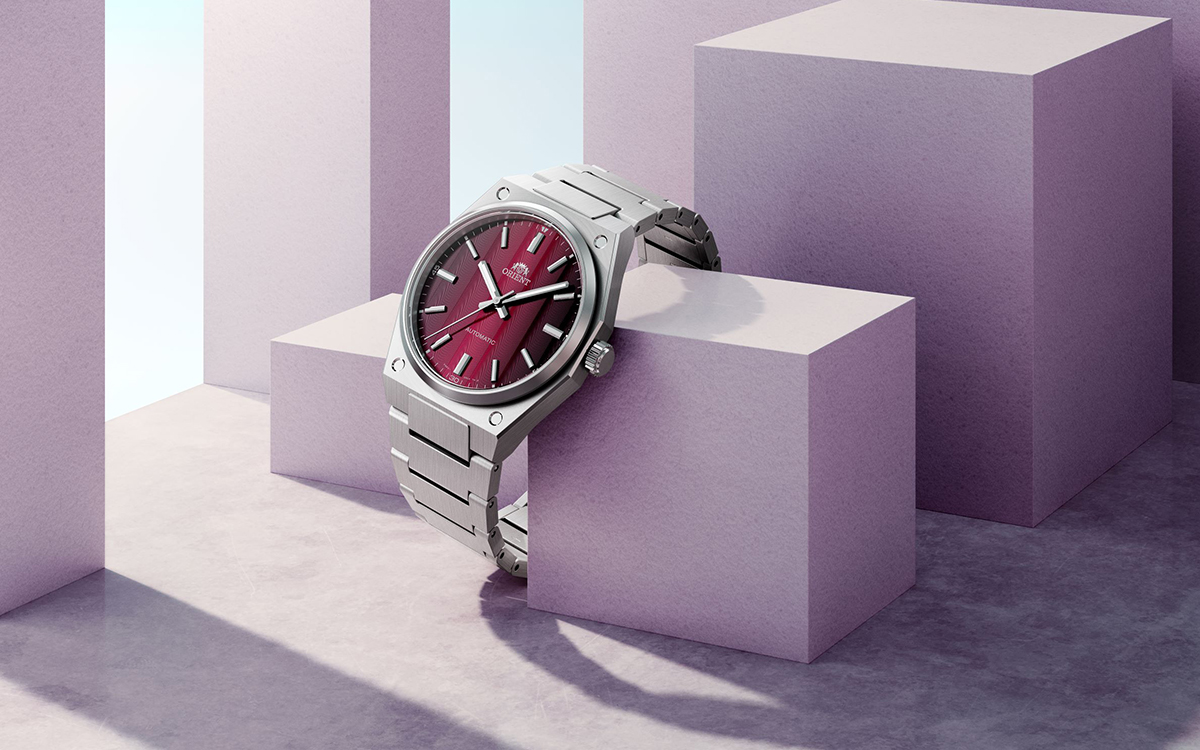
The Orient Flusso, unveiled by Orient as a new model for 2026, is a mechanical wristwatch characterized by its simple dial with bar indices and a seamlessly integrated form from the case to the bracelet. It is equipped with Orient's in-house automatic Cal.F6522 movement. With 10 ATM water resistance and JIS Class 1 magnetic resistance, it boasts practical specifications designed for everyday use.
The model name "Flusso" means "flow" in Italian. As the name suggests, it adopts a full-flow design where the flat case seamlessly connects from the top and bottom to the bracelet. The key to this model is its styling, which presents the case and bracelet not as separate parts, but as a continuous, integrated design.
The variations include three regular models and one limited-edition model with a red gradient dial. At first glance, it might seem like a new release in line with the recent popularity of integrated bracelet sports watches. However, when you look at the details, Orient's distinctive roots become apparent.
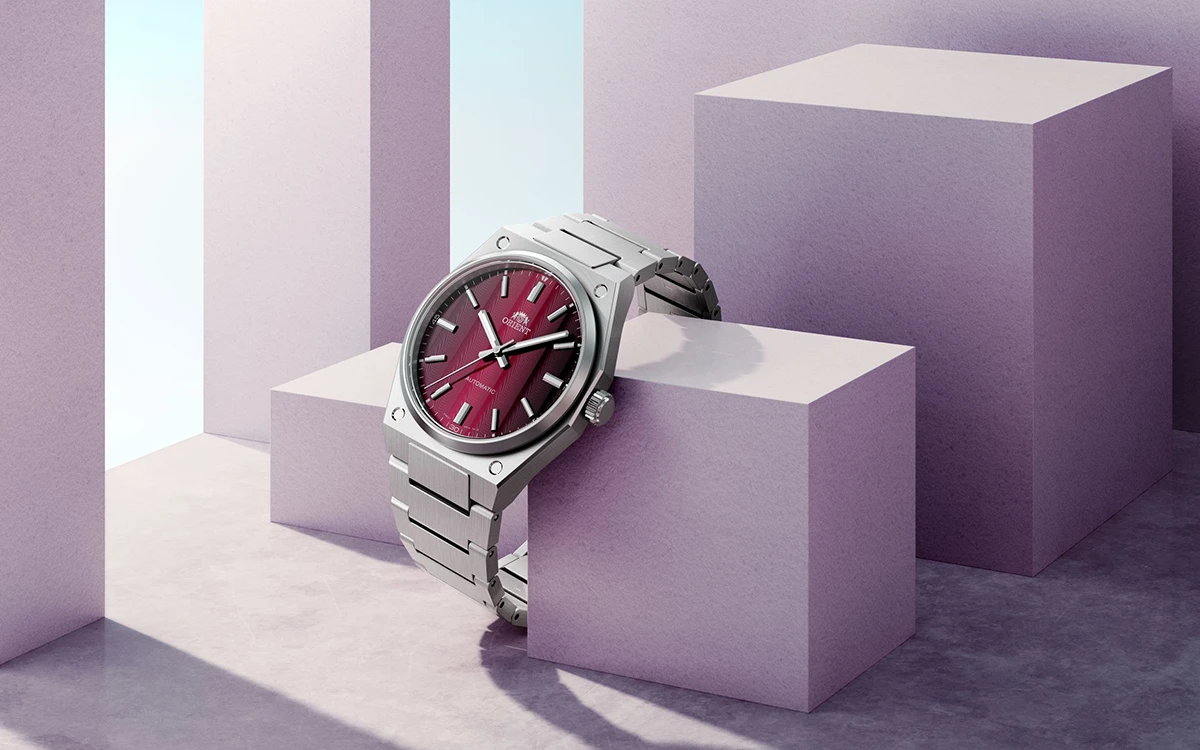
Orient has unveiled its new "Orient Flusso" watch. This timepiece is a modern reinterpretation of the "SK" model, incorporating design elements reminiscent of the original while maintaining a sophisticated look. It features an automatic movement (Cal. F6522), 22 jewels, 21,600 vibrations per hour, and a power reserve of approximately 40 hours. It has a stainless steel case (39mm diameter, 10.9mm thickness) and is water-resistant to 10 atmospheres. It is limited to 4500 pieces worldwide (1100 of which are for the domestic market). The price is 45,100 yen (including tax).
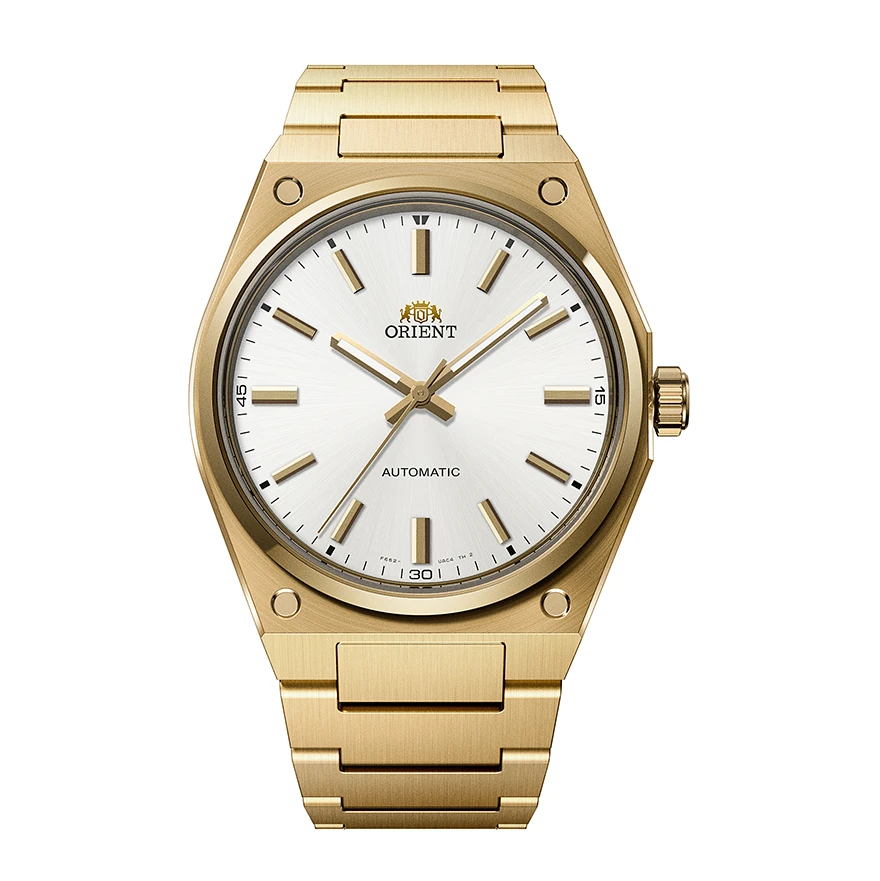
This model features a gold-plated exterior combined with a white dial. The predominantly brushed finish gives it a sophisticated look, making it easy to wear casually despite its gold base. It's an automatic movement (Cal. F6522), with 22 jewels, 21,600 vibrations per hour, and a power reserve of approximately 40 hours. It has a stainless steel case (39mm diameter, 10.9mm thickness) and is water-resistant to 10 atmospheres. Price: ¥50,600 (including tax).
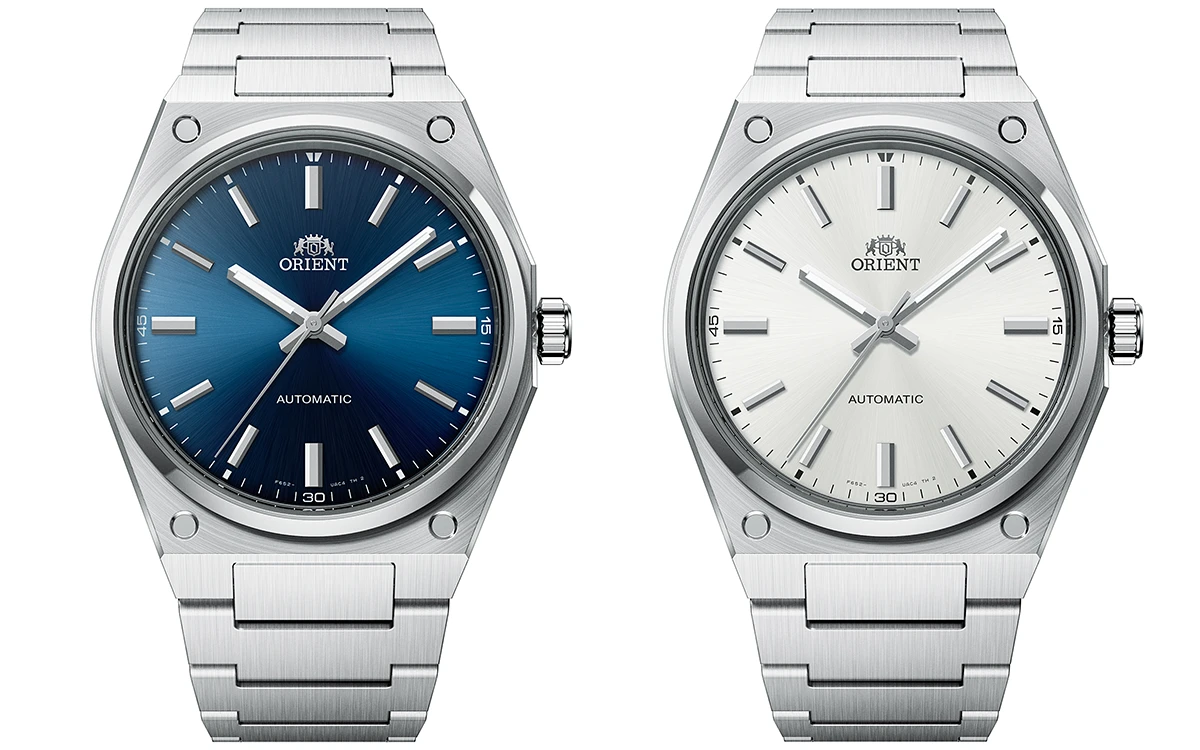
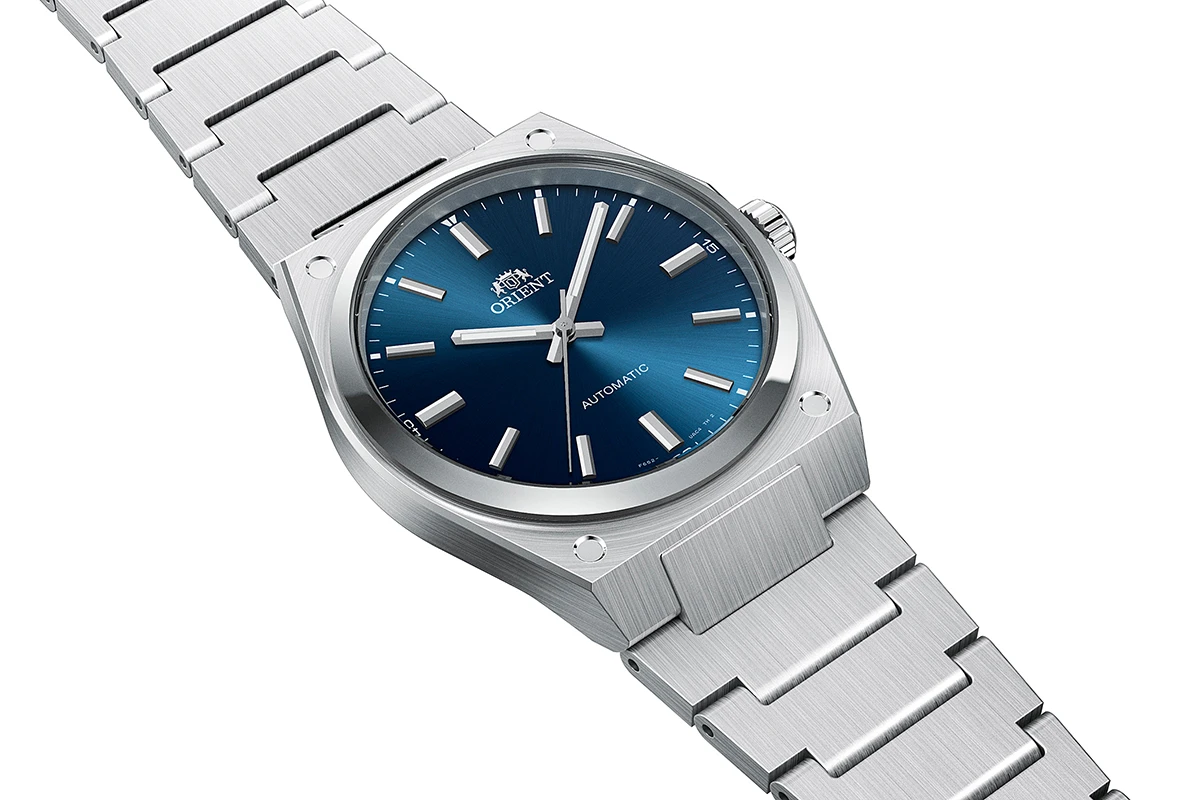
Available in a versatile blue dial model suitable for both formal and casual occasions, and an elegant white dial model. The three-dimensional indices and luminous hour and minute hands ensure excellent legibility. Automatic movement (Cal. F6522). 22 jewels. 21,600 vibrations/hour. Power reserve approximately 40 hours. Stainless steel case (39mm diameter, 10.9mm thickness). 10 ATM water resistance. ¥42,900 (tax included).
The base model was the distinctive "SK" brand that was born in the 1970s.
To understand Flusso, it's essential to look at the "SK (Super King Diver)" that served as its motif. From the 1970s to the 80s, the SK was released in various variations and possessed a strong, instantly recognizable personality, with lines flowing from both sides of the case, which housed the round dial, to the bracelet, and the fixing pins at the four corners of the flat top surface of the case. In 2019, a reissue model was released, reviving the design unique to that era, including the distinctive inner rotating bezel.
Perhaps the most easily recognizable inheritance from the Flusso is the case design. The four corners of the top surface retain indentations reminiscent of the SK, and the case side at 3 o'clock is flat, creating an asymmetrical line. The top and bottom of the case and the shape of the bracelet links have been newly designed, resulting in a smoother, more continuous form.
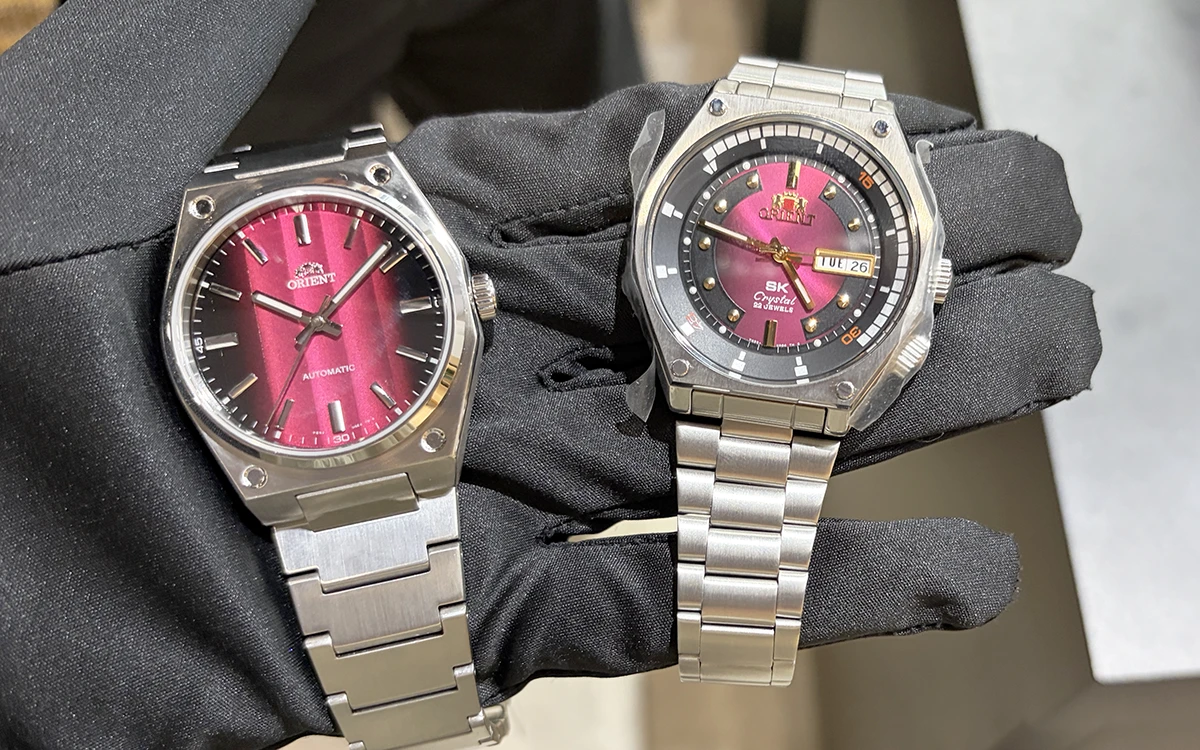
On the other hand, in contrast to the SK-inspired design of the case, the dial is surprisingly simple. The inner rotating bezel that characterized the SK has been removed, and there is no calendar display. The combination of bar indices and pencil-shaped hour and minute hands creates a style that is truly that of a standard three-hand watch. The Orient logo at the 12 o'clock position is also blended into the overall color scheme of the dial, and by reducing the amount of information, the distinctive shape of the case is made to stand out even more.
As expected from Orient, a limited edition of 4500 pieces worldwide, the "RN-BB0205R" red gradient model, is available for fans who want to experience more of the SK style. The dial, featuring a vertical stamped pattern overlaid with a red gradient, evokes a strong 1970s feel.
The case size is a manageable 39mm in diameter, 10.9mm thick, and 47mm long. Furthermore, it features a sapphire crystal for the watch face, which is unusual for this price range. The Orient brand logo is engraved in the center of the screw-down case back, and limited edition models also include a unique serial number.
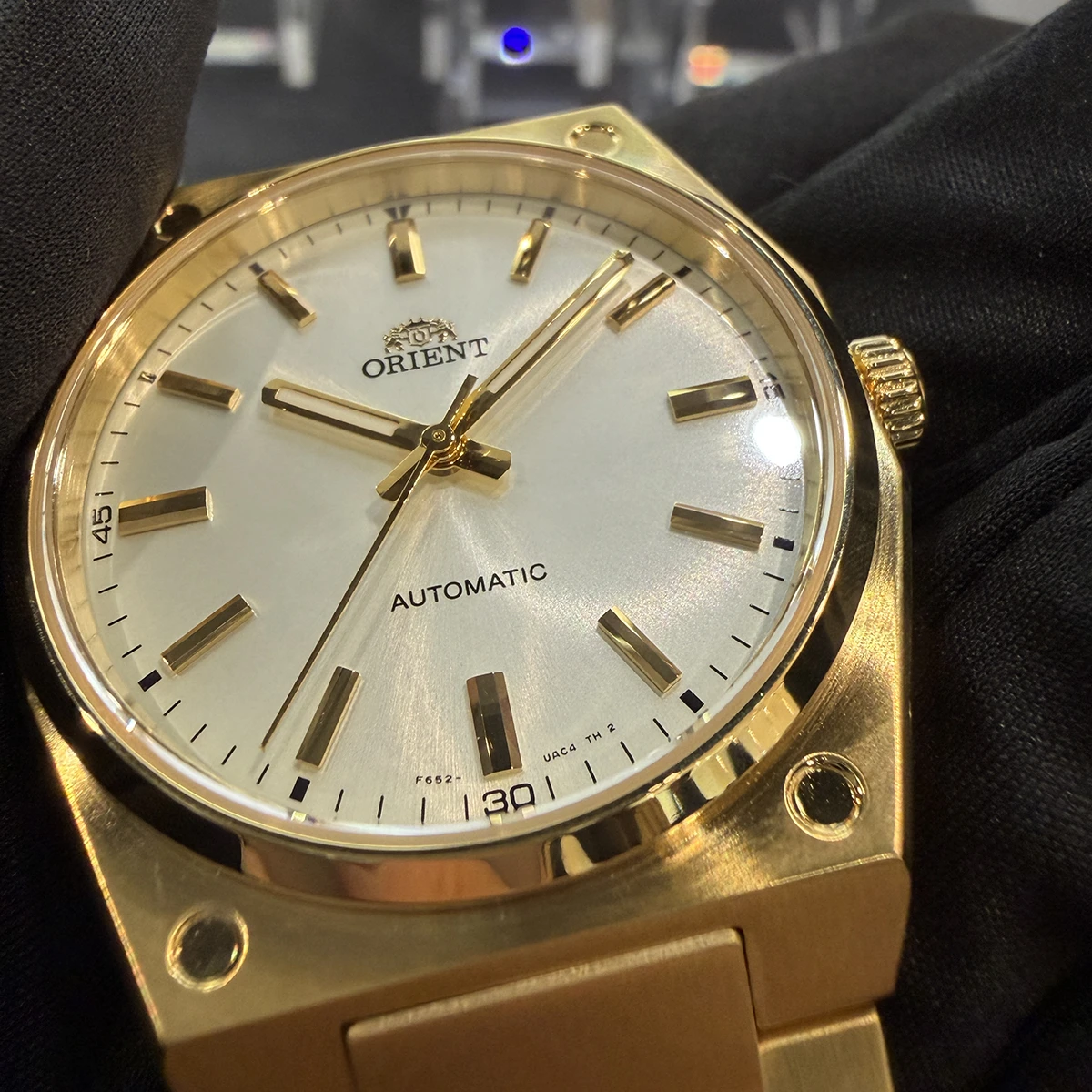
What's noteworthy is the smooth bracelet.
What impressed me most when I actually handled the watch was the stainless steel bracelet. Of course, the aesthetic connection between the case and bracelet is important for a watch that boasts an integrated design. However, considering that a wristwatch is a tool worn on the wrist, it's crucial to pay attention not only to the appearance but also to the comfort of wearing it.
The Flusso bracelet, with its slightly oversized links, gives a sporty impression at first glance. However, when you actually hold it in your hand, it moves so smoothly that you don't get that impression at all. Maintaining continuity from the case to the bracelet, the links drop smoothly downwards from near the ends of the lugs, making it fit on the wrist more comfortably than its case size would suggest. In watches where the case and bracelet appear as one unit, it's not uncommon for the first link to protrude, making the effective overall length longer. In this respect, the Flusso has handled it well.
This brings us to the SK revival model that appeared in 2019. This model features a 41.7mm diameter and 12.6mm thick case with an inner rotating bezel, faithfully recreating the atmosphere of the original SK. A notable feature is the use of a bracelet with links connected by leaf springs, a deliberate choice given its nature as a reissue model.
In contrast, the Flusso belongs to the "contemporary" category rather than the "revival" category, and this is where the difference between the two lies. Because there is no need to faithfully reproduce past SK models, it was able to move away from the constraints of the original and pursue the wearability and texture necessary for a modern wristwatch. While retaining the SK-like case shape, the decision to refresh it with a modern bracelet shows that the Flusso is not just a reissue but a "reinterpretation."
Equipped with the 46 series movement, which has a history of over half a century.
Inside the Flusso is the company's in-house automatic movement, Cal.F6522. Essential to understanding Orient's history is its origin: the Cal.46 series. The 46 series was born in 1971 as the company's core movement and has been continuously used and improved over many years to this day.
While certainly not a luxury timepiece, it boasts sufficient specifications, including manual winding, a hacking mechanism, a daily accuracy of +25 to -15 seconds, and a power reserve of approximately 40 hours. Above all, its appeal lies in the fact that it has been refined over many years, resulting in enhanced reliability. The 46 series, featured in practical timepieces supporting users' daily lives, including tough diver's watches, and having kept time in sometimes harsh environments, embodies a stoicism born from continuous evolution as a tool—a quality absent in high-end movements with complex mechanisms and hand-finishing by skilled craftsmen.
Expectations are high for its potential to become a new staple.
Throughout its history, Orient has produced many unique watches. From colorful dials and bold cases to models featuring world maps, and even "retro-futuristic" designs incorporating elements of cameras, guitars, and automobiles, these watches, far from conservative, continue to be loved by many fans. The SK is one such example. Its information-rich dial with an inner rotating bezel, angular case, and distinctive color scheme possess an irreplaceable charm with its 1970s-esque "unrefined" aesthetic.
The Flusso, with its simple dial centered around bar indices, devoid of the inner rotating bezel and calendar, and its slim case combined with a smooth bracelet, lacks any of that clunky feel. So, is the Flusso, now more versatile, easier for everyone to wear, and easier to match with various everyday outfits, a boring watch? At least when you see the actual timepiece, you wouldn't think so. The indentations at the four corners of the case and the asymmetrical case lines clearly show its ancestry with SK, and therein lies the history that the company has built up over the years.
When reissuing a timepiece, there's a clear model to follow: the original. On the other hand, creating a new watch while inheriting past designs presents a different set of challenges: deciding what to keep and what to change. If SK's revivals are watches meant to be enjoyed for their past individuality, then Flusso is undoubtedly a watch that uses its DNA to create a new classic.
Orient boasts the globally renowned "Bambino" model, and the sporty "Mako" series. In the daily watch category, which sits between these two, several models have competed for prominence. In this genre, where strong individuality limits the occasions in which it can be worn, and prioritizing versatility too much results in a lack of individuality, the Flusso has the potential to grow into a new classic, standing alongside the Bambino and Mako.