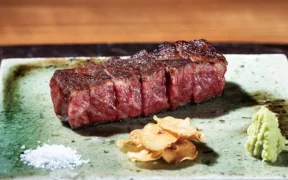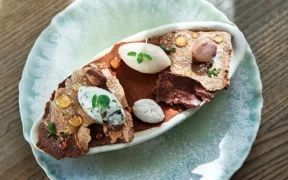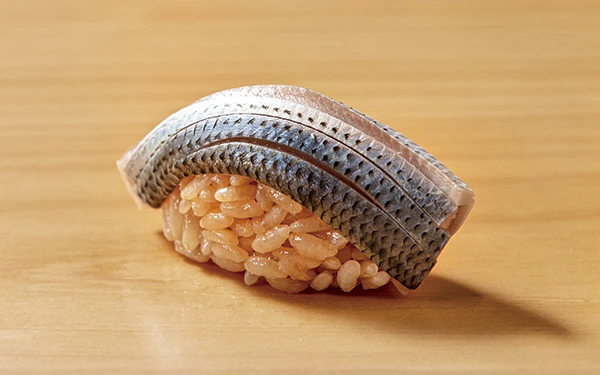

"Sascrier" brings together the traditional cultures and techniques of Italy and Japan to create dishes that connect to the future. We invite you to enjoy the overwhelming creativity of these two chefs.
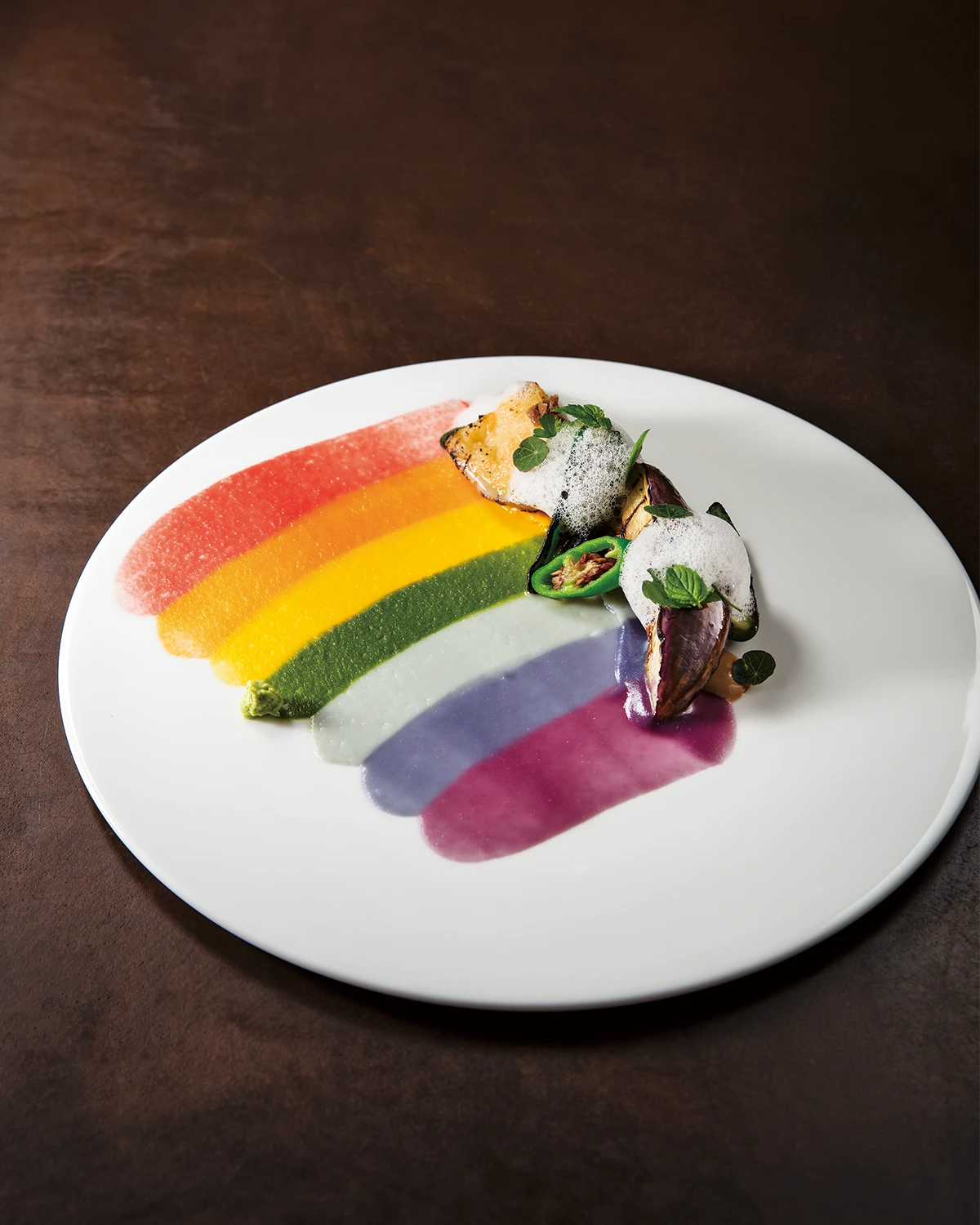
This signature dish is served in the first half of the course. The vegetables arranged to resemble a rainbow convey the changing seasons. Although cooked over a wood fire using techniques such as low-temperature cooking, it is intentionally prepared to have a firm texture so that it can be enjoyed like a salad. It is finished with soy milk foam resembling clouds, mayonnaise made with sake lees and black garlic, wasabi, and herbs grown on the terrace.
Text by Yui Togawa
Photo by Yu Mitamura
Photographs by Yu Mitamura
[Article published in the July 2026 issue of Kronos Japan]
A dual team of Italian and Japanese chefs sustaining creativity.
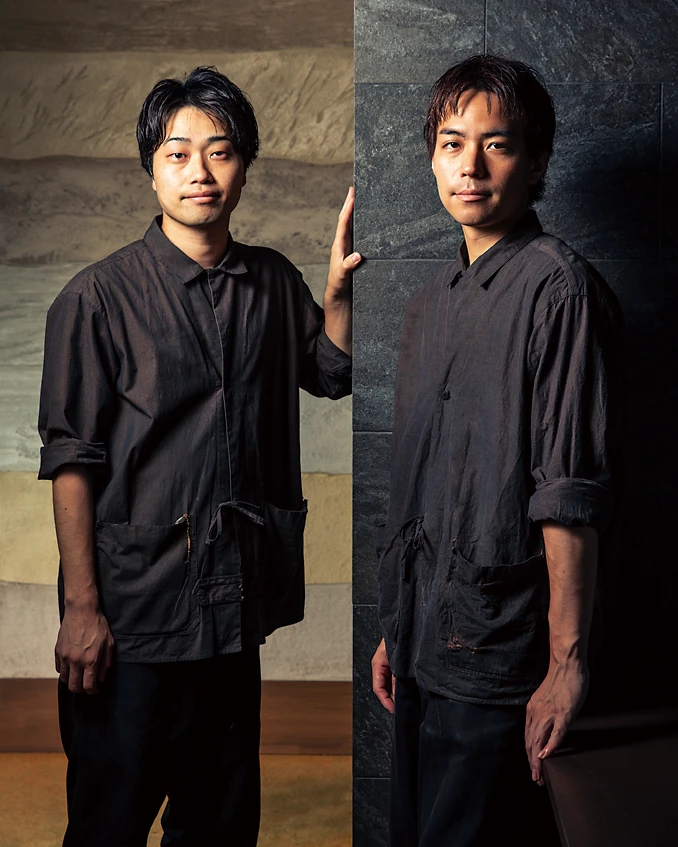
Born in Tottori Prefecture in 1995. After serving as sous chef at the Osaka restaurant "Quintocanto," he honed his skills at restaurants and bars both domestically and internationally. From 2021, he served as chef at the restaurant "Perouse" in "Krukku Fields" in Kisarazu, and from 25, he became the executive chef of "Sascrier."
(Right) Atsushi Wada
Born in Niigata Prefecture in 1997. After studying Japanese cuisine for four years at "Ginza Kojyu" and "Ginza Okuda," he gained experience at affiliated restaurants in New York and Paris. Upon returning to Japan, he became the chef at a members-only wood-fired restaurant in Nishi-Azabu in 2024, and in 2025, he became the head chef at "Sascrier."
The signature dish, "Hope," features seven colored purees—red, orange, yellow, and so on—arranged vertically on a pure white plate. A wooden spatula is then used to draw an arc, creating a rainbow. Both the preparation process and the finished dish are breathtakingly vibrant, prompting everyone to instinctively point their camera lenses at it. And that sight, along with the taste, leaves a deep impression on the diner's memory.
"It has an impactful visual, but this menu was born from the question, 'What does it mean to eat?' We believe that eating is about 'passing on knowledge,' and this rainbow design was created with the desire to be a bridge to pass that knowledge on to the future," says Executive Chef Shinki Yamana. The puree that forms the rainbow is made entirely from vegetables and herbs. For example, the red is made from tomatoes and bell peppers, the orange from butternut squash, and the blue from cauliflower and the herb butterfly pea. The menu mainly uses vegetables grown by Etsuo Asano, known as the "legendary farmer" of "Eco Farm Asano" in Chiba Prefecture, and uses as many as 15 different kinds of vegetables in a single dish.
The restaurant's name, "suscrea," is a portmanteau of "sustainable" and "creative." While environmental sustainability is paramount, the restaurant's strength lies in its two-chef system, which allows for the continuous creation of new recipes. Head chef Atsushi Wada teams up with Mr. Yamana, who comes from an Italian cuisine background. "I've always worked in Japanese cuisine, but while working in Europe, I was amazed by the power of vegetables, and realized that there's no need to be tied to a specific genre to bring out their full potential. I wanted to become a chef with a repertoire of flavors tailored to each ingredient, and learning wood-fired cooking was one approach to achieve that." Indeed, the rainbow-colored vegetables, cooked over a wood fire, exude an even more vibrant presence, radiating a sense of life.
The cuisine at "Sascrier" is sustainable, yet possesses exceptional taste and creativity. The irreplaceable experience, where the sensibilities of two chefs transcending genres resonate with each other, provides an opportunity to reconsider the question, "What does it mean to eat?"
suscrea
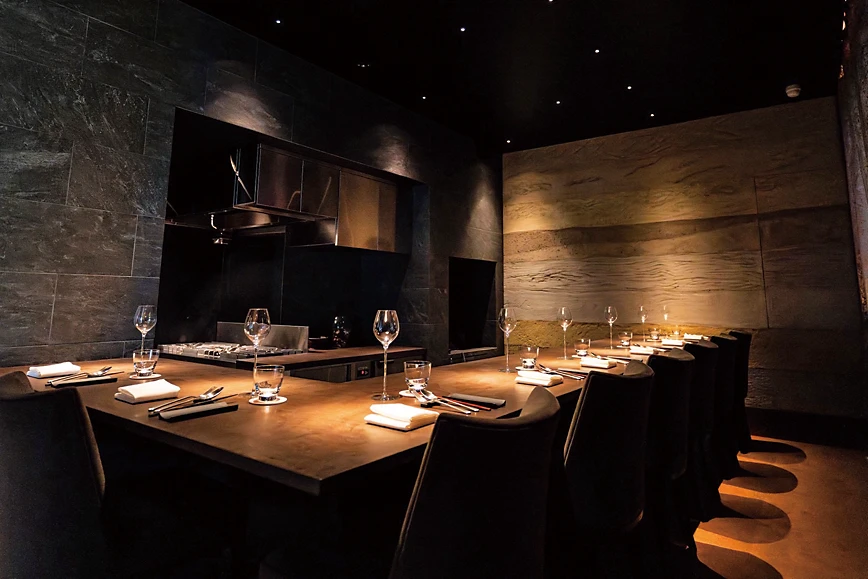
2F, KRK Building, 3-14-28 Minami-Aoyama, Minato-ku, Tokyo
Tel. 03-6447-5422 Closed on Sundays and some other days.
12:00-14:00 (Saturdays only), 17:00-22:30
Lunch from 11,000 yen, dinner from 24,200 yen (both prices exclude a 10% service charge).