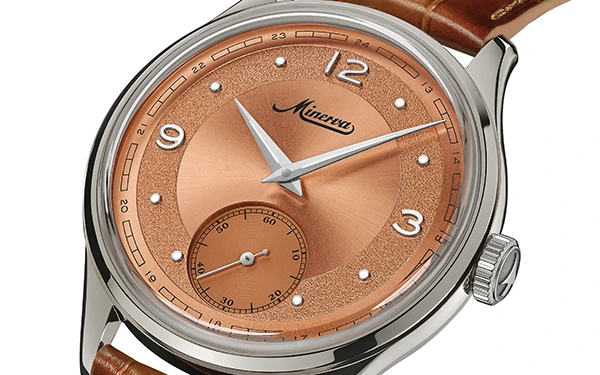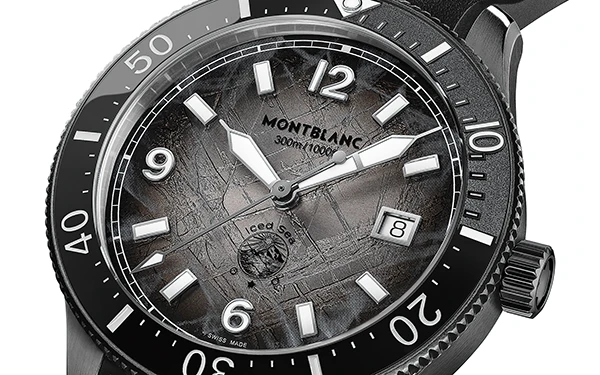
In 2026, Montblanc announced a major transformation in its watchmaking business. Minerva, which had been the flagship of its high-end line for about 20 years, was relaunched as an independent entity, and its name was revived on the watch dial.
Photograph by Takafumi Okuda
Tomoyo Takai: Interview and text
Text by Tomoyo Takai
Edited by Yukiya Suzuki (Chronos-Japan)
[Article published in the July 2026 issue of Kronos Japan]
Minerva uses the past to drive innovation.
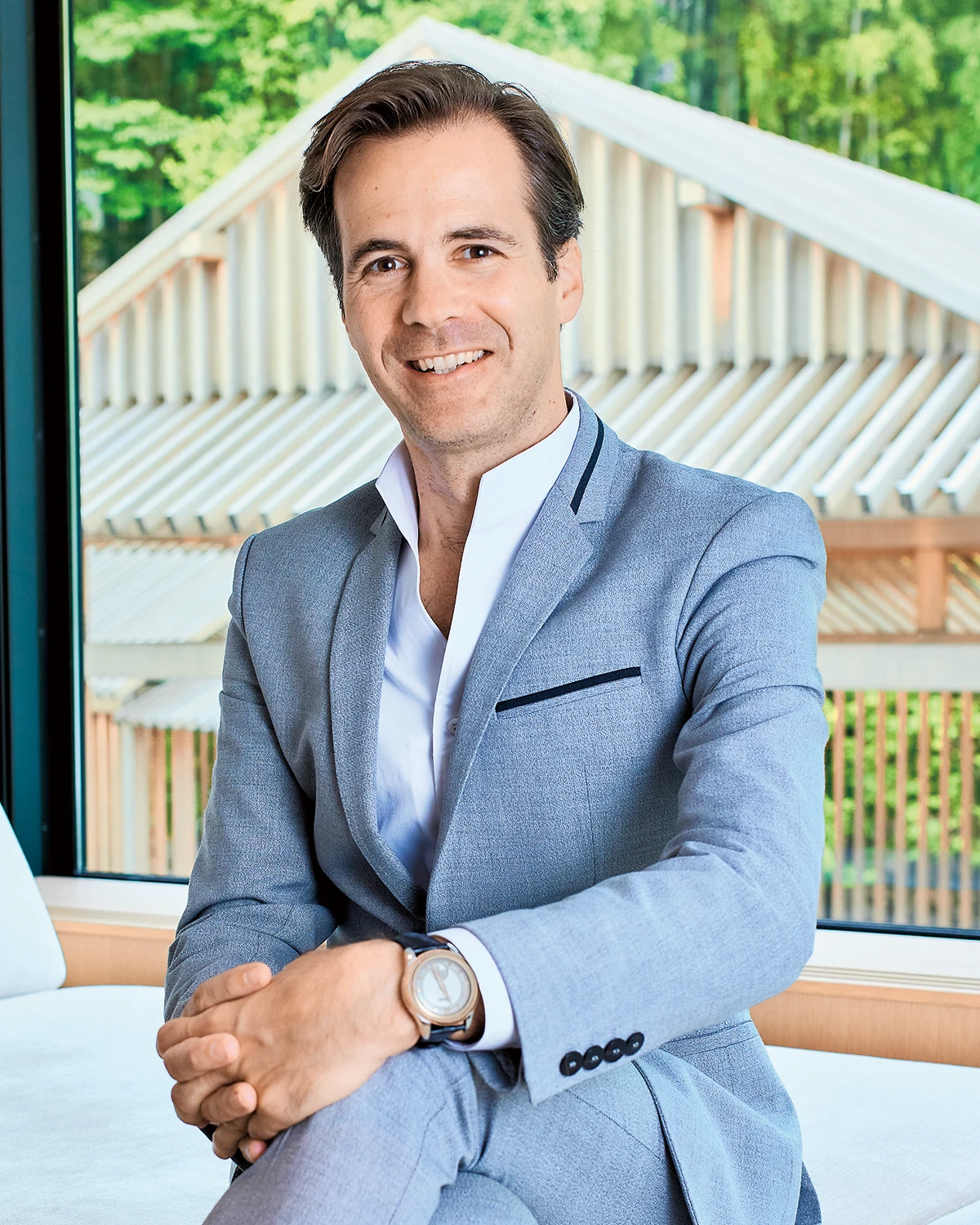
He began his career in 2001 as a brand manager in the wine and spirits division of the LVMH Group, before moving into the watch industry. In 2008, he co-founded the independent brand "Cyrus." In 2014, he joined Carl F. Bucherer, where he served as CEO of the Japanese subsidiary, among other positions. In 2021, he became the director of the watch division at Montblanc, where he revitalized IceSea, 1858, and Minerva. In 2026, he became CEO of Minerva, which was relaunched as an independent entity.
At the same time, the sales system is also undergoing a major transformation. The brand is shifting from a broad sales network to a system focused on carefully selected sales locations. The focus is shifting from pursuing sales volume to emphasizing communicating the brand's value to a limited customer base. Furthermore, this year, the brand has opted out of exhibiting at Watches & Wonders, instead shifting to a small-scale roadshow in Europe, America, and Asia, emphasizing dialogue with a select few. These reforms coincide with the relaunch of Minerva.
Laurent Lécrin, who led Montblanc's watch division for many years and has now become CEO of Minerva, explains the reason: "Minerva is a brand that needs to be explained one-on-one. And it's important for people to touch it." Lécrin repeatedly used the word "feel." "The feel of the watch when you touch it, the feel of winding it, the feel of setting the time—these are very important elements for many collectors."
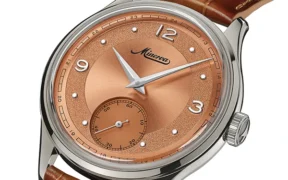
The first model released by the reborn Minerva, the "Minerva Unveiled Crownless," embodies this philosophy. It lacks a conventional crown; instead, a lever on the side of the case switches the bezel's functions, and time setting and manual winding are performed by operating the bezel. This model is a modern reinterpretation of a mechanism developed by Minerva in 1927. Lecan explains that this is not a reissue. "This is a highly innovative take on what Minerva has done in the past."
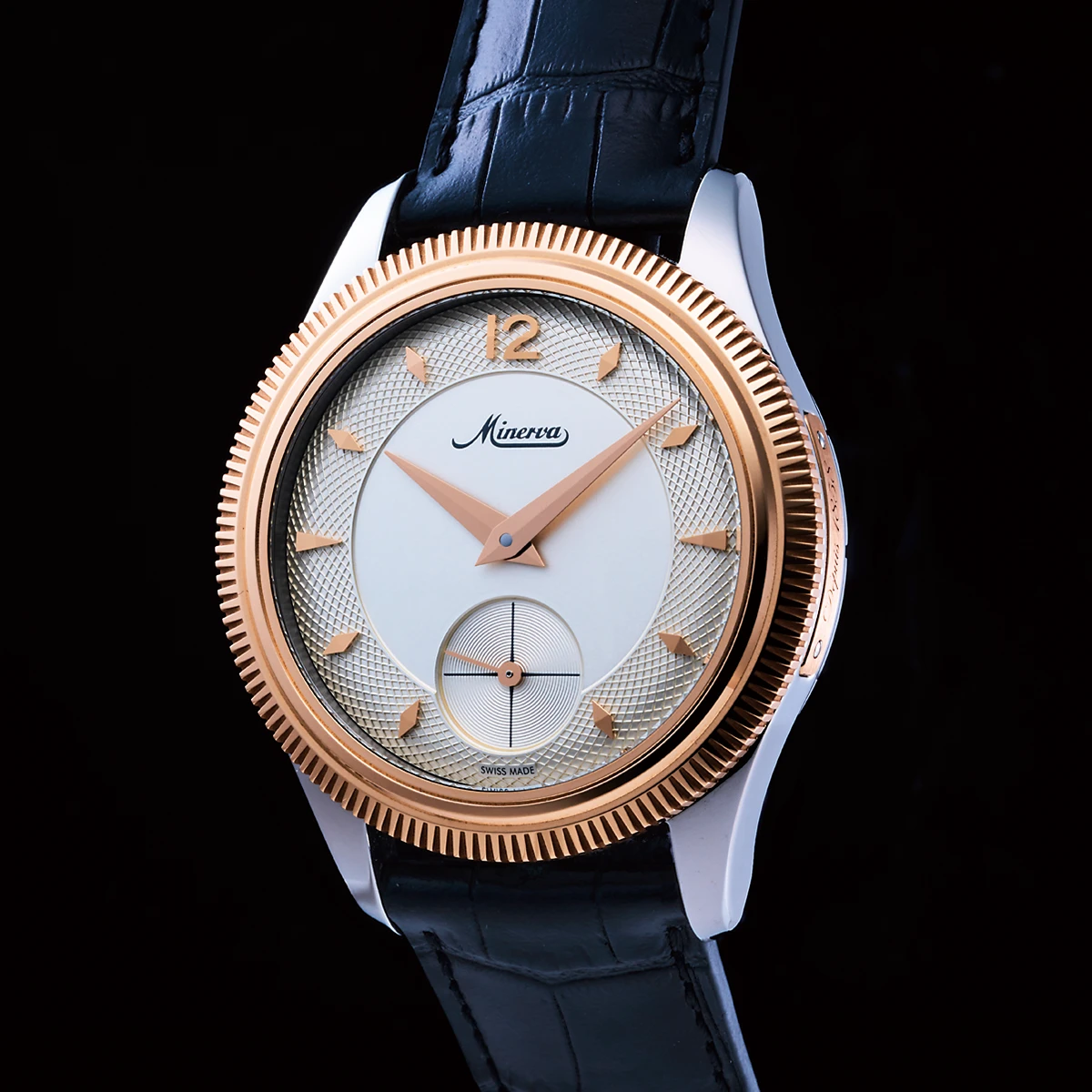
This watch inherits the military watch mechanism developed by Minerva in 1927, which controls the internal time-measuring ring by operating the bezel. Building upon this historical mechanism that can be operated even with gloves on, it features the brand's first crownless design. Functions are switched using a lever on the side of the case, and time setting and manual winding are performed with the fluted bezel. Manual winding (Cal. M15.08). 19 jewels. 18,000 vibrations/hour. Power reserve approximately 80 hours. Stainless steel case (41.50mm, thickness 11.99mm). 3 ATM water resistance. ¥6,516,950 (tax included).
This philosophy is also reflected in their brand strategy. "The average selling price of Minerva watches is about 5 euros. In contrast, Montblanc watches are priced between 4000 and 1 euros. The two brands occupy completely different positions." Minerva pursues craftsmanship as a top-tier, small-batch production brand, while Montblanc serves a broader market. This independence, which clearly defines the positioning of both brands with their respective customer bases in mind, also symbolizes their long-term brand strategy.
Lecan concluded his discussion of the essence of brand building with these words:
"I don't have customers. I only have fans. I leave the customers to other brands, but I will protect my fans."
Minerva's independence isn't simply about launching a new brand. It's a decision to fundamentally redesign its approach, including the entire experience, for people who deeply understand the brand's history and values.