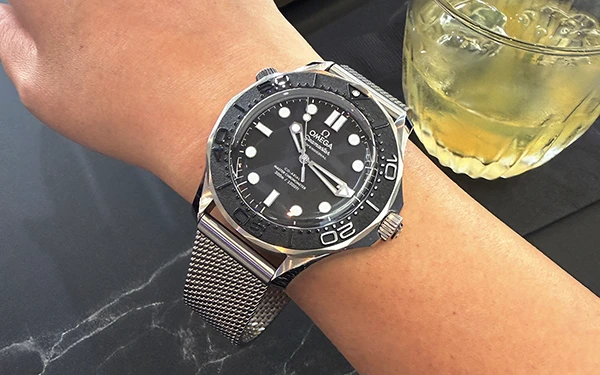

This article introduces five carefully selected masterpieces made from ceramics by renowned brands. While this material was once considered difficult to incorporate due to the challenges of processing, recent rapid advancements in processing technology have led to an increase in watches that benefit from its superior material properties. Here, we will focus on models where ceramics is used for the majority of the exterior, such as the case and bracelet.

Text by Kento Nii
[Article published on January 29, 2026]
The potential of ceramics expands with advancements in processing technology.
Ceramics, known for being lightweight and scratch-resistant, are an ideal material for watches worn daily. In particular, zirconium oxide ceramics, which are mainstream in watchmaking, have low toughness and are at risk of cracking or chipping from strong impacts, but they boast a Vickers hardness several times that of stainless steel and are also hypoallergenic. Furthermore, they offer a high degree of freedom in color, similar to resin, and can be given a unique lustrous texture, which is another attractive feature.
This material has been incorporated into watchmaking in various ways in recent years. The most popular application is to certain parts such as the dial and bezel insert. This not only adds character through its unique texture, but also protects areas prone to scratches and addresses the issue of aging. Some brands also use hybrid ceramics mixed with luminous paint for the indices to pursue superior legibility.
On the other hand, due to its exceptional hardness, processing ceramics requires advanced technology and specialized equipment. Unlike stainless steel or precious metals, which are machined from blocks, ceramics are formed by sintering powder, making it difficult to control shrinkage during sintering, and unlike gold, they cannot be melted down and reused. For this reason, the full-scale application of ceramics to high-end watches, which require superior aesthetics and precise processing accuracy, has long been considered a high hurdle.
However, in recent years, thanks to the dramatic advancements in processing technology, there has been an increasing trend towards models that use ceramics for many of their main components. At the Geneva Watch Days held in September 2026, ceramics were prominently featured on the exteriors of Corum's "Admiral 39" and Bianche's "Ultravino Tonneau," which made its full-fledged debut in Japan this year.
This article highlights five ceramic watches that exemplify advanced processing techniques, showcasing their exceptional qualities. Each is an ambitious creation from a prestigious brand that has focused on the potential of this material and honed its skills. If you have the opportunity to see one in person, be sure to pay attention to its exquisite craftsmanship and meticulous, distortion-free finish.
Please note that this article excludes excessively rare models, such as limited editions produced in very small quantities or concept watches, from the selection.
Chanel "J12 Calibre 12.1" Ref. H11684
First up is the Chanel J12, a timepiece that represents the brand and enjoys popularity across genders. Launched in 2000, this collection featured a case and bracelet entirely crafted from ceramic. Since then, the use of ceramic has become widespread in the watch industry, making the J12 a groundbreaking piece in watchmaking history.
The J12's appeal also lies in Chanel's unique and original design codes, which have solidified its position as a luxury brand. The sleek form, inspired by racing yachts, incorporates geometric elements into its sporty look with a powerful bezel. Incidentally, the highly durable ceramic used is extremely scratch-resistant, with a Vickers hardness approximately seven times that of stainless steel.

Automatic winding (Cal. 12.1). 28,800 vibrations/hour. Power reserve approximately 70 hours. High-resistance ceramic x stainless steel case (38mm diameter). 200m water resistance. 1,424,500 yen (tax included). (Inquiries) Chanel Customer Care Center Tel. 0120-525-519
Among the J12 models, the Ref. H11684, released in 2026 as a standard color following black and white, is a 38mm diameter model clad in blue ceramic. This particular model features a matte finish on the entire case and bracelet, setting it apart from the conventional J12 models characterized by their glossy finish, resulting in a more subdued appearance. The dial, also in the same color, has a consistent matte texture, and its layout, consisting of three-dimensional Arabic numeral indices, hollowed-out hour and minute hands, and an inner railway minute track, enhances readability.
It is equipped with the exclusive Kenissi Cal. 12.1 movement. It boasts high precision with Swiss Official Chronometer (COSC) certification and a practical power reserve of approximately 70 hours. Furthermore, the transparent case back allows you to see the intricate workings of the mechanism, as well as the tungsten rotor with its boldly designed circular openwork.
Omega "Speedmaster Dark Side of the Moon" Ref. 310.92.44.50.06.002
Omega is a brand that has expanded the scope of its watchmaking by developing its own alloys and gold materials in-house. Since the 2000s, it has also been actively using ceramics, and has accumulated advanced know-how to date, such as developing "Omega Ceragold™," which enables smooth 18K gold decoration on ceramics.
The product that best reflects the company's material technology is the "Speedmaster Dark Side of the Moon." As the series name, which means "the dark side of the moon," suggests, this series features a product design that is in stark contrast to the traditional "Speedmaster Moonwatch Professional," starting with the use of ceramic throughout the entire case, and incorporating a bicompax layout and an automatic winding movement.

Manual winding (Cal. 3869). 26 jewels. 21,600 vibrations/hour. Power reserve approximately 50 hours. Ceramic case (44.25mm diameter, 12.97mm thickness). 50m water resistance. 2,453,000 yen (tax included). (Inquiries) Omega Tel. 0570-000087
The Ref.310.92.44.50.06.002 we've picked is a model nicknamed "Gray Side of the Moon." The design is inspired by the words of Jim Lovell, command module pilot of Apollo 8, who said, "The moon is essentially gray," and the use of ceramics of the same color directly expresses the world of the lunar surface.
Furthermore, this model, which was updated in 2026 as part of the series update, features a chronograph design with three sub-dials, crater-like details on the surface, and openwork from the 6 to 9 o'clock position, giving it a distinctive look that stands out even within the uniquely individual series.
Furthermore, the exceptionally high-quality surface finish applied to the ceramic case is another noteworthy feature of this watch. A special process using plasma treatment has been achieved to skillfully differentiate between polished and brushed finishes, creating a contrast in texture similar to that seen in stainless steel or 18K gold cases.

Inside is the hand-wound Cal.3869 movement. This specially designed movement, adorned with a lunar surface pattern similar to the dial, features a mystical design visible through the transparent case back. Along with Jim Lovell's inscription on the outer edge, the homage to the moon landing is made even more striking. Furthermore, it boasts Master Chronometer certification, offering exceptional high precision and outstanding magnetic resistance.
Rado "Anatom Automatic" Ref.R10203102
When discussing ceramic watches, Rado, which proclaims itself the "Master of Materials," is an indispensable name. Known as a pioneer in the watch industry for its early adoption of robust, high-tech ceramics, Rado has continued to refine its processing technology since using this material in the "Integral" model released in 1986.

Automatic movement (Cal. R766). 21 jewels. Power reserve approximately 72 hours. High-tech ceramic case (46.3mm x 32.5mm, 11.3mm thick). 50m water resistance. 772,200 yen (tax included). (Inquiries) Rado/Swatch Group Japan Tel. 03-6254-7330
From Rado, we've selected the "Anatom Automatic." A successor to the eponymous watch born in 1983, it inherits the ergonomically designed case that conforms to the wrist and the seamless form incorporating a cylindrical sapphire crystal. Particularly noteworthy is the use of plasma high-tech ceramic in the exterior. Advanced plasma treatment, which alters the molecular structure, provides excellent material properties, including scratch resistance, along with a smooth, lustrous finish to the entire watch.
Among them, the Ref. R10203102 is a variation that features a chic gray tone throughout. The lacquered dial has irregular horizontal lines, and the rose gold-colored hands and applied indices, along with the "moving anchor symbol" at the 12 o'clock position, add accents to its appearance. Furthermore, the central links of the bracelet are made of stainless steel with a rose gold-colored PVD coating, creating a unified look.
The case, updated to modern proportions of 46.3mm in height and 32.5mm in width, boasts a smooth texture thanks to plasma treatment, allowing it to fit naturally in the hand, just like the original.
Furthermore, the movement employs the automatic winding Cal.R766. It features magnetic resistance thanks to its Nivacron balance spring, a long power reserve of approximately 72 hours, and enhanced accuracy for practical use through 5-position adjustment.
Tudor "Black Bay Ceramic" Ref. 7941A1ACNU-0001
While known as a sister brand of Rolex, Tudor has established a completely different identity by developing its own unique watchmaking style. The "Black Bay Ceramic," released in 2021, stands out even within its lineup. It inherits details from Tudor's archive diver's watches, such as the snowflake hands and the absence of a crown guard, but with a ceramic exterior.
The Ref. 7941A1ACNU-0001, which we'll discuss here, was added to the lineup in 2026 as a new variation of the Black Bay that utilizes ceramics. In contrast to the previous model, which featured a rubber-lined leather strap, this model is Tudor's first to feature a ceramic bracelet, and the entire watch has been refreshed with an all-black design, giving it an even more robust and powerful impression.

Automatic movement (Cal. MT5602-U). 25 jewels. Power reserve approximately 70 hours. Ceramic case (41mm diameter, 13.6mm thickness). 200m water resistance. 1,070,300 yen (tax included). (Inquiries) Rolex Japan / Tudor Tel. 0120-929-570
The case and bracelet feature a matte finish achieved through sandblasting, while the bezel is satin and the beveled edges of the lugs are polished. This sophisticated combination of finishes adds depth to the otherwise monotonous monochrome look.
The dial, adorned with a radial pattern, features hands and applied indices with borders and luminous paint, creating a contrast in texture and ensuring legibility. This model, one of the few ceramic watches in the company's lineup and entirely black, showcases intricate tone-on-tone craftsmanship. Furthermore, considering the fragile nature of the material, a unique structure has been introduced in which the nuts inside the bracelet are curved to conform to the shape of the links, demonstrating meticulous attention to detail despite this being the company's first ceramic bracelet model.
Internally, it continues to feature the Cal.MT5602-U movement, which boasts a power reserve of approximately 70 hours. It has achieved Master Chronometer certification, guaranteeing accuracy that meets COSC standards and ultra-high magnetic resistance of 15,000 gauss.
IWC Ingenieur Automatic 42, Ref. IW338902
IWC unveiled several ceramic models at Watches & Wonders Geneva in 2026. The company first introduced a case made of this material in the "Da Vinci" in 1986, and has a track record of promoting the practical application of ceramic technology, including expanding its range of colored ceramics and developing its own titanium alloy "Ceratanium" with a ceramic surface.
The last timepiece we'll introduce is the "Ingenieur Automatic 42" Ref. IW338902, which condenses the technology that has been refined since the 1980s into the iconic "Ingenieur" watch, following Gerald Genta's design.

Automatic winding (Cal. 82110). 22 jewels. 28,800 vph. Power reserve approximately 60 hours. Ceramic case (diameter 42 mm, thickness 11.5 mm). Water resistant to 10 bar. 979,000 yen (tax included). (Inquiries) IWC Tel. 0120-05-1868
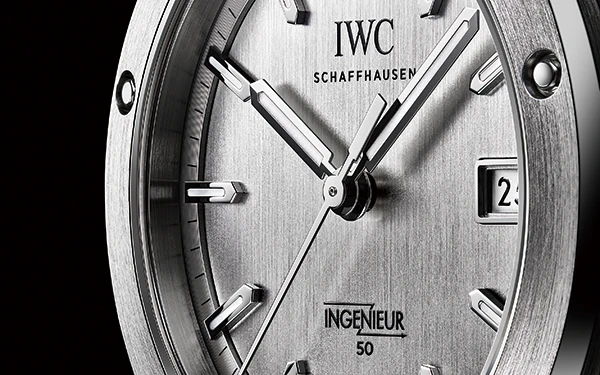
This timepiece, the first in the Ingenieur collection to utilize colored ceramics, features a dark olive green color throughout, from the case to the bracelet. The dial, adorned with the iconic grid pattern, is also in the same color, while the hands, applied indices, bezel screws, and crown are accented in gold, resulting in a striking and avant-garde appearance.
The ceramic case, made by precisely blending zirconium oxide with metal oxides, boasts a slim profile with a diameter of 42mm and a thickness of 11.5mm. What's noteworthy is that achieving these proportions requires a unique design distinct from that of the stainless steel model.
As mentioned earlier, ceramics shrink by about 30% during the sintering process, making the manufacturing of precision exterior parts technically challenging. Therefore, IWC developed a new multi-part structure that eliminates the conventional movement container. By using a thin titanium ring to hold the movement and screws, and directly press-fitting the sapphire crystal and gasket into the case and case back ring, they have managed to reproduce an ergonomic form using difficult-to-process ceramics while maintaining the same 10-bar water resistance as previous models.
The movement powering it is the in-house Cal. 82110. It features a Pellaton automatic winding mechanism that utilizes ceramic components for high-wear parts, and boasts a power reserve of approximately 60 hours. From the exterior to the internal mechanism, this timepiece can be said to reflect IWC's ceramic technology and engineering.