
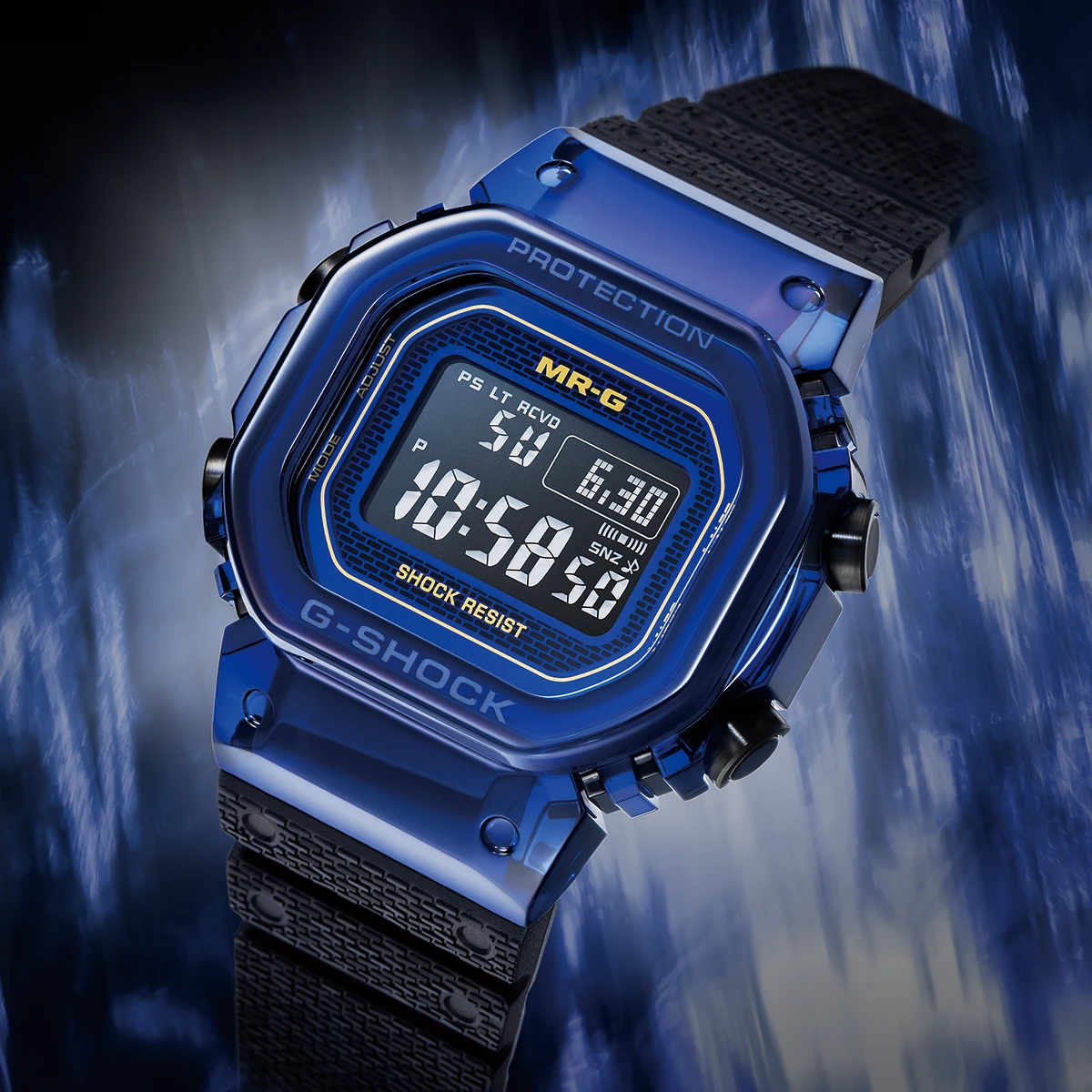
Sapphire crystal boasts high transparency and scratch resistance, yet is vulnerable to strong impacts. Casio tackled the seemingly contradictory challenge of using this material to create the exterior of a G-SHOCK, a brand whose philosophy is based on impact resistance. After approximately 10 years of trial and error, they completed the "MRG-D5000." This project, which the development team named "Blue Rose," overturned conventional G-SHOCK wisdom in every aspect, from materials and structure to processing and assembly. How did the "impossible" become the "possible"? We delve into the heart of the matter through the words of those involved.
Photographs by Eiichi Okuyama, Yu Mitamura
Masamasa Hirota (this magazine): Interview and writing
Text by Masayuki Hirota (Chronos-Japan)
Edited by Yukiya Suzuki (Chronos-Japan)
[Article published in the July 2026 issue of Kronos Japan]
The MRG-D5000 Blue Sapphire: Overcoming the "Unconventional" – A Dream Come True
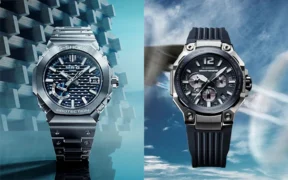
Sapphire crystal is highly transparent and hard. While more and more watch manufacturers are using it for watch exteriors, it's unsuitable for everyday use because it's easily broken. The MR-G "MRG-D5000" has overturned this common sense in the watch industry. This model, which clears the shock resistance of G-SHOCK, has an exterior made of sapphire crystal. The pride of MR-G in making the impossible possible is embodied in its vibrant blue color.
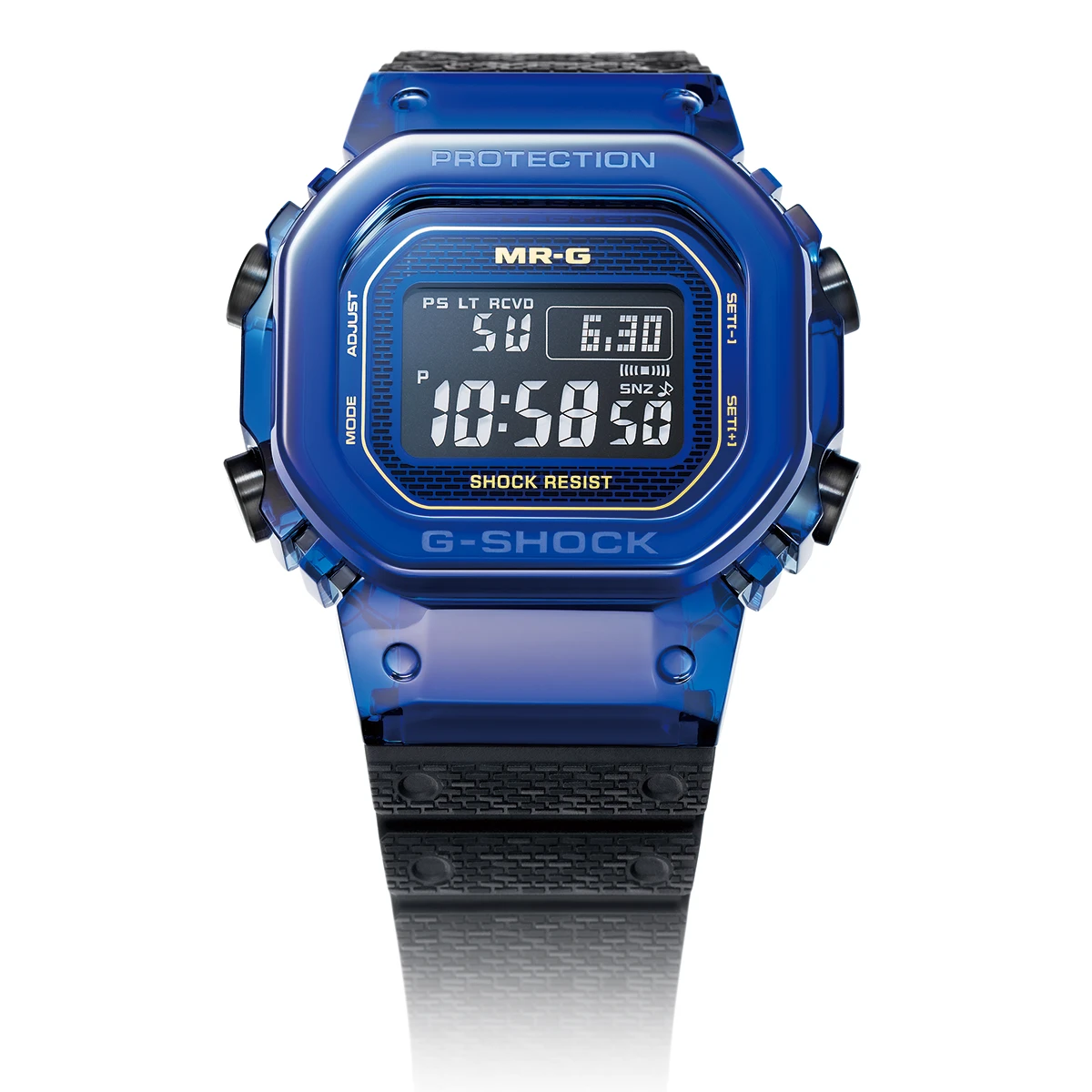
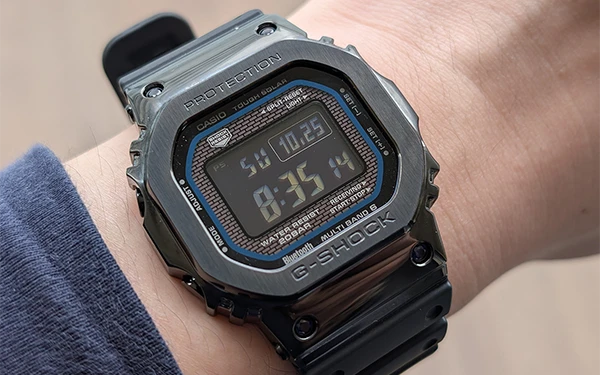
A new pinnacle of Japanese watchmaking. Despite its sapphire crystal exterior, which is prone to cracking under strong impact, it meets the G-SHOCK shock resistance standards. It employs Multi-Band 6, but Bluetooth has been omitted for ease of long-term maintenance. Gallium Tough Solar. Sapphire crystal x Ti + DLC case (51.3mm x 43.2mm, 16.5mm thick). 20 ATM water resistance. Limited to 20 pieces worldwide. 1100 million yen (tax included).
Sapphire crystal is now used in many luxury watches. Often called "sapphire glass," this material is not actually glass, but rather a single crystal of aluminum oxide. In addition to its high transparency, it is scratch-resistant, highly resistant to heat and chemicals, and strong against sweat, UV rays, and aging, making it an ideal material for watch crystals. Nowadays, it would be rare to find a luxury watch that does not use sapphire crystal for its crystal.
However, this material had two weaknesses. One was its high refractive index. To address this issue, companies began applying anti-reflective coatings to sapphire crystal watch faces from the 1990s onward. The other weakness was its susceptibility to cracking under strong impact. This was one reason why companies were skeptical about adopting three-dimensional domed watch faces. Nevertheless, this material, with its high transparency and scratch resistance, eventually opened up applications beyond watch faces. If ceramics with similar properties could be used, why couldn't sapphire crystal be repurposed for watch cases? This is why advanced brands are now releasing watches with sapphire crystal cases that allow you to see the inner workings.
Incidentally, Casio first adopted sapphire crystal for its watches in the late 1990s. In the 2000s, the company incorporated spherical sapphires and anti-reflective coatings, and in 2016, it used a 2.8mm thick sapphire in its diver's watch, the "FROGMAN." Applying this technology, in 18, they released the "Oceanus Manta," which featured a thick sapphire bezel. Now, a sapphire bezel can be considered an icon of the Oceanus series.
In 2018, G-SHOCK completed a prototype with a sapphire crystal exterior. However, this was merely a mockup that lacked shock resistance. It was theoretically impossible to use sapphire, which can shatter under strong impact, in a G-SHOCK, a watch whose selling point is its shock resistance. In fact, even during manufacturing, this model was plagued by the problem of the sapphire used in the exterior shattering.
Eight years later, MR-G completed the "MRG-D5000," featuring a sapphire crystal exterior. The project was called "Blue Rose." Because roses do not possess the gene to produce blue pigment, development through crossbreeding was considered impossible. However, research and development of blue roses, which began in 1990, went through many twists and turns before finally culminating in the "SUNTORY blue rose APPLAUSE" in 2004 (released in 2009). The flower language of the blue rose was once "impossible." Now, it has become "dreams come true," "miracle," and "applause." This model, which uses fragile sapphire crystal for its exterior while still meeting G-SHOCK's high shock resistance standards, can be said to embody the blue rose itself, transforming the impossible into the possible.
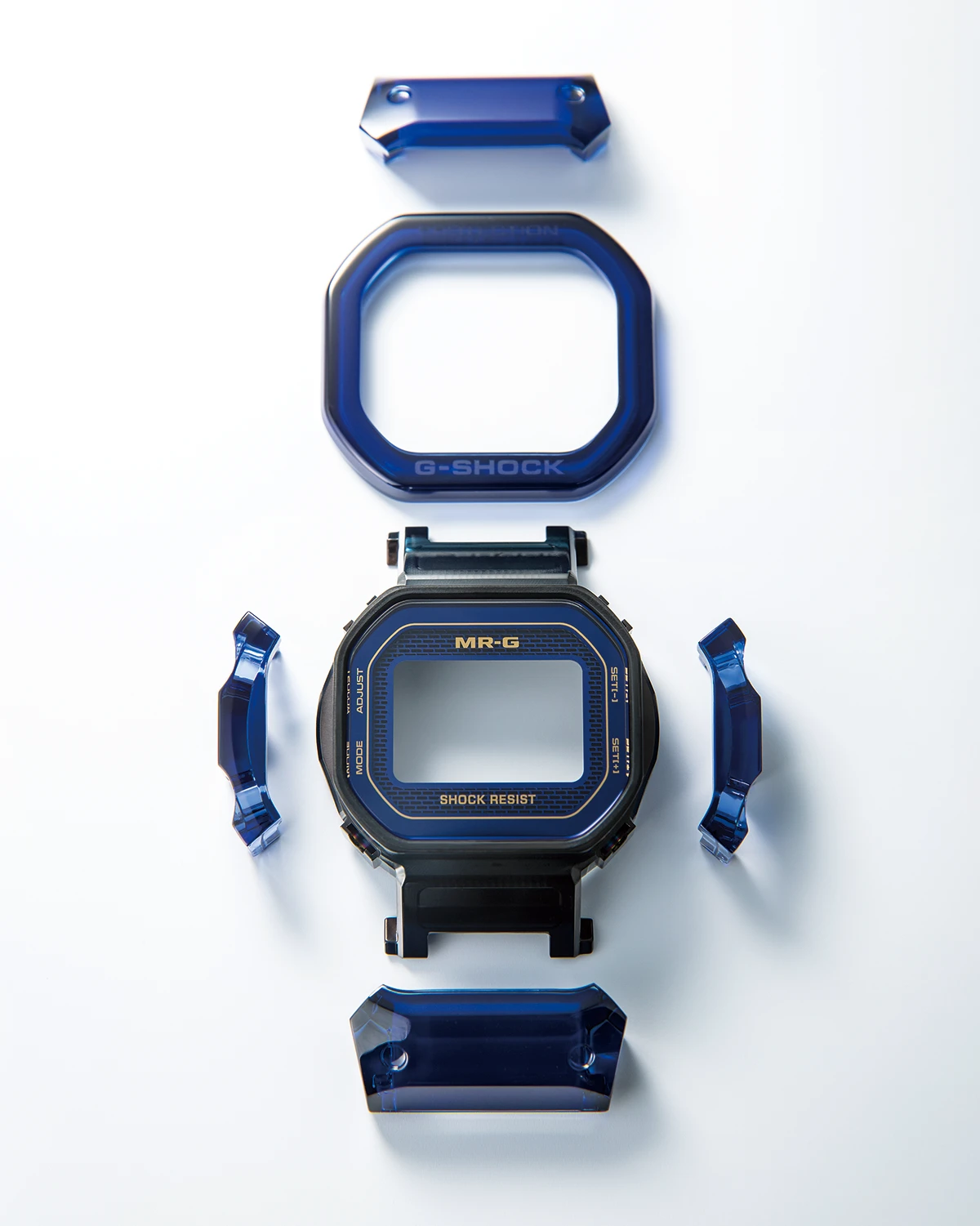
The 2018 prototype simply replaced the resin exterior with sapphire crystal. However, as mentioned earlier, even at the prototype stage, there was a problem with the sapphire cracking. The solution that made the impossible possible was brought about by the MRG-B5000 in 2022. The "Multi-Guard Structure," which divides the exterior parts into small pieces and assembles them like a puzzle, not only made it possible to polish the details of the case but also dramatically improved the impact resistance of the metal exterior.
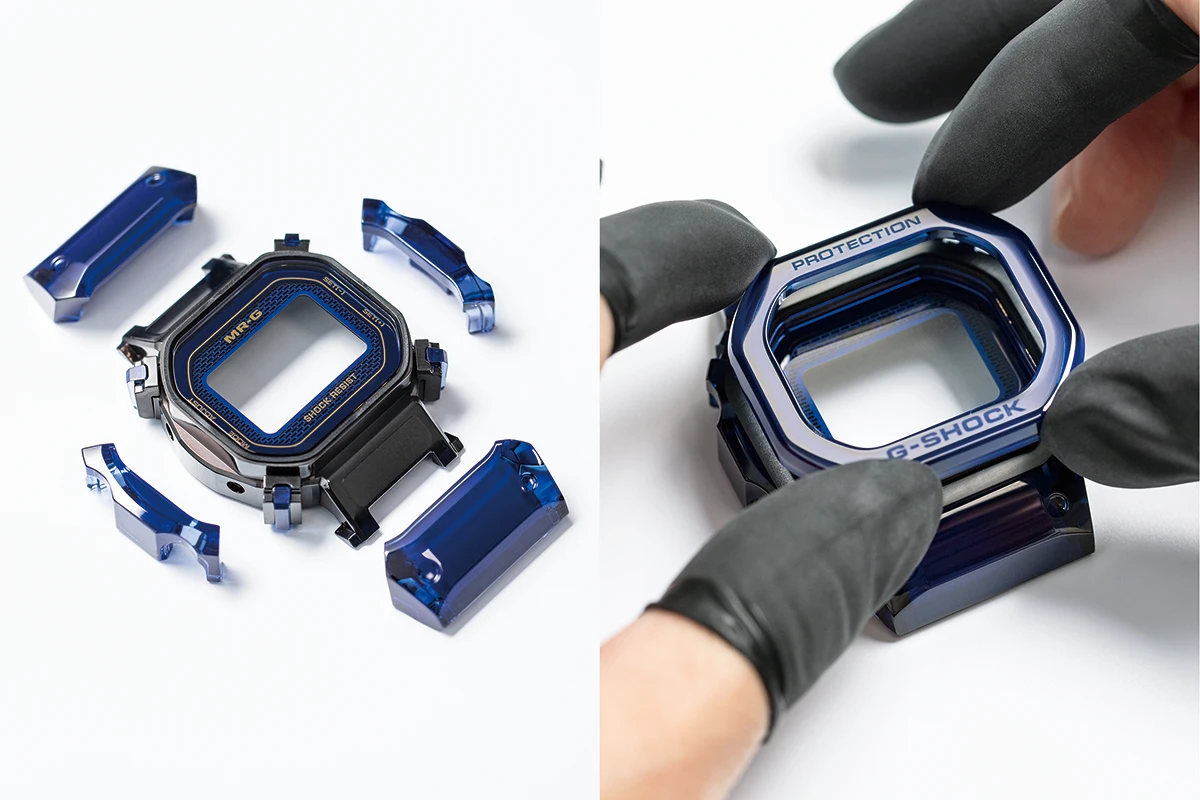
This new approach involves increasing impact resistance by dividing the parts rather than using a single molded piece. However, the Multi Guard Structure of the MRG-B5000 could not be directly adapted to sapphire crystal. Therefore, the MR-G design team succeeded in giving the sapphire exterior high impact resistance by reducing the division of exterior parts, eliminating the T-springs that fix the parts in place, and adopting an interlocking structure that also eliminates the screw holes for fixing. However, the journey to this point was long.
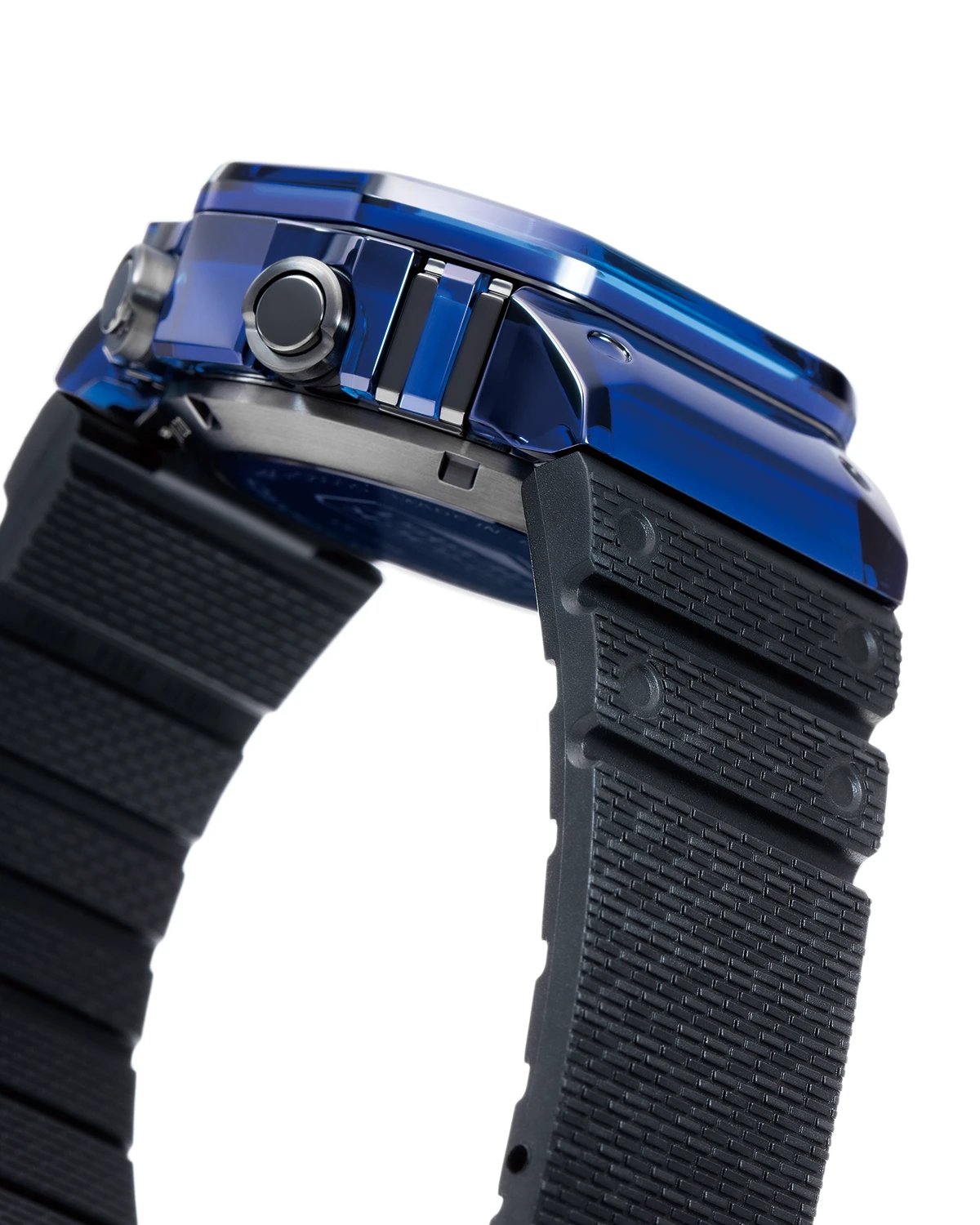
The sapphire crystal G-SHOCK project, which began in 2016, started with a design that involved placing a sapphire exterior over a pure titanium inner case. However, a problem arose where strong shocks caused the case to flex, leading to the sapphire cracking. In response, the design team challenged themselves with an approach completely opposite to previous G-SHOCKs: constructing it from hard materials. They changed the base on which the sapphire was placed from soft rubber to hard 64 titanium, further tightened the tolerances of the parts, and even eliminated the leaf springs that support the parts, a characteristic of the multi-guard structure. The idea of hardening the exterior with hard materials was completely opposite to previous G-SHOCKs. However, this shift in thinking paved the way for a sapphire exterior.
Although a clue to the solution had been found, numerous challenges remained. First, simply adapting the MRG-B5000 design did not provide the required shock resistance. If the dimensions of the exterior parts were too tight or the materials were too thin, the sapphire would easily crack. Furthermore, the segmented case, which was supposed to improve shock resistance, became more prone to cracking as the number of sapphire cuts increased and as more elongated parts were added. What was particularly troublesome was that it wouldn't crack in a single test, but would crack after multiple shock resistance tests. To address this problem, MR-G ended up creating as many as 20 different prototypes, altering the bezel thickness and the structure of the outer case.
However, even with good design and manufacturing, the MRG-D5000 would not have been complete. The person who brought this product to fruition was Yusuke Kikuchi of Yamagata Casio. He is a medalist tester in the Premium Production Line (PPL), which manufactures high-end products, and is involved in the assembly of MR-G watches and other models. The person who would normally be responsible for maintaining the production line is single-handedly assembling the MRG-D5000.
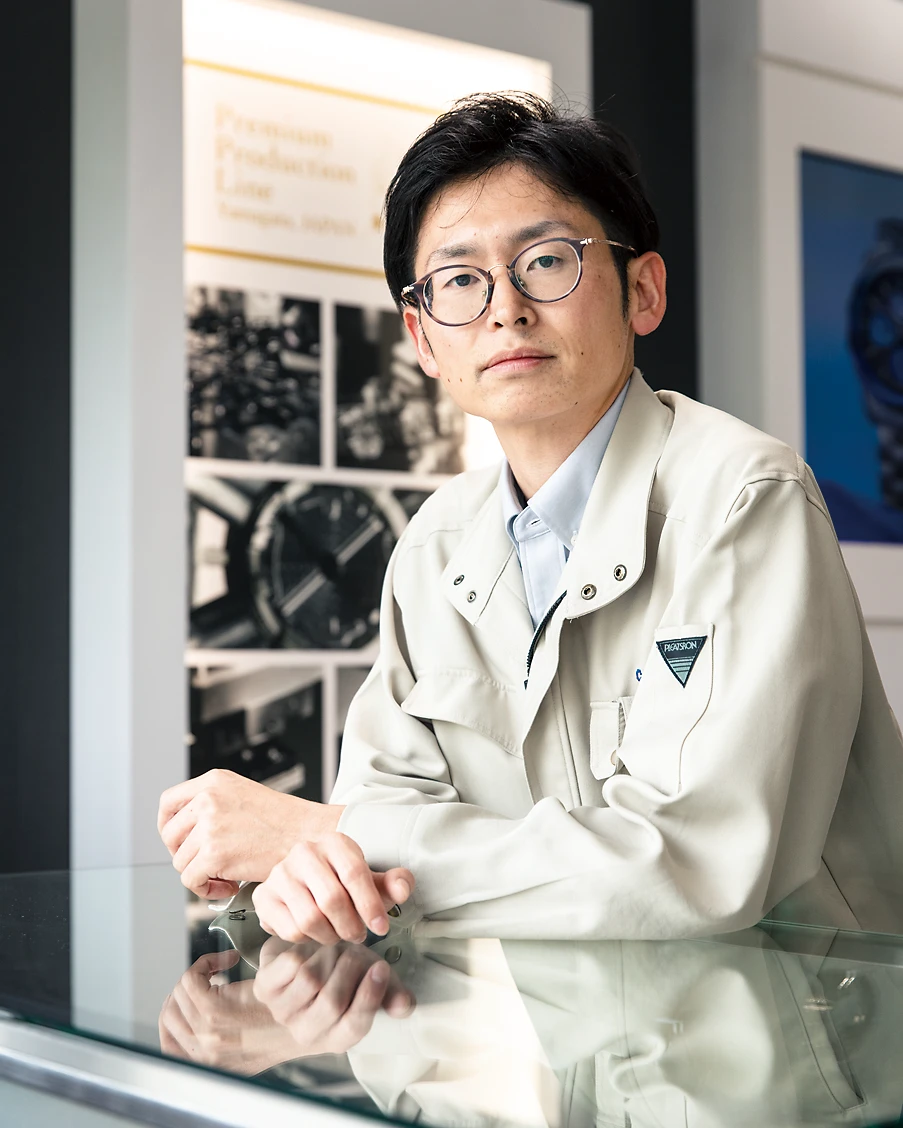
"This is the Blue Rose Project. We could have gathered PPL medalists and assembled it, but I thought it should be done by the people who were involved in the planning. They also understood the design philosophy of the MRG-D5000."
Kikuchi spoke of it casually, but in reality, it would have been impossible for anyone else to assemble it. This is because the required standards were completely different from those of the existing MR-G, and even from the 18K gold case models.
"With the gold model, we didn't do anything special during assembly. In contrast, the assembly process for the MRG-D5000 was like we had to think it through from scratch."
The fact that the MRG-D5000 is produced in limited quantities of one to two units per month makes sense when you hear the explanation that "there are variations in the dimensions of the exterior parts, yet the required quality is the highest."
Essentially, each exterior part of the MRG-D5000 is a one-of-a-kind piece. As a result, the dimensional tolerances of the parts inevitably become large. However, Kikuchi assembles the watches while making adjustments to ensure consistency. "It's interesting that Yamagata Casio, which has pursued processing precision through systems, is now assembling one-of-a-kind pieces by hand," says Kikuchi. However, given the ultra-high price range, the required standards are comparable to those of ultra-luxury Swiss watches. One example is the alignment of the central axis of the case and dial. Normally, there is a misalignment of about 0.3 degrees, but in the case of the MRG-D5000, it is said to be 0 degrees. Moreover, even the case back, which has a sapphire crystal pressed into it, is first screwed into the case to determine its position, then removed, the sapphire is pressed into the case back so that the logo is horizontally positioned, and then it is reassembled.
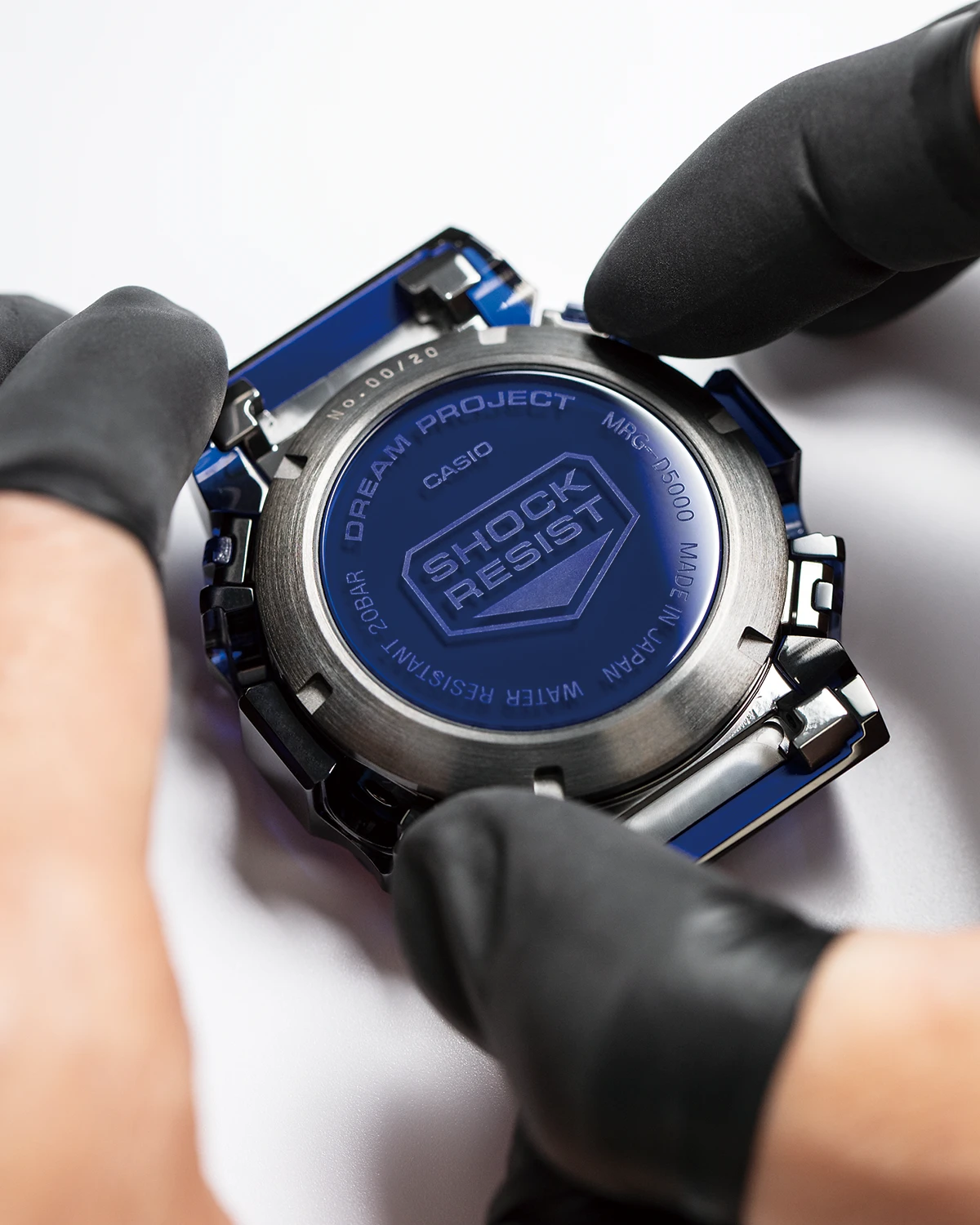
"Normally, there's a standard torque for tightening the case back, but that doesn't apply to this model. If you tighten it with a uniform torque, the logo position will be off from one watch to another." Moreover, the MRG-D5000, with its interlocking case construction, even has a specific direction for assembling the parts.
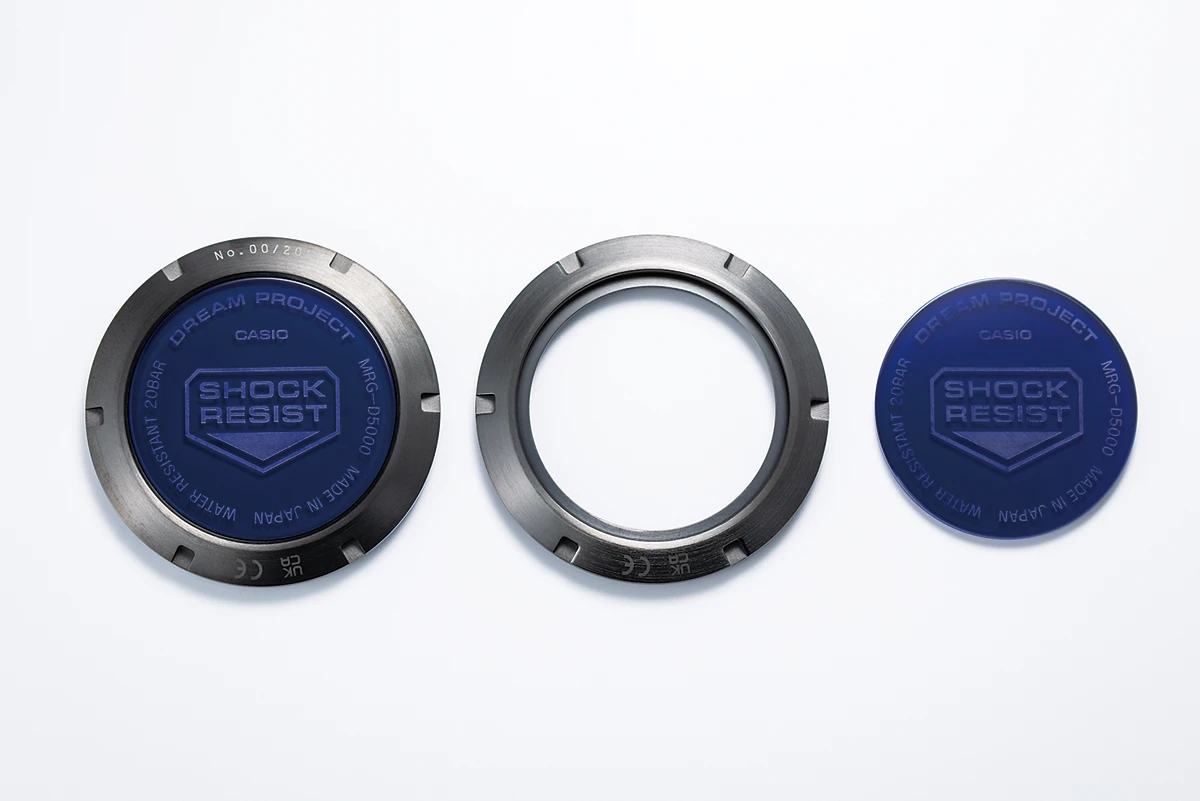
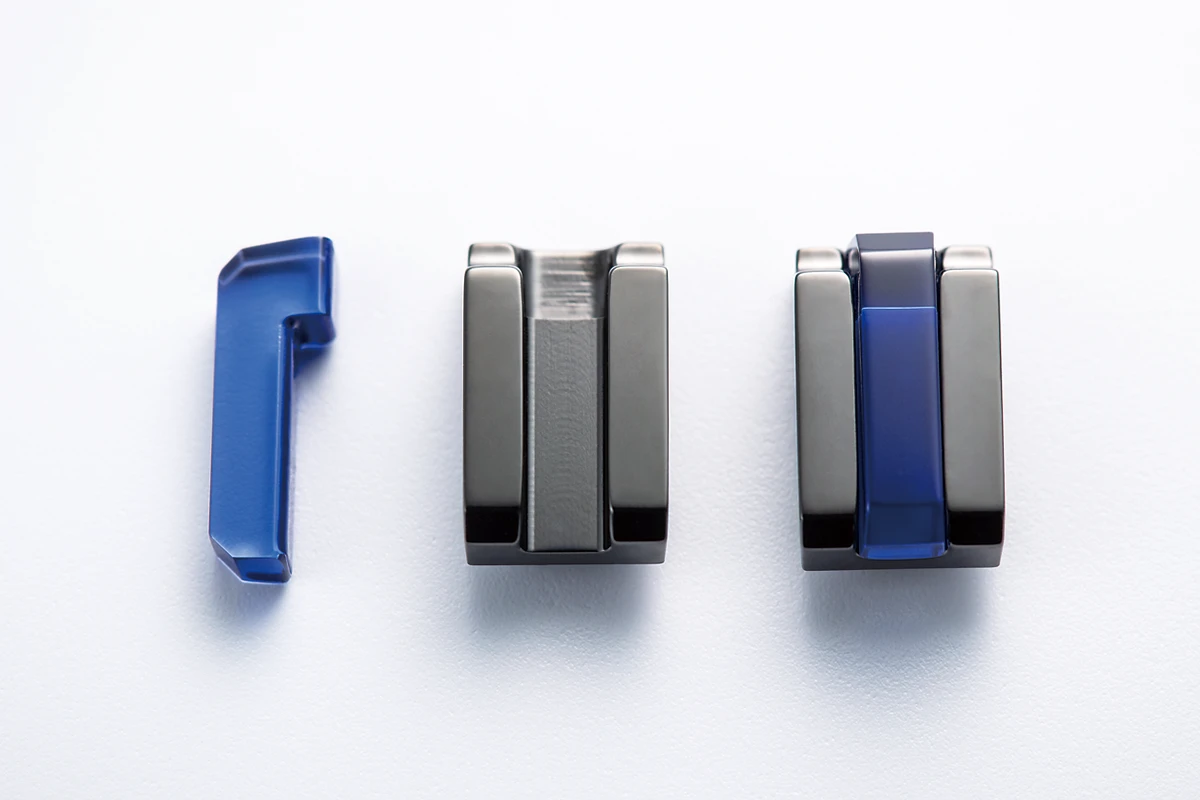
The main reason the exterior components are a collection of unique, one-of-a-kind pieces is to ensure consistent color. According to Casio, theoretically, ten exterior components can be obtained from a single sapphire block. However, even when parts are machined from the same block, the color will vary depending on the location. Therefore, the MR-G addressed this by machining multiple components from five separate sapphire blocks and selecting those of the same color. This explains why it takes at least several months to produce all the exterior components, and why the dimensional tolerances vary from part to part. If the colors were transparent or light-colored, manufacturing and assembly would have been somewhat easier. However, the MR-G deliberately chose a dark blue, which is difficult to match in color. This explains why Kikuchi and his team said they "weren't thinking about productivity."
Kikuchi, who was in charge of assembly, also made some design requests. One of them was about the dial frame. The MRG-D5000, which uses a gallium solar cell in the light-receiving section, had the base material visible through the dial frame. So Kikuchi requested that the frame be made thicker to hide the solar cell. In addition, Bluetooth, a Casio specialty, was omitted from the movement. The base is the movement from the 18K gold model, but Kikuchi explains, "We deliberately removed Bluetooth from it so that it can be repaired for decades to come."
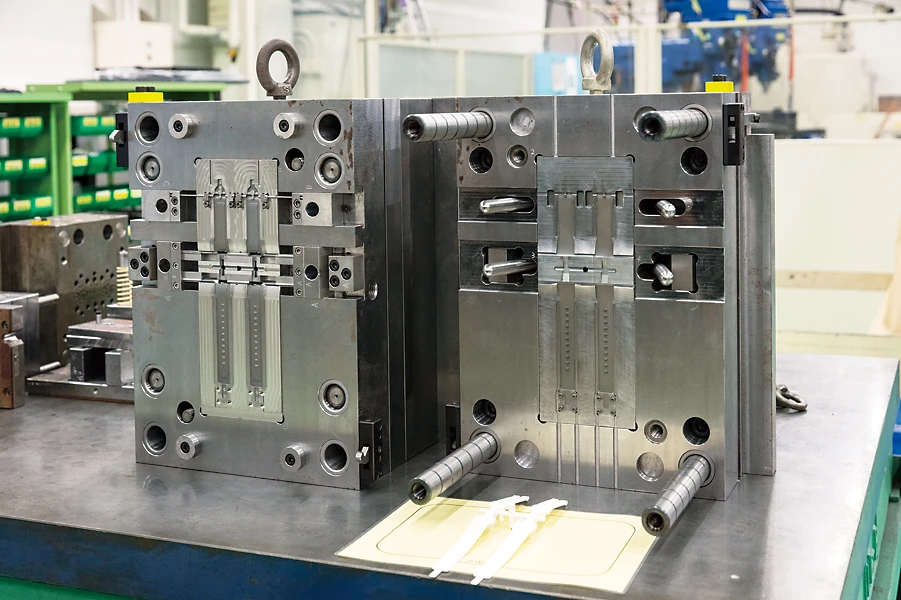
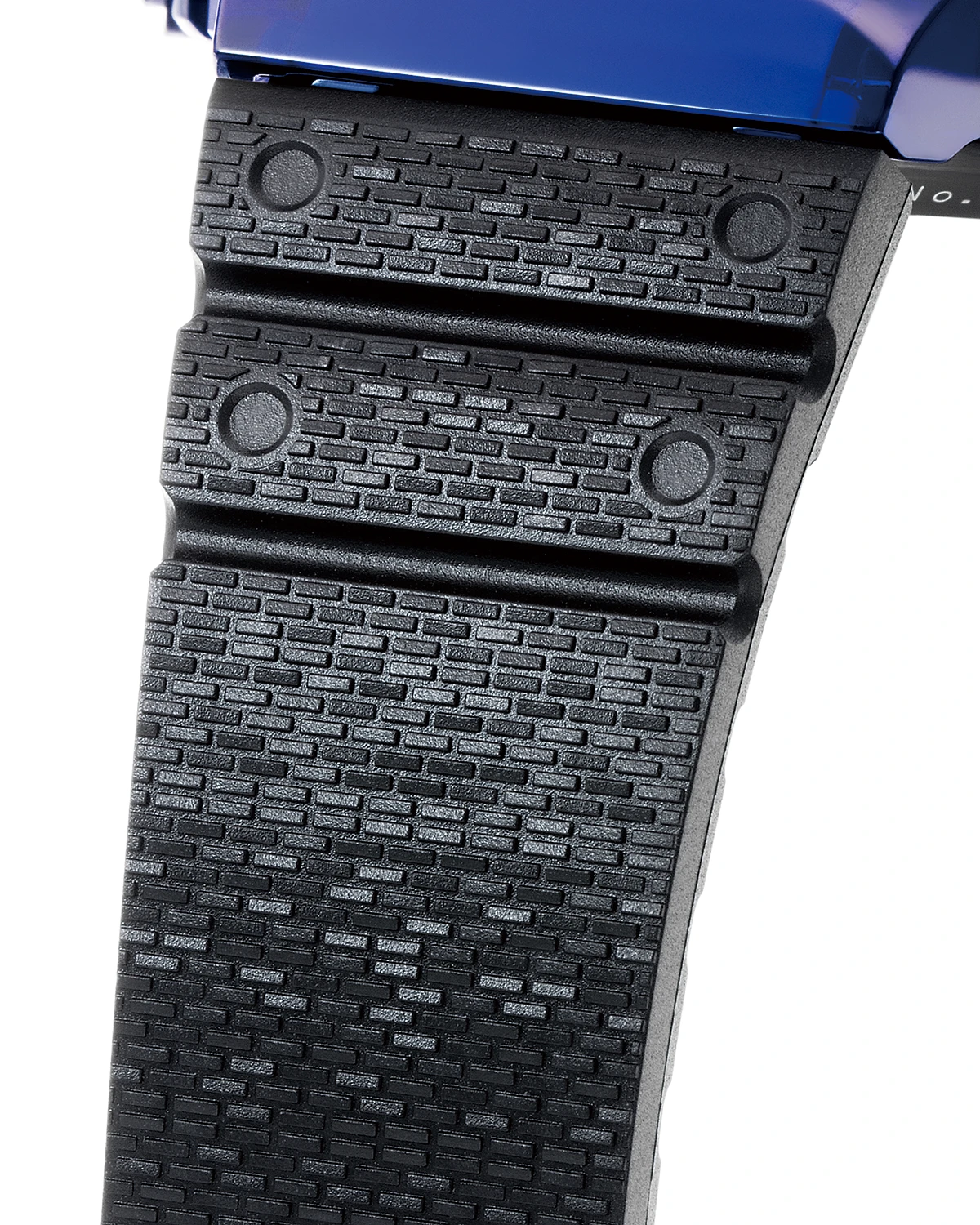
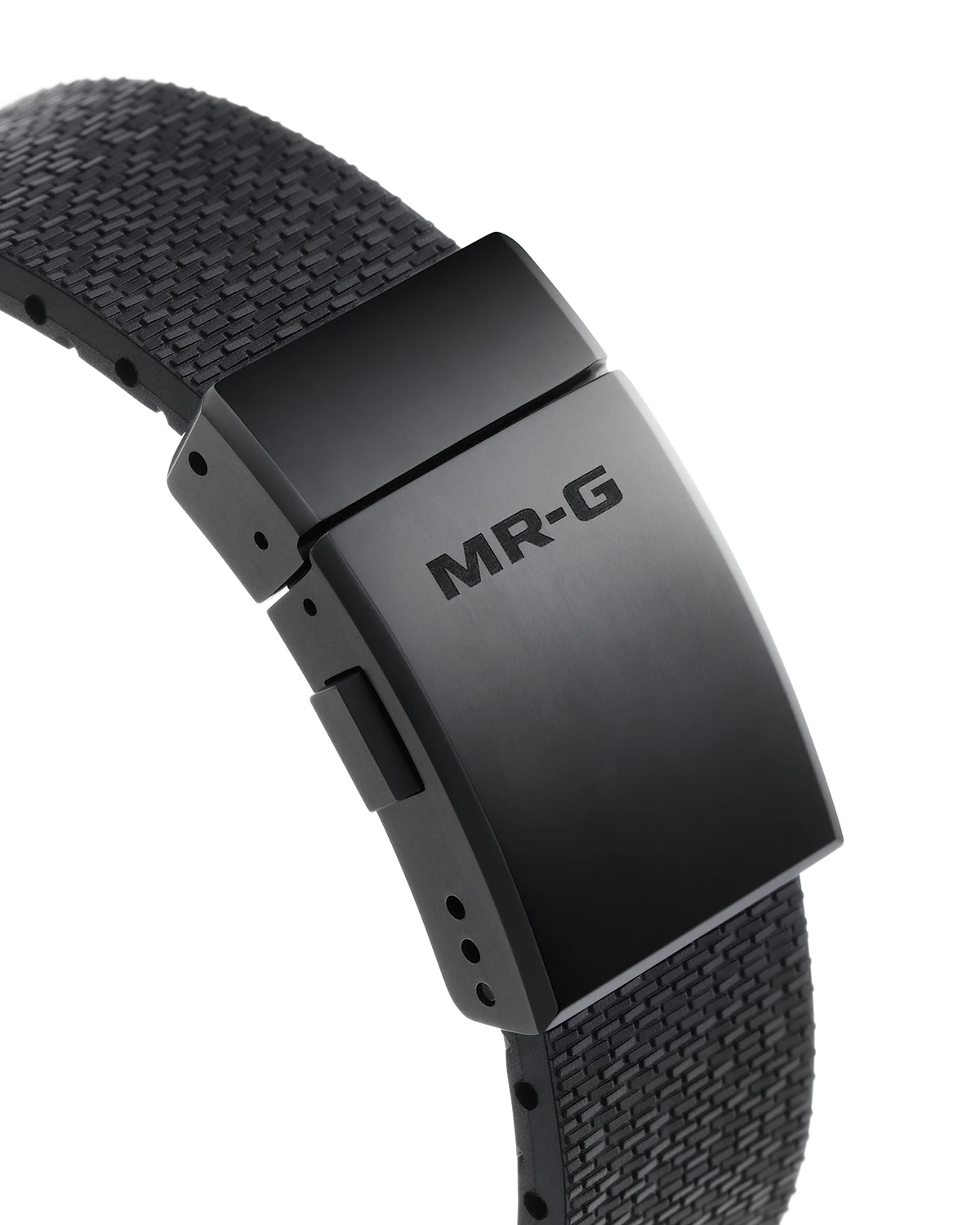
Beyond the sapphire crystal, Yamagata Casio poured its full resources into the exterior as well. The DuraSoft band, resistant to discoloration, dirt, and aging, has been used in regular MR-G models since 2024. The fluoroelastomer material has a softness similar to natural rubber, but on the other hand, it is difficult to create intricate patterns. In contrast, MR-G has created a custom-made product with an unprecedentedly precise pattern. The edges, which are sharp enough not to be unpleasant, represent the pinnacle of Yamagata Casio's expertise in resin molding. In addition, the buckle that fastens the strap, the case, and the buttons are treated with DLC (Diamond-Like Carbon) coating, which makes the coating resistant to peeling and scratches.
The MRG-D5000, which uses sapphire crystal—a material easily shattered by strong impacts—for its exterior, yet still manages to meet G-SHOCK's overwhelming shock resistance standards, is a model that embodies the very essence of G-SHOCK, which has turned the impossible into the possible. With that in mind, it's understandable why the development team chose a vibrant blue for this model. That clear blue, reminiscent of a blue rose, is the very proof that "the impossible" has been transformed into "dreams come true."