
Audemars Piguet, which pioneered the skeletonization of thin movements in the 1930s, is now embarking on a new endeavor: openwork, a more sculptural and free approach. Their chosen subject is a state-of-the-art perpetual calendar, where all calendar elements can be adjusted using only the crown. Beyond the finishing touches, this project explores a new way of approaching complex timepieces that showcase their movement.
Photographs by Eiichi Okuyama
Masamasa Hirota (this magazine): Interview and writing
Text by Masayuki Hirota (Chronos-Japan)
Edited by Yukiya Suzuki (Chronos-Japan)
[Article published in the July 2026 issue of Kronos Japan]
A new approach that goes beyond just finishing, incorporating openwork that allows you to enjoy the movement.
It's fair to say that Audemars Piguet introduced the concept of skeletonization to the world of watches. Having skeletonized thin movements in the 1930s, the company has since led the way, particularly with its ultra-thin Caliber 2003 skeletonization. More accurately, they created this genre.
Le Brassus, a long-established watchmaking company, is now embarking on a new approach called openwork. Like skeleton watches, it involves removing material from the movement. However, while skeleton watches emphasize the gears and other components, openwork watches are significantly more sculptural. In other words, they offer greater freedom.
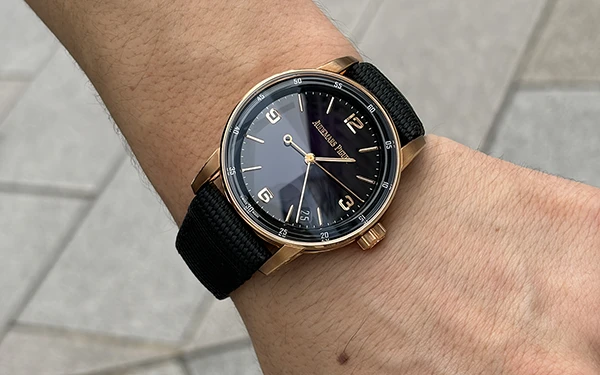
Behind these changes lies Audemars Piguet's transformation into a manufacture. For many years, the company relied on conventional movements manufactured by Jaeger-LeCoultre, but starting with the acquisition of the former Renaud & Papi (now Audemars Piguet Le Locle), it has been working to bring its movements in-house. This in-house production, which began with complicated watches, eventually extended to basic automatic watches, and now the company can freely arrange the components of complex mechanisms. The result of this is the "CODE 11.59 by Audemars Piguet Ultra Complication Universelle (RD#4)." This timepiece, which packs 40 functions into a practical size, is proof of the company's dramatically improved design capabilities.
Another feature worth mentioning is the perpetual calendar, which was revamped in 2025. The fact that all the calendars can be individually adjusted simply by operating the crown demonstrates extraordinary design skill. Moreover, the Cal. 7138 movement is highly practical (the power reserve has been extended from approximately 40 hours to approximately 55 hours) without sacrificing aesthetics. Normally, when you have to individually operate four sub-dials with a three-position crown, the components are arranged with functionality as the priority, and appearance becomes a secondary consideration. However, the 7138, both in terms of its base automatic winding 7120 series and the perpetual calendar mechanism built on top of it, does not fall short of the 2120-based perpetual calendar (which is considered a masterpiece among masterpieces and which few watch enthusiasts would criticize). The design team led by Lucas Raggi must be comprised of exceptionally skilled individuals.
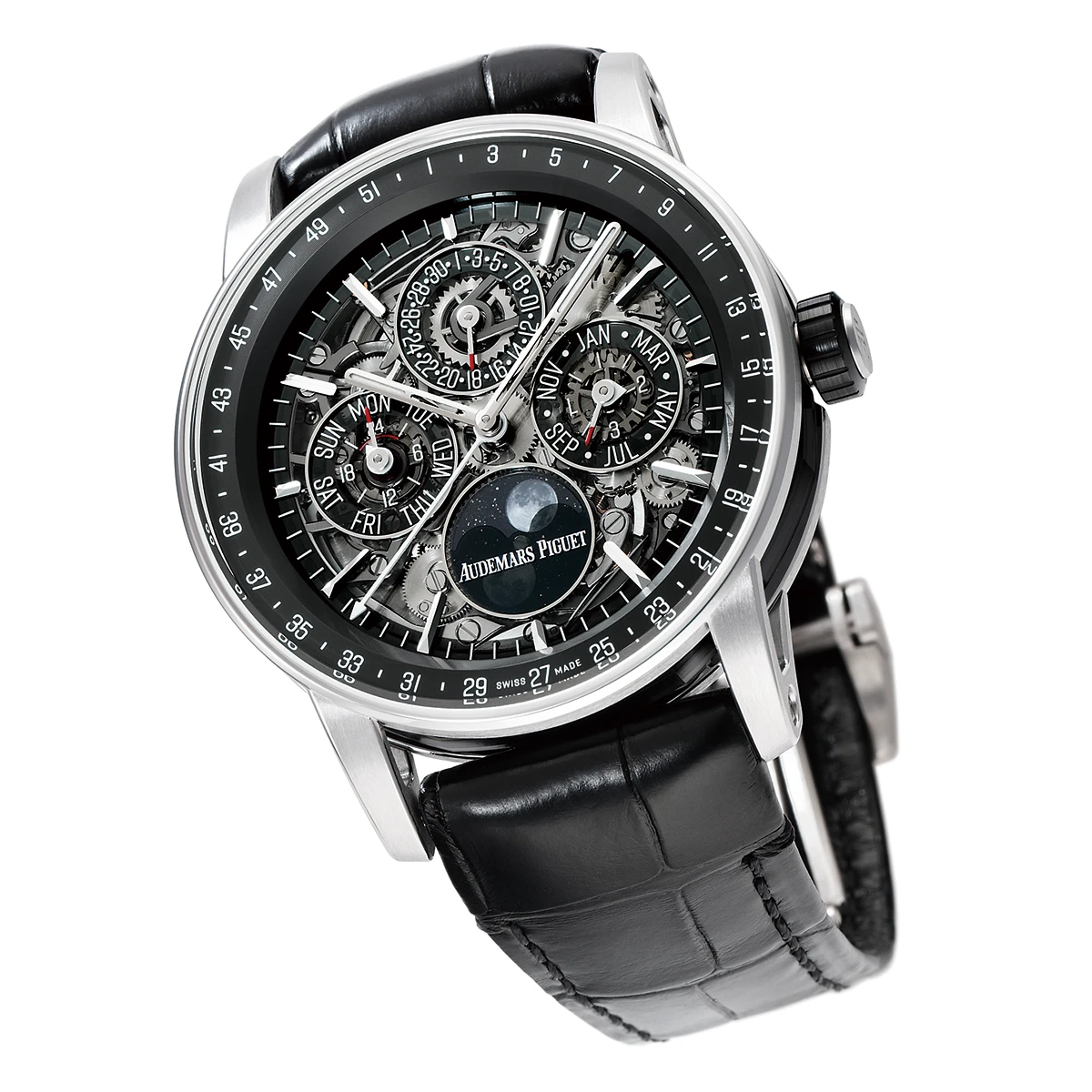
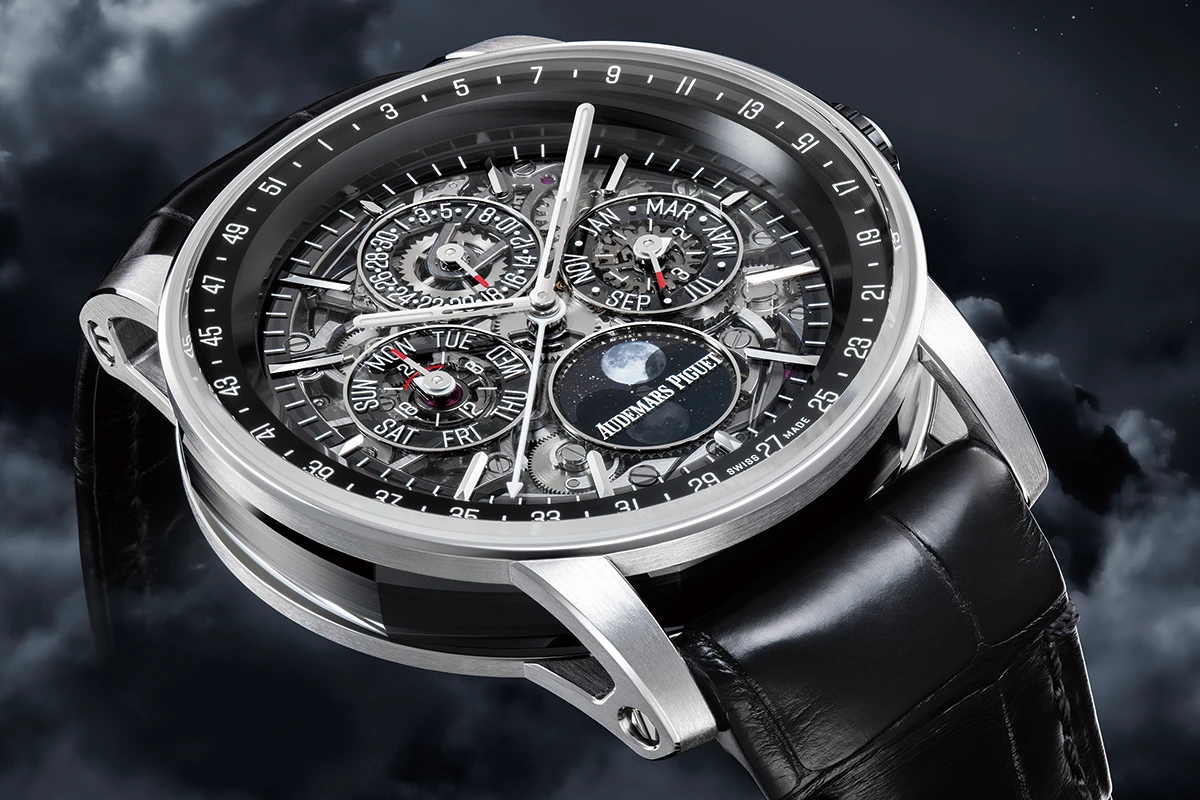
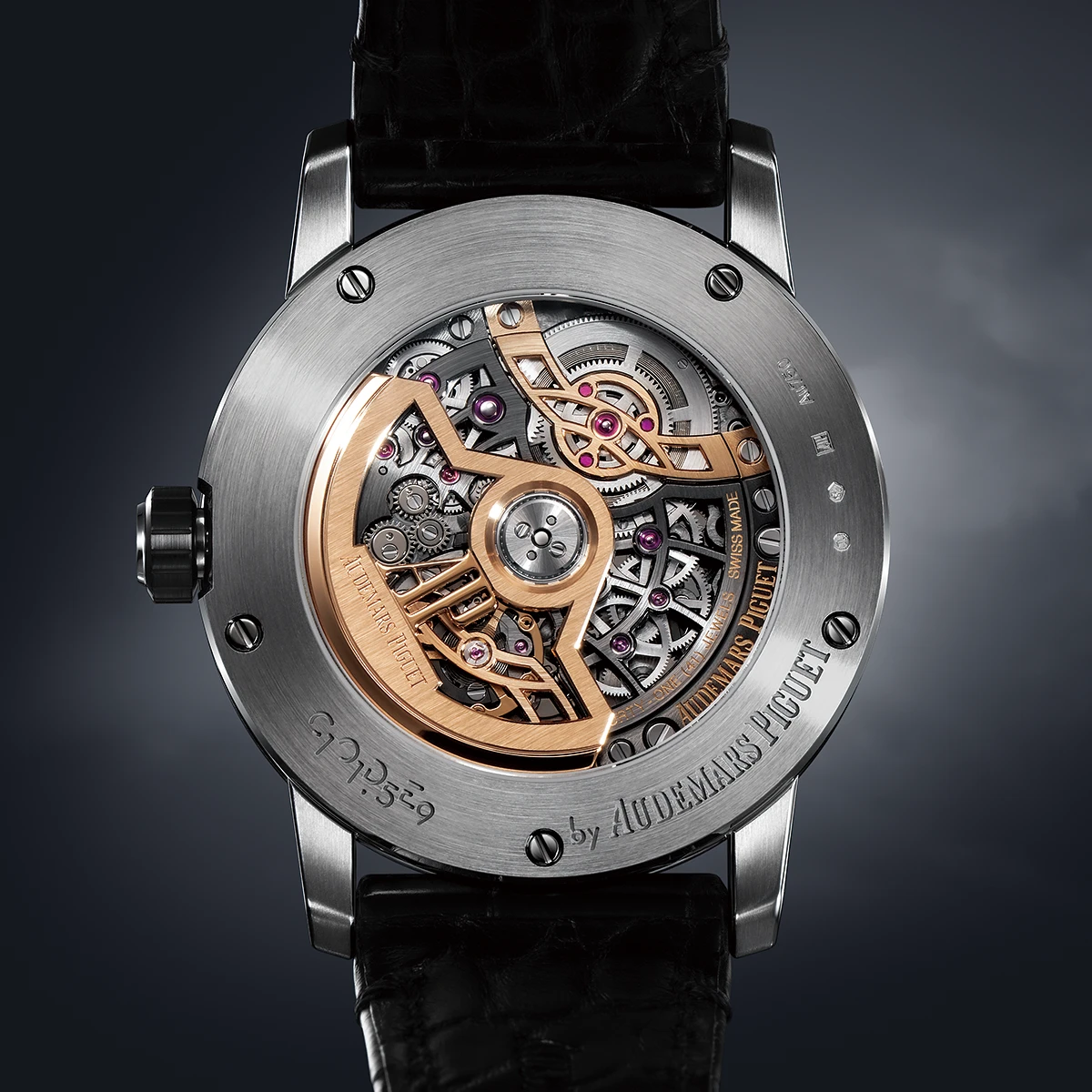
Equipped with the new Cal.7139 movement, an openworked version of the Cal.7138 perpetual calendar movement. This is the first openworked perpetual calendar in the collection. The sapphire crystal dial is overlaid with gray transparent sub-dials, achieving a high level of balance between aesthetics and legibility. The calendar is fully adjustable via the crown. Automatic winding (Cal.7139). 41 jewels. 28,800 vibrations/hour. Power reserve of approximately 55 hours. 18K white gold x ceramic case (41mm diameter, 10.6mm thickness). 30m water resistance. Price upon inquiry.
The "CODE 11.59 by Audemars Piguet Perpetual Calendar Openworked" features the Caliber 7139, which is an openworked version of the 7138. The clever move is to remove most of the dial and hollow out the bridges to reveal the components, while deliberately leaving the mainplate intact. A skeletonized design would have made it even more visually appealing. However, with such a complex mechanism with overlapping components, it would be difficult to achieve the "lightness" that only a skeletonized design can provide. Furthermore, it would likely not have passed the company's rigorous tests against impacts expected in daily life, and legibility would have been compromised. The company's emphasis on legibility, even in an openworked design, is evident from the fact that the four sub-dials are made of translucent gray, and the bridges holding the mechanism components beneath them are colored anthracite.
This watch, with its exposed components, offers the unique opportunity to see the mechanisms of the Cal. 7139. For example, the "progressive step" disc that enables uneven date display. The way the uneven gears mesh to change the date display is something that watch enthusiasts would surely want to see. The movement of the parts when operating the three-stage crown is also something that is never seen in a typical perpetual calendar. Normally, skeleton watches are meant to be enjoyed for the finish applied to the movement and components. In contrast, this watch is innovative because it allows you to enjoy the "movement" itself.
Audemars Piguet, the creator of the skeleton watch genre, is now changing the very way complicated watches are presented with openwork. From watches where you admire the finish to watches where you can enjoy the movement of the mechanism. This has been made possible by the design capabilities that have been elevated to the point where components can be freely arranged. This timepiece is a symbol of Audemars Piguet today, with 150 years of history.