
Greubel Forsey, with its atelier in La Chaux-de-Fonds, has a special research department called "EWT" (Experimental Watch Technology) within its laboratory. As its avant-garde name suggests, this department is where cutting-edge technologies such as nanotechnology are refined. A dedicated team has been stationed there with the aim of defining and quantifying "traditional handiwork," which has traditionally been left to the skill of the watchmaker. Greubel Forsey has reaffirmed its commitment to the "value of handiwork" that has been passed down since its founding, and has reconstructed a clear standard.
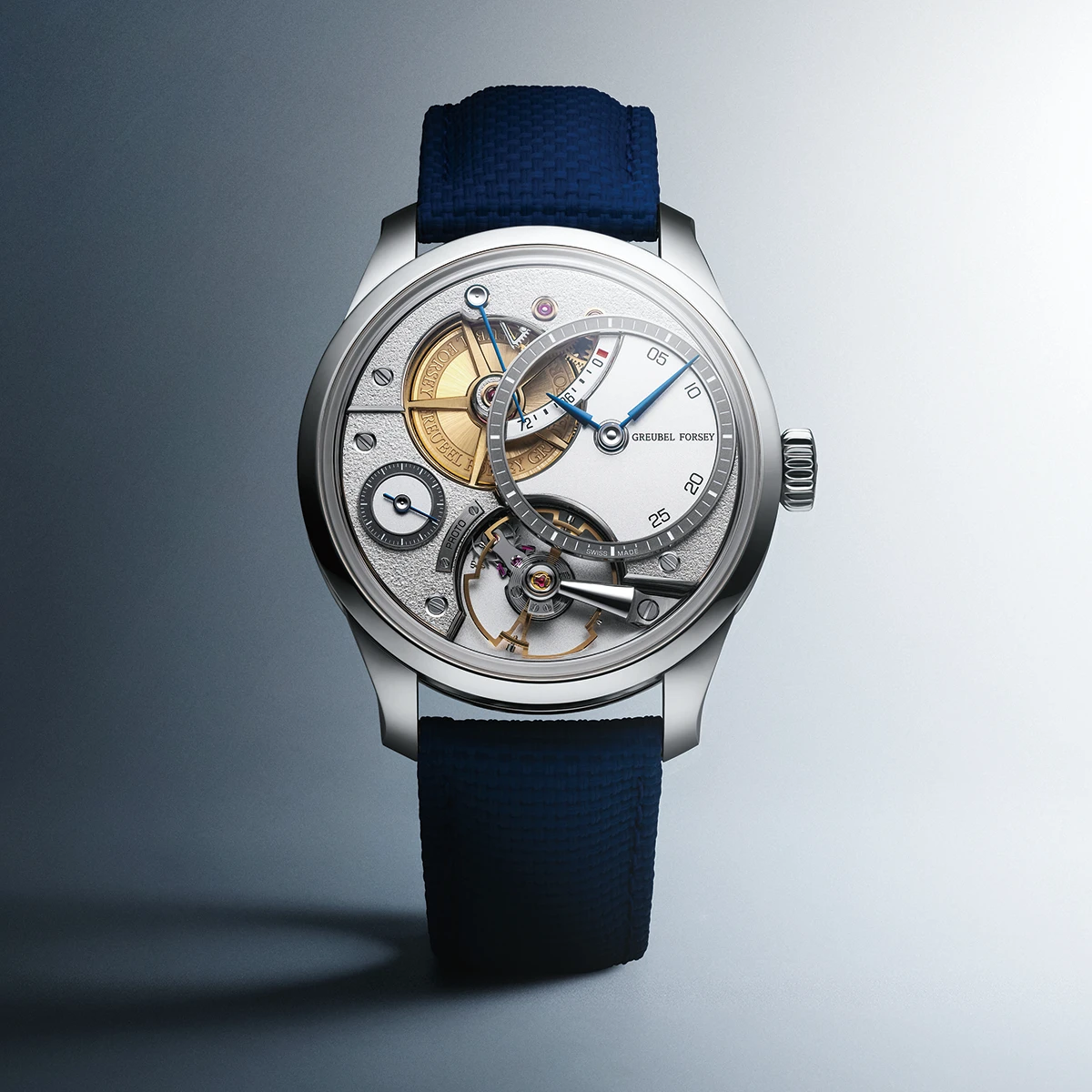
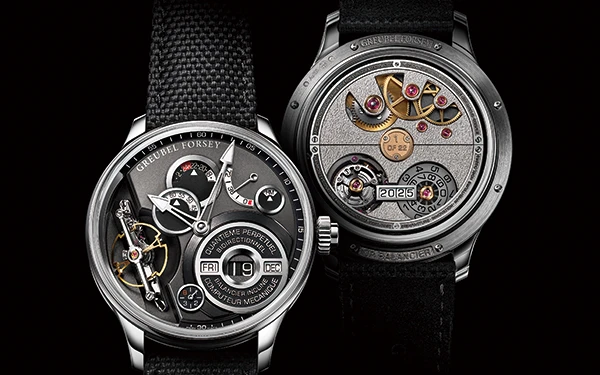
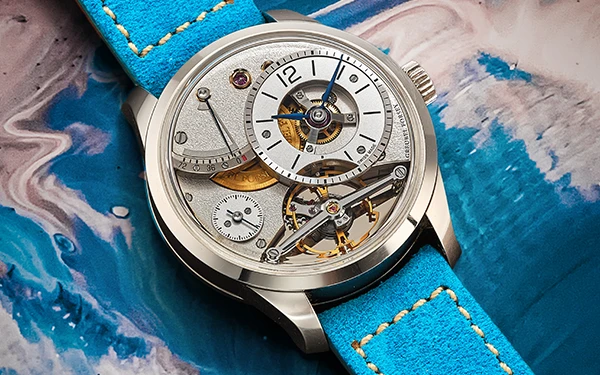
This is the first standard watch produced based on the "Qualité Musée" standards defined by EWT. Its classic form embodies an aesthetic that can only be achieved through traditional handcrafting. Manual winding (Cal. GF09cm). 34 jewels. 21,600 vibrations/hour. Power reserve approximately 72 hours. 18K white gold case (39.6mm diameter, 12.25mm thickness). 3 ATM water resistance. Limited edition of 33 pieces worldwide. Price upon inquiry.
[Article published in the July 2026 issue of Kronos Japan]
The value of craftsmanship as articulated
Since its founding in 2004, Greubel Forsey has cherished the value of handcrafted and hand-finished products as one of its core principles. In the Swiss watch industry, where the concept of handcrafted is extremely ambiguous, Greubel Forsey clearly defined what handcrafted means when it released its "Handmade" models in 2019 and 2025. For Greubel Forsey, the "Balencière QM," announced in 2026, is a model that elevates the value of handmade to the next level.
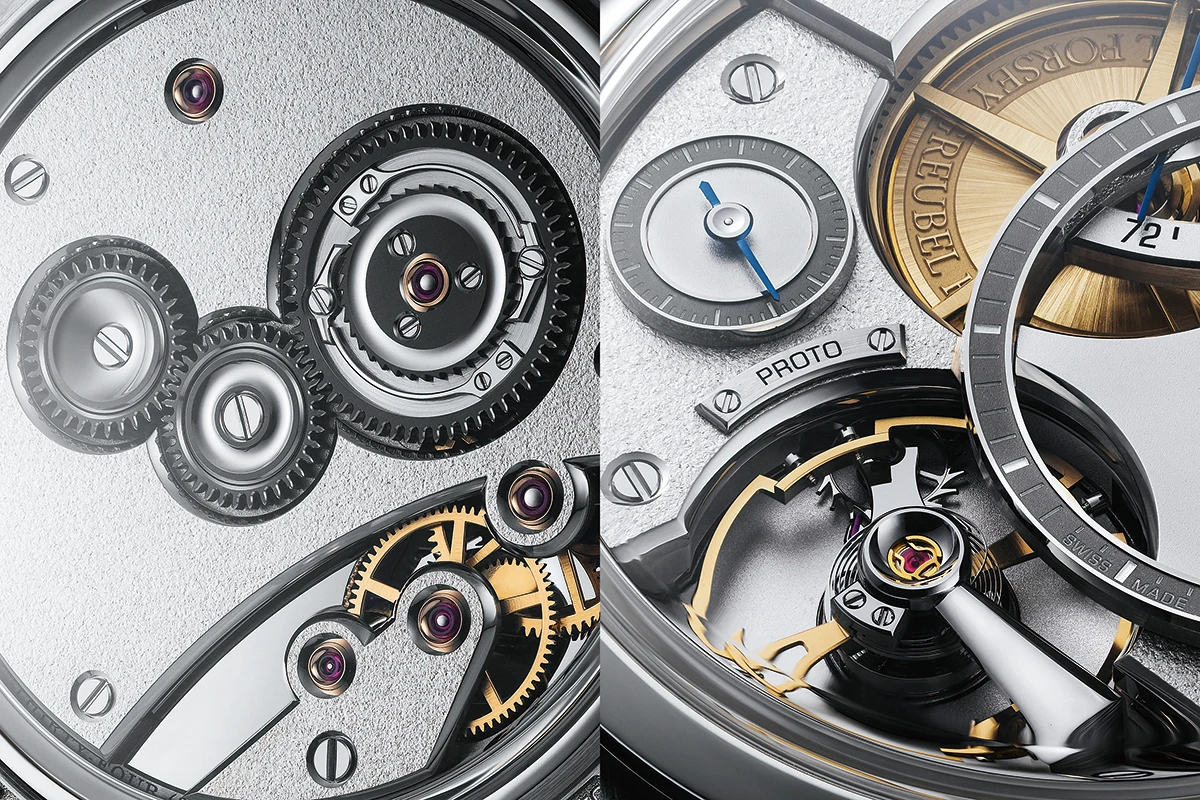
Among the Balencières, which guarantee high precision with only a basic escapement and without complex mechanisms such as tourbillons, the QM is one of the simplest models, equipped with only a single large-diameter cantilevered balance wheel. The classical aesthetic beauty created by the offset hour and minute hands and the mainspring barrel visible on the dial side positions it as a clear successor that follows the context of handmade watches. However, what is fundamentally different from previous models is the redefinition of the value of hand-finishing, which has been practiced since the company's founding. Symbolizing this is the introduction of the "QM = Qualité Musée" standard. This standard, which could be translated as museum-piece quality, was researched and developed by a specialized research department called "EWT" established within the company's laboratory, and aims to standardize and quantify the hand-finishing techniques that had previously relied on the skill of each individual watchmaker. This is described in detail on the spec sheet that comes with the QM.
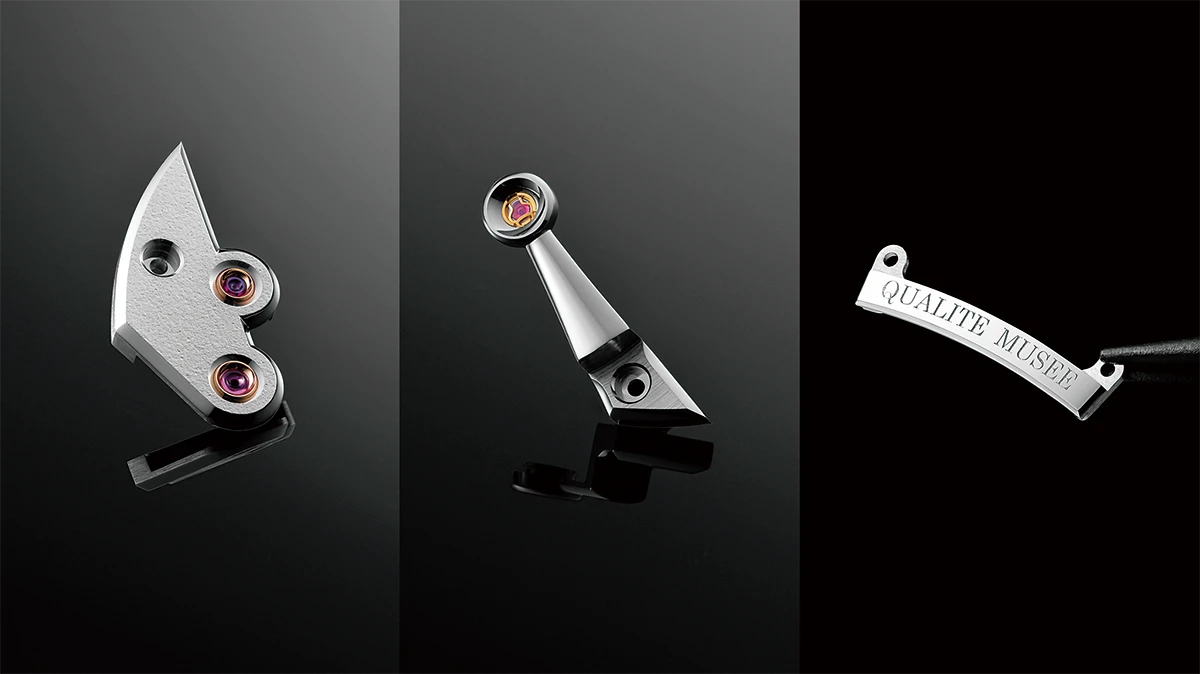
For example, the base plate and bridge made of German silver are frosted and treated with nickel palladium on the surface. The chamfers and inner corners, which are wider than usual at 0.4 mm, are hand-polished. The cantilever balance bridge is barrel polished, but this is completely different from the usual mechanical pre-polishing and seems to refer to hand polishing applied to the convex cross-section. The jewels have a convex cross-section, and the parts that house them are given a smooth black polish. Black polish refers to a mirror finish applied using a surface plate made of tin or similar material. The round-hole wheels and the square-hole wheels of the wolf-tooth model are given a concave hand polish, and the pawls are also carefully chamfered and polished... These finishes, applied to all 298 parts, have been done before and are by no means special. What is special is that it has now been explicitly codified as the "standard".
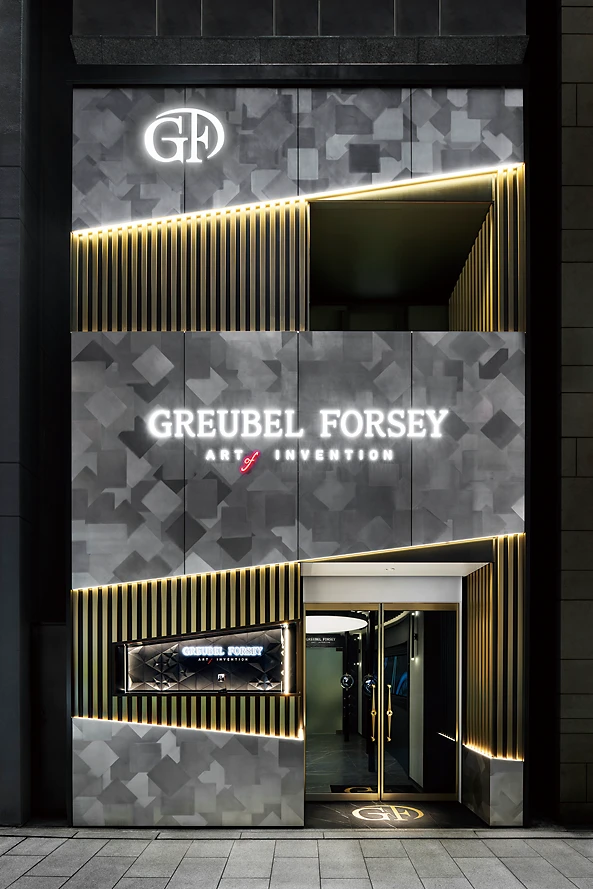
Greubel Forsey Boutique Ginza
Opened in April 2024, this is the brand's first boutique, established through a partnership with YOSHIDA, which holds the exclusive distribution rights in Japan. Here, you can experience rare timepieces in a luxurious setting.
Business hours / 10: 30-19: 30
Closed: Tuesdays (except public holidays)
https://watch-yoshida.co.jp/greubelforsey_ginza