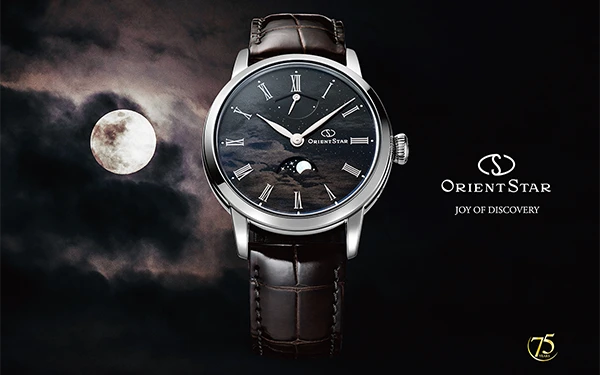

In 2026, Orient Star celebrated its 75th anniversary. True to the brand's history of emphasizing skeleton designs and power reserve indicators, this year they released a completely new skeleton design. The 110 million yen price tag reflects the extra effort put into its construction. But what's truly remarkable, even more than the details, is the masterful packaging.
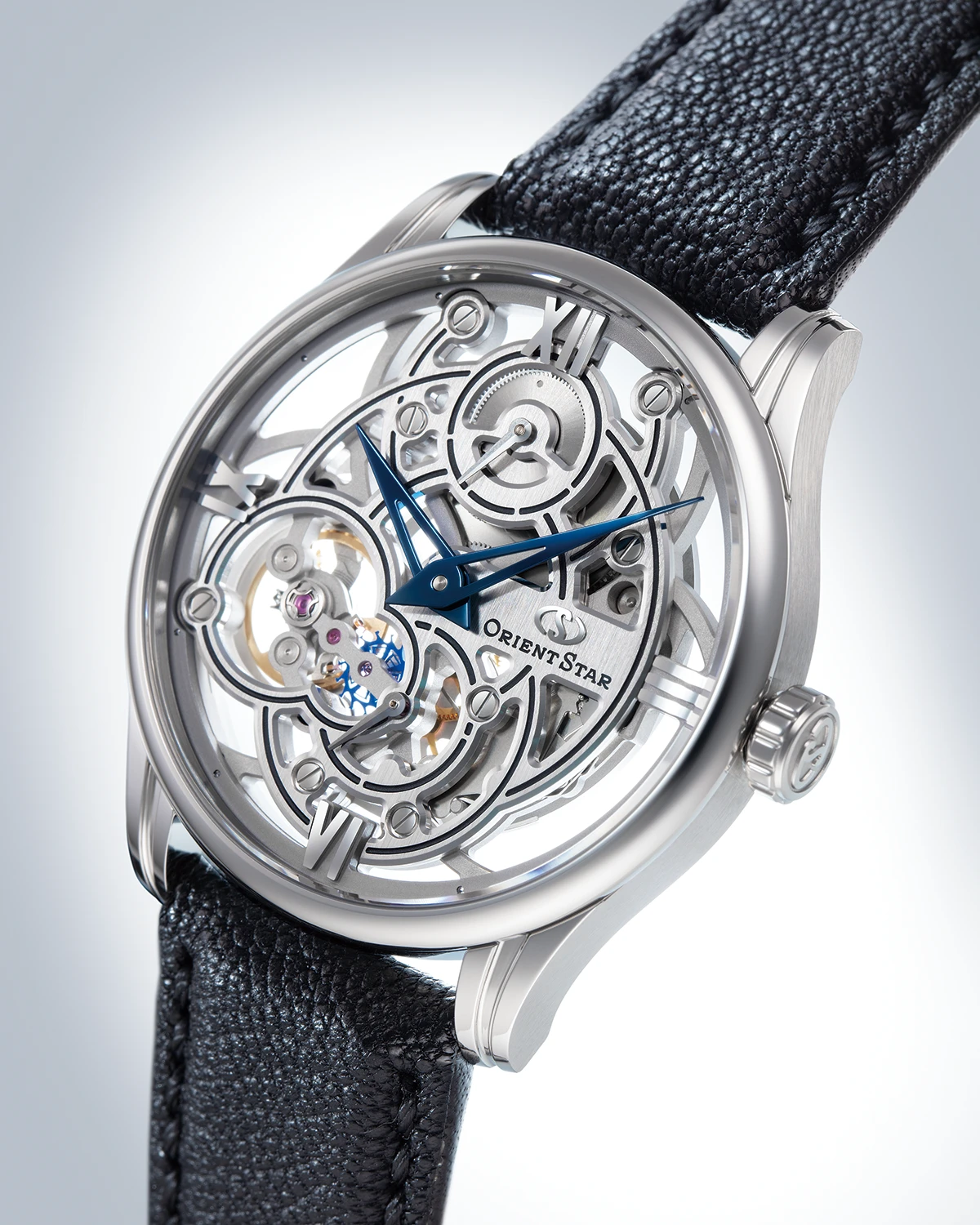
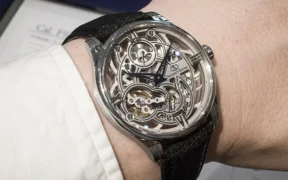
Orient Star 75th Anniversary Model. To create the finest timepiece, almost all of the parts, including the exterior, were newly manufactured. The inner frame was eliminated and the diameter of the movement was enlarged to increase the available space. The bevels and screws were also refinished to the standards of high-end watches. Comes with a 10-year warranty. Manual winding (Cal. F9B82). 20 jewels. 21,600 vibrations/hour. Power reserve of approximately 72 hours. Stainless steel case (40mm diameter, 9.5mm thickness). 3 ATM water resistance. Limited edition of 130 pieces worldwide (75 pieces in Japan). 1,100,000 yen (tax included).
Photographs by Eiichi Okuyama
Masamasa Hirota (this magazine): Interview and writing
Text by Masayuki Hirota (Chronos-Japan)
Edited by Yousuke Ohashi (Chronos-Japan)
[Article published in the July 2026 issue of Kronos Japan]
The future of design created by "space"
The Orient Star, with its iconic power reserve indicator at the 12 o'clock position and skeleton design, celebrated its 75th anniversary in 2026 with the release of a new model that fully showcased its unique character. It's called the "Orient Star Skeleton."
With this model, Orient Star aimed to create the best watch in the brand's history. Therefore, the watch's construction was completely redesigned. One example of this is the design. For many years, Orient Star had skeletonized its basic 46-series movements by removing material. In contrast, the new F9-series movement featured in this new model has been enlarged to its maximum diameter. The reason for this deliberate enlargement was to emphasize the Japanese concept of "ma" (space/space). Furthermore, the latest design eliminated the inner frame holding the movement, instead attaching it directly to the case, creating even more visual space. This idea of integrating the movement and case resulted in a design unlike anything typically seen in Japanese watches.
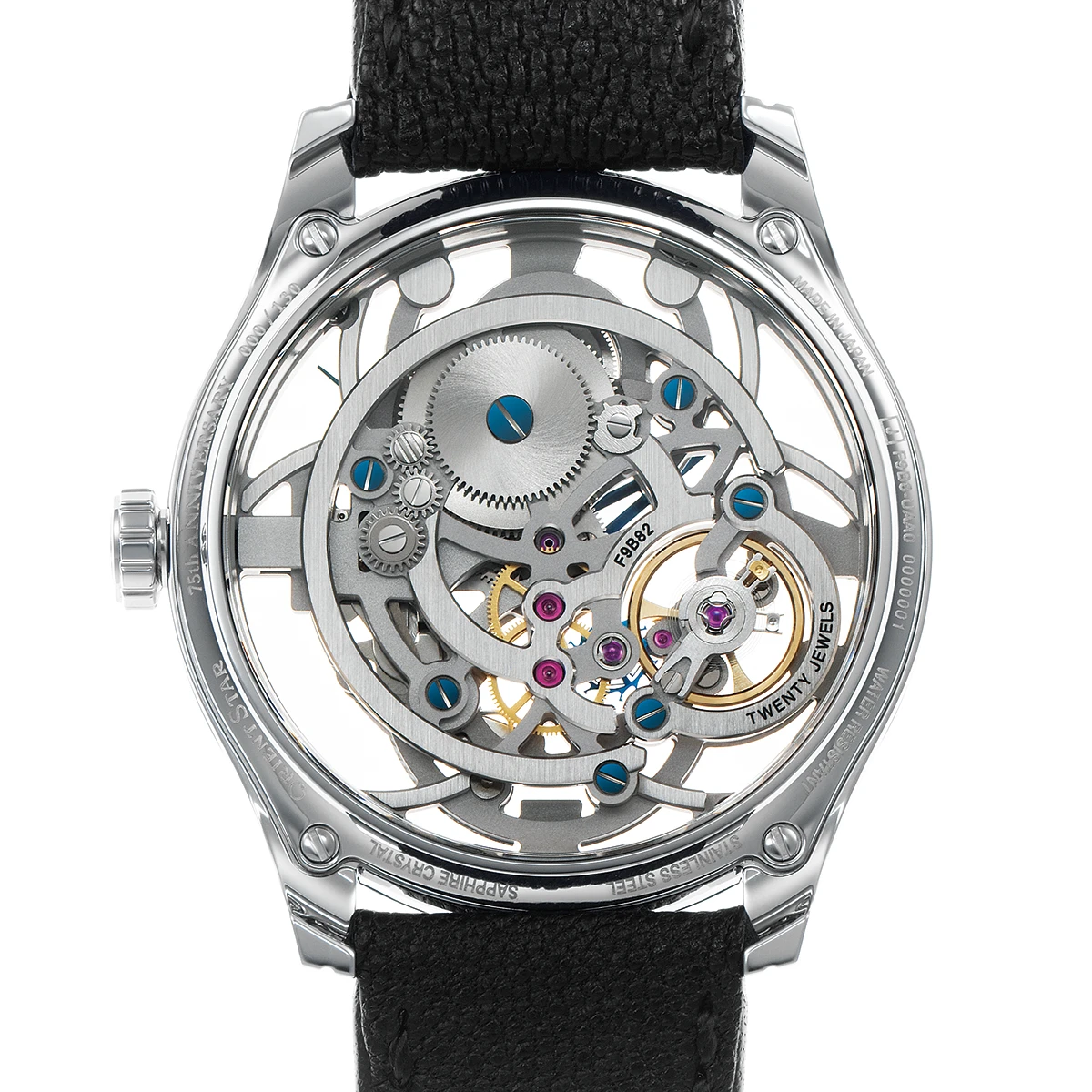
The finishing is also ambitious. The base plate and bridges, which were finished by machining, were then given a fine sandblasting treatment. Normally, a matte finish would dull the edges, but this is not the case with this piece. When asked, they said, "We finished it to the same standard as the dial." In addition, the chamfers of the base plate and bridges were given a mirror finish with a diamond cutter, emphasizing the depth of the movement. The reason for not making the chamfers thicker was a consideration for the design.
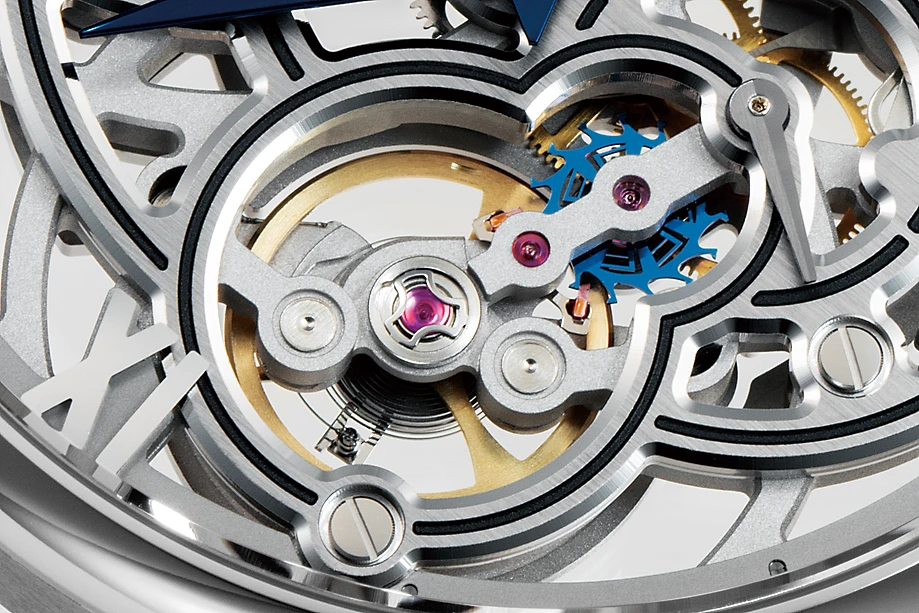
Furthermore, the development team added a unique twist to the design of this model. The "circle" motif, common to all Orient Star watches, is highlighted by black lines. While seemingly simple, the color filling process is irreversible, requiring the craftsmen to fill in the recessed lines in a single, precise stroke. The screws that secure the movement were also replaced with high-quality screws with smoothly polished heads. Orient Star went to the trouble of having screws specially made for this limited edition of 130 pieces.
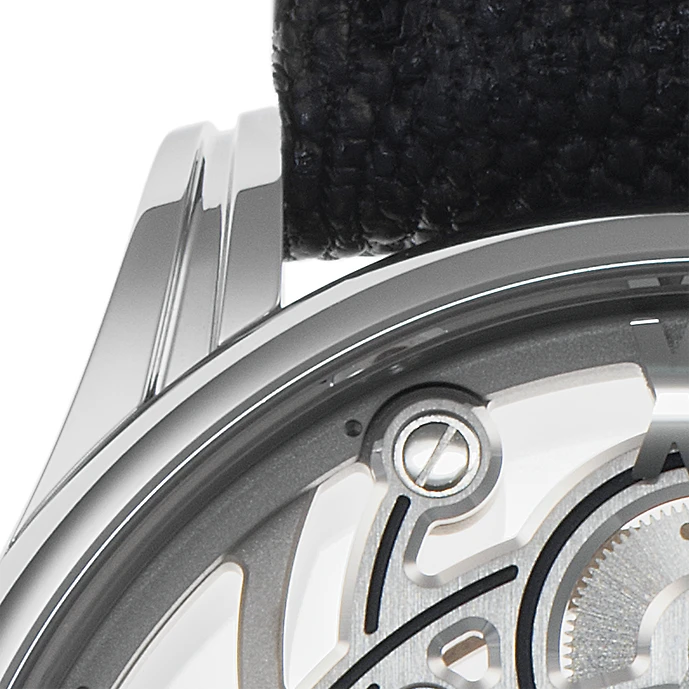
The case is also elaborately designed. Despite having no inner frame, the case is made as thin and slender as possible. On the other hand, to give it a three-dimensional feel, an indentation is made in the center of the lug surface. The inside of this indentation has a mirror finish because the inside was polished with a micro-machining machine. It may seem like a waste of machinery, but an unprecedented attempt was made to achieve the desired finish.
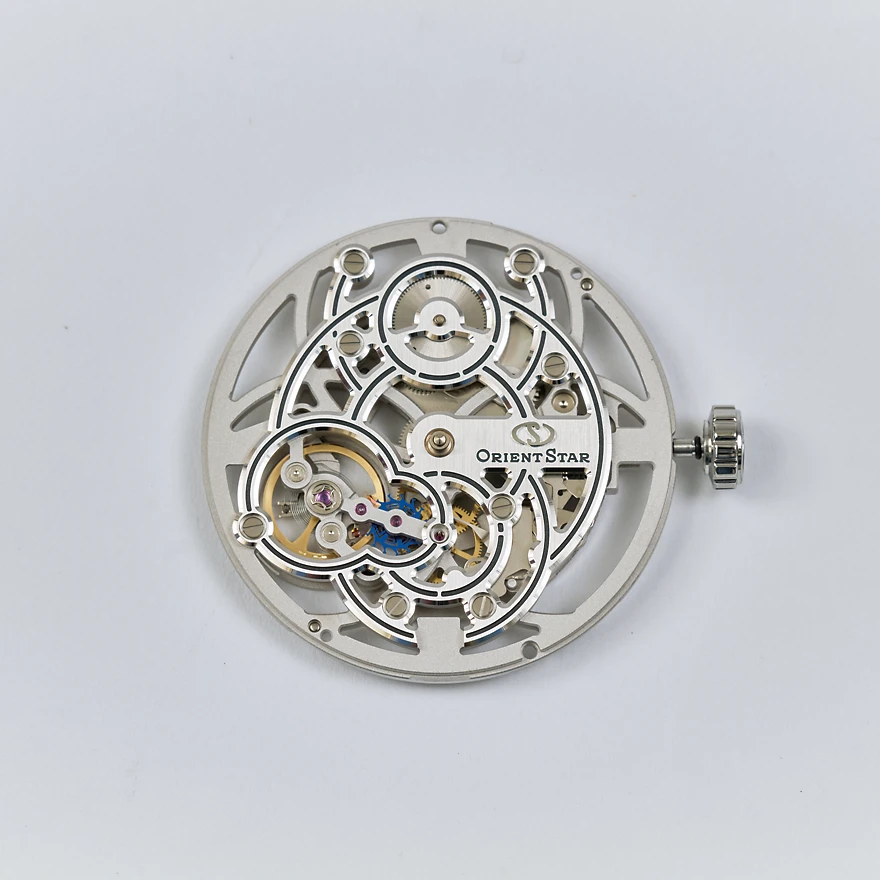
What's most noteworthy about this watch is its excellent packaging. To conceal any unnecessary elements, the winding stem is covered by the base plate and bridge, the hands are blued for better legibility, and the dial surface features cabochon-shaped indices at 5-minute intervals. In addition, the goat leather strap, finished using a technique called Chari Happo, provides superior comfort.
The price is 110 million yen. It is remarkably expensive compared to other existing Orient Star models, but for those with a discerning eye for watches, it is undoubtedly a very attractive timepiece. The Orient Star Skeleton is a product of the brand's full efforts. This is, without exaggeration, the pinnacle of Orient Star as it celebrates its 75th anniversary.
A harmony of softness and strength, a "pioneer" of a new standard.
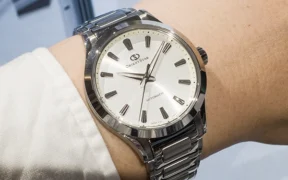
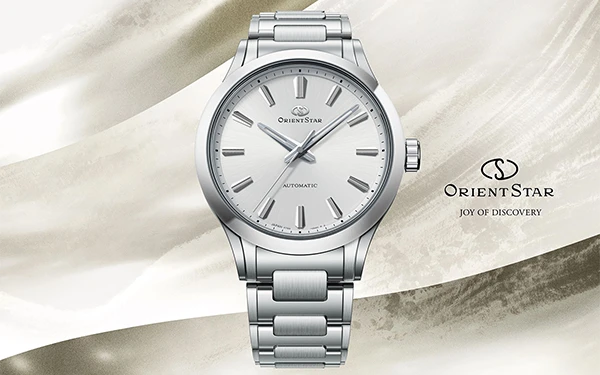
Orient Star has almost always featured a power reserve indicator at the 12 o'clock position. However, the "Three Hand" model, released in the year of its 75th anniversary, is a new model that abandons this signature feature. The absence of a power reserve indicator and date display was made possible by the meticulous craftsmanship of the dial and hands. Its exquisite workmanship is sure to excite even connoisseurs.
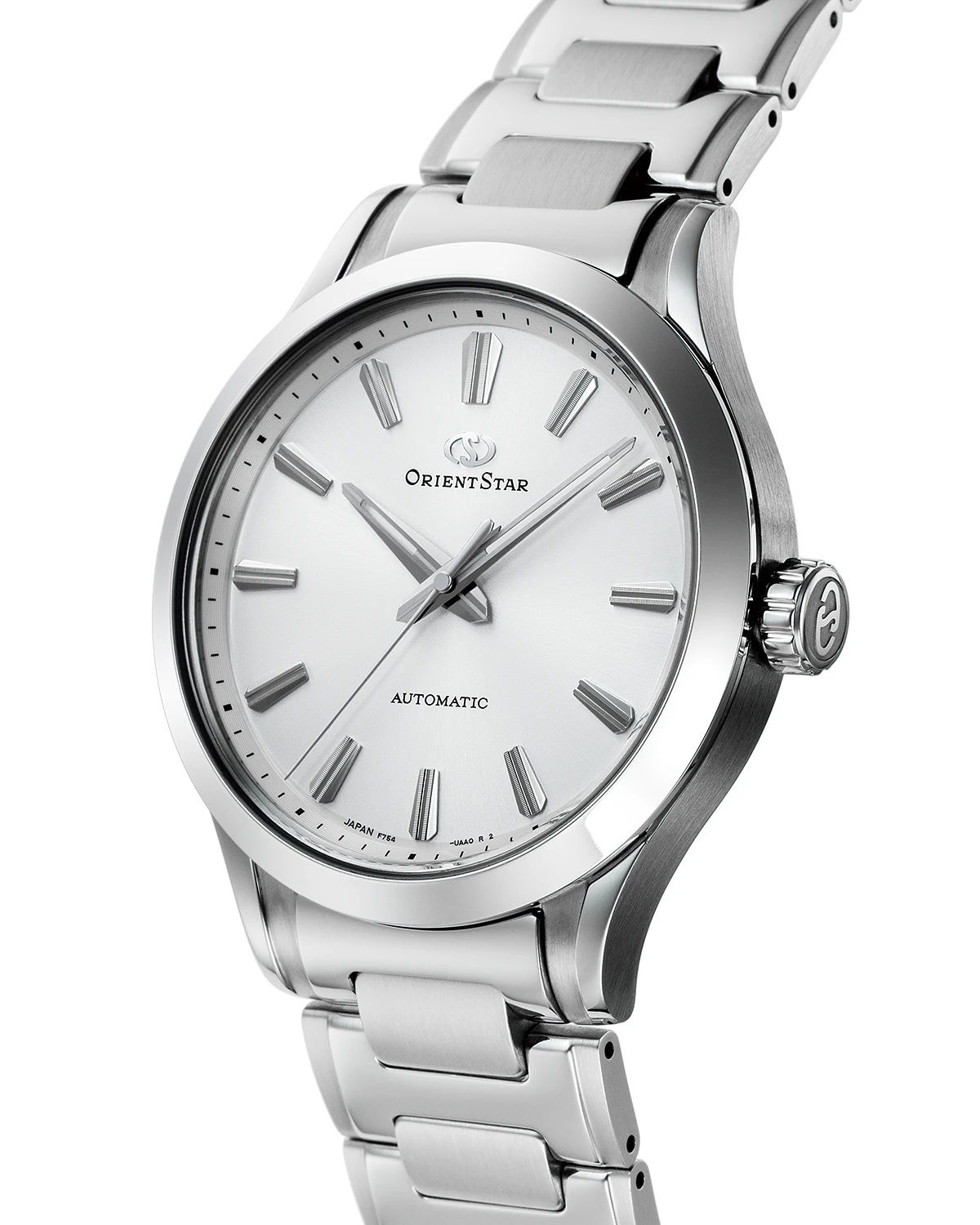
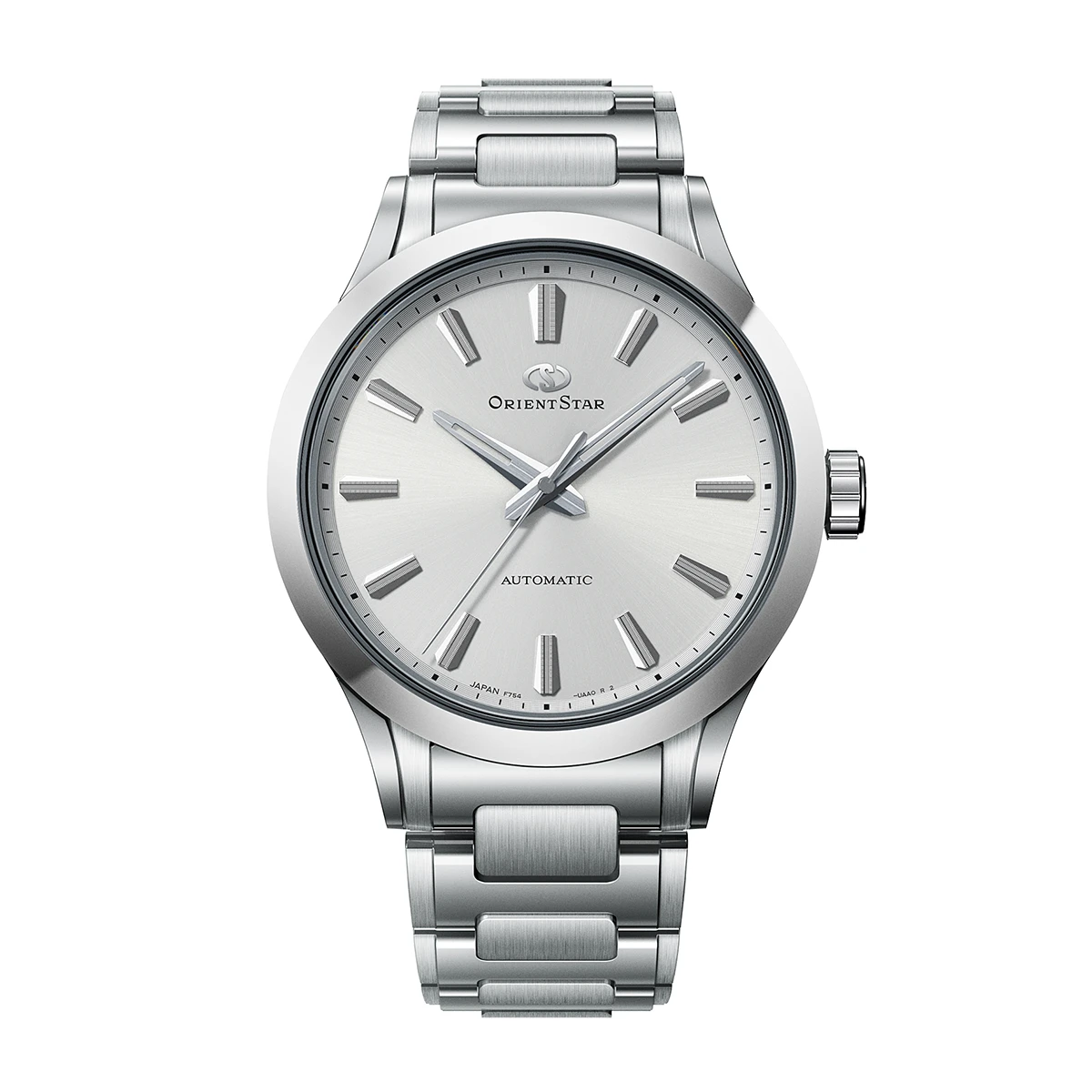
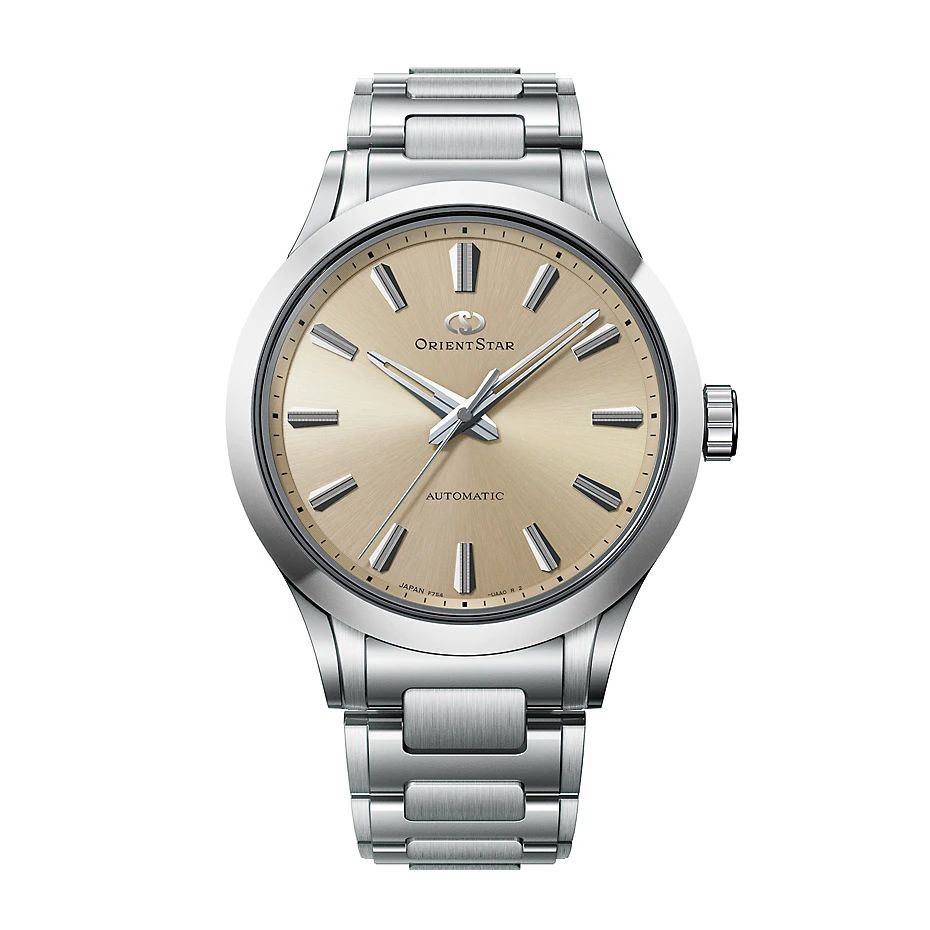
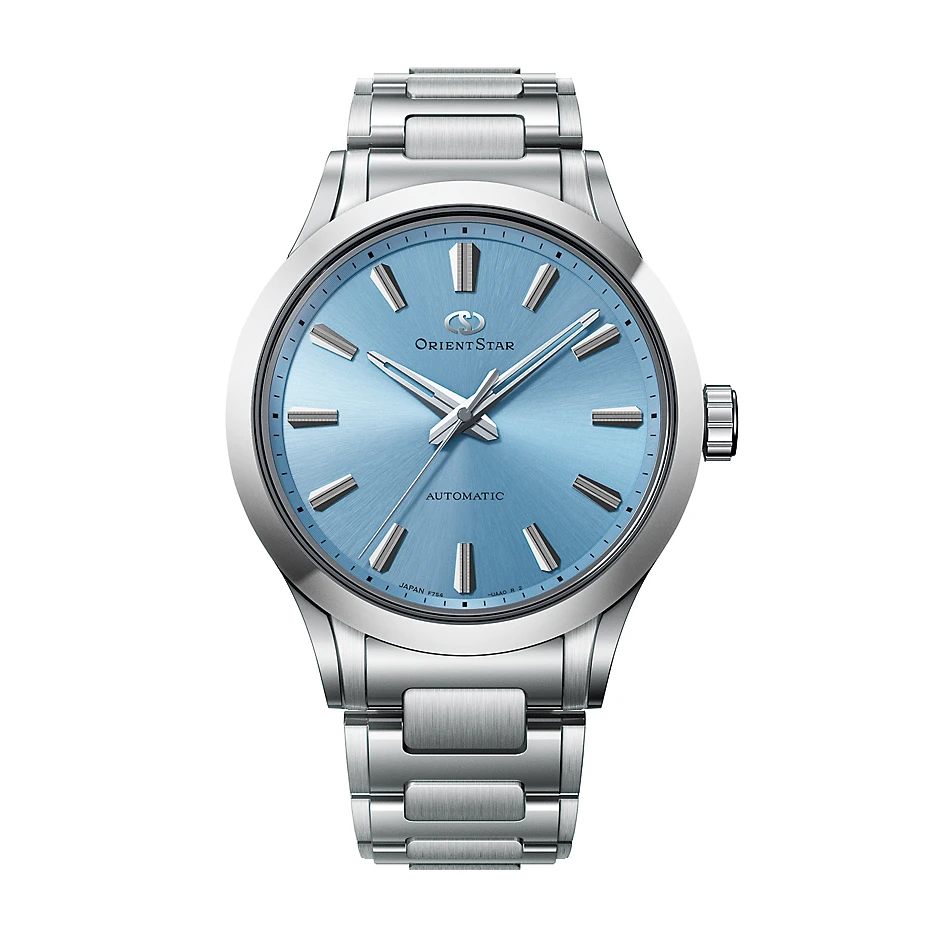
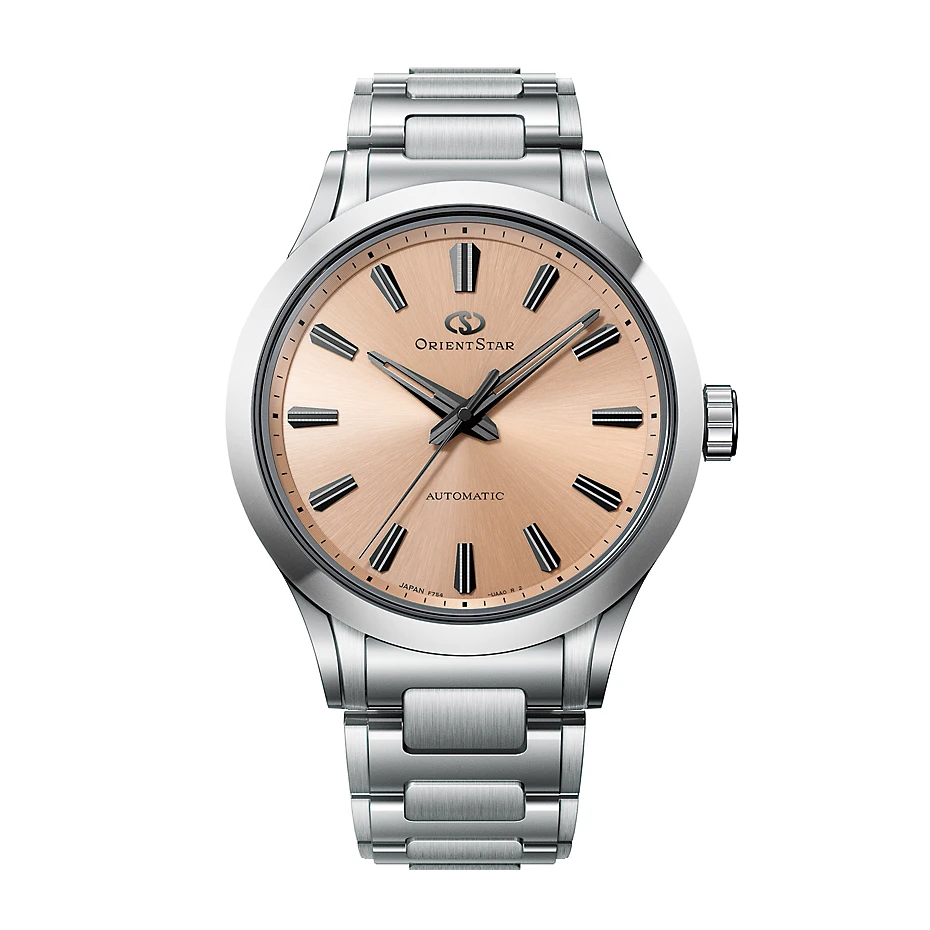
As its concise model name suggests, this basic model emphasizes a simple design. Thanks to a new design code, the bracelet and case are cleverly integrated. The finish of the dial and hands far exceeds the standards for this price range. Automatic movement (Cal. F7542). 22 jewels. 21,600 vibrations/hour. Power reserve of approximately 50 hours. Stainless steel case (38.7mm diameter, 11.8mm thickness). 10 ATM water resistance. 132,000 yen (including tax).
While expanding its high-end lineup, Orient Star is also working on refreshing its classic "Bread & Butter" series. To commemorate its 75th anniversary, Orient Star released the "Three Hand," a new design and concept. Its defining feature is its remarkably simple configuration. It lacks not only the power reserve indicator at the 12 o'clock position, an icon of Orient Star, but also a date display. On the other hand, even more ingenuity has been put into the design and details.
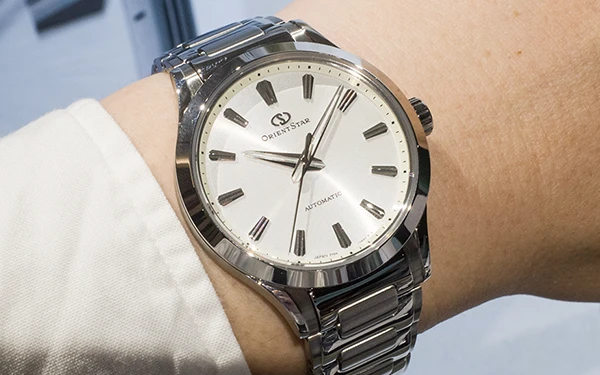
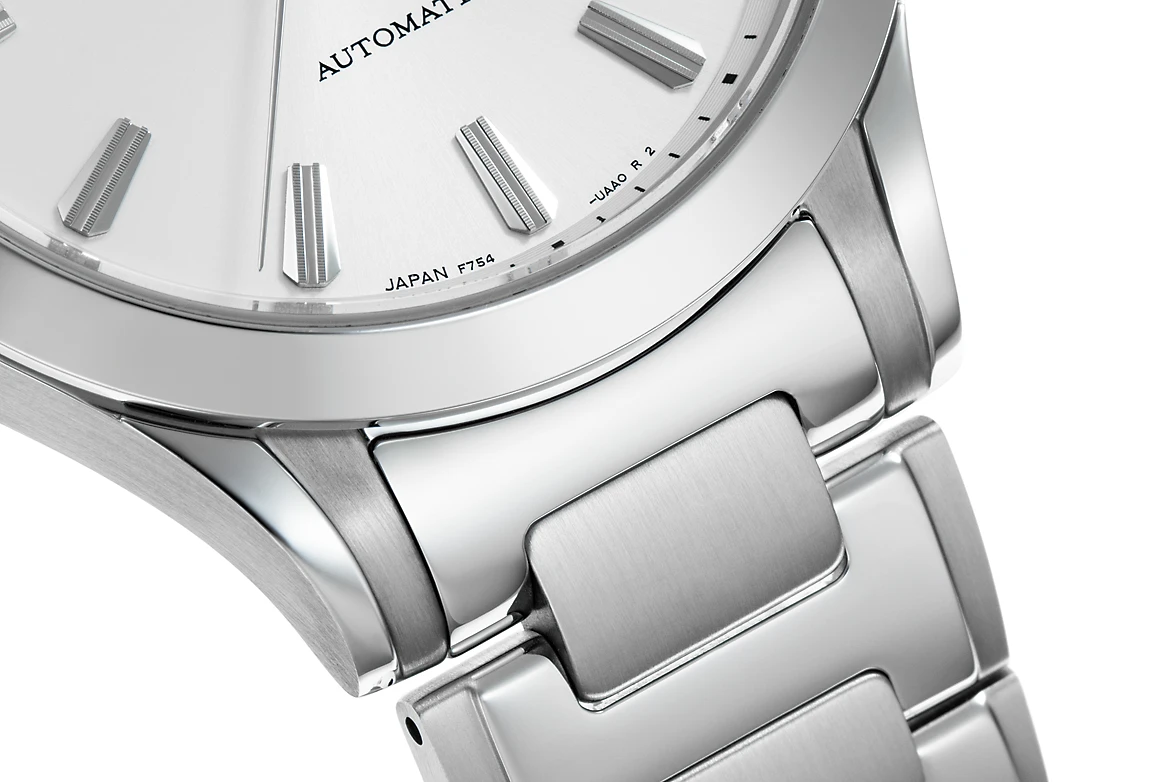
The design of this watch is inspired by a bent bow. As described, the bracelet, which appears to be a separate part, is actually integrated with the case, creating a "single-stroke line that flows from the case to the lugs and band." This integrated design was intentional, but it also significantly enhances the watch's luxurious appearance by eliminating the clearance between the end links and the case. Additionally, the use of H-shaped links in the bracelet makes the gaps between links less visible when the watch is worn on the wrist. Perhaps due to its price in the low 10 yen range, the buckle does not have an extension function, but instead, a half-link has been added to improve the fit. Furthermore, by shortening the lugs and reducing the overall case length to 47mm, the watch is easy to handle.
The reason for omitting the signature power reserve indicator this time isn't solely for aesthetics. This model boasts a case thickness of 11.8mm, making it one of the thinnest automatic Orient Star watches available. While there are even thinner watches in the same price range, fitting a not-so-thin 46-series automatic movement into this size is more than sufficient.
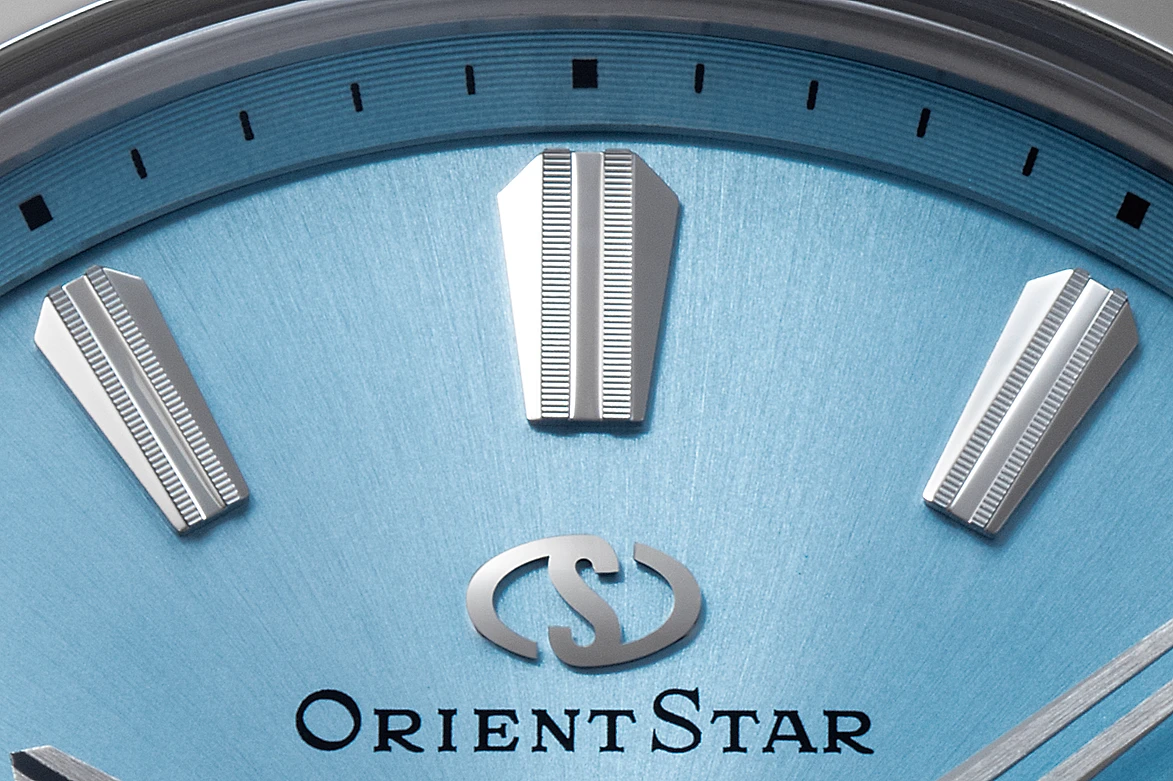
The bold design, lacking a power reserve indicator and date display, is supported by the meticulous craftsmanship of the dial and hands. This model features Orient Star's signature thick lacquer coating on the dial. The colors chosen are the classic silver, gold (which is difficult to achieve a consistent color tone), light blue, and copper (limited edition). While this is a trend-conscious selection, the fact that it could be used in a mass-produced, entry-level model is likely due to Epson's expertise in manufacturing lacquer dials.
What surprised me was the finish of the dial. The thickly applied lacquer surface was free of distortion, and the color matching with the inner bezel far exceeded the standards for this price range. The same goes for the three-dimensional hands and indices. Some parts have a satin finish with a "rainbow effect," and the three-dimensional second hand (!) has a cap in the center, just like a high-end watch. Looking at this dial and hands, who would imagine that this is a watch priced in the low 10 yen range?
However, it's typical of Epson not to make this new model merely a dress watch in appearance. This model is equipped with the Cal.F7542, which further improves upon the accuracy of the 46 series. With a daily variation of +15 to -5 seconds and a power reserve of approximately 50 hours, it's hard to believe that it's based on a low-beat movement whose basic design dates back to 1971. Furthermore, because it's based on the 46 series with its ratchet-type winding mechanism, the winding efficiency is more than sufficient.
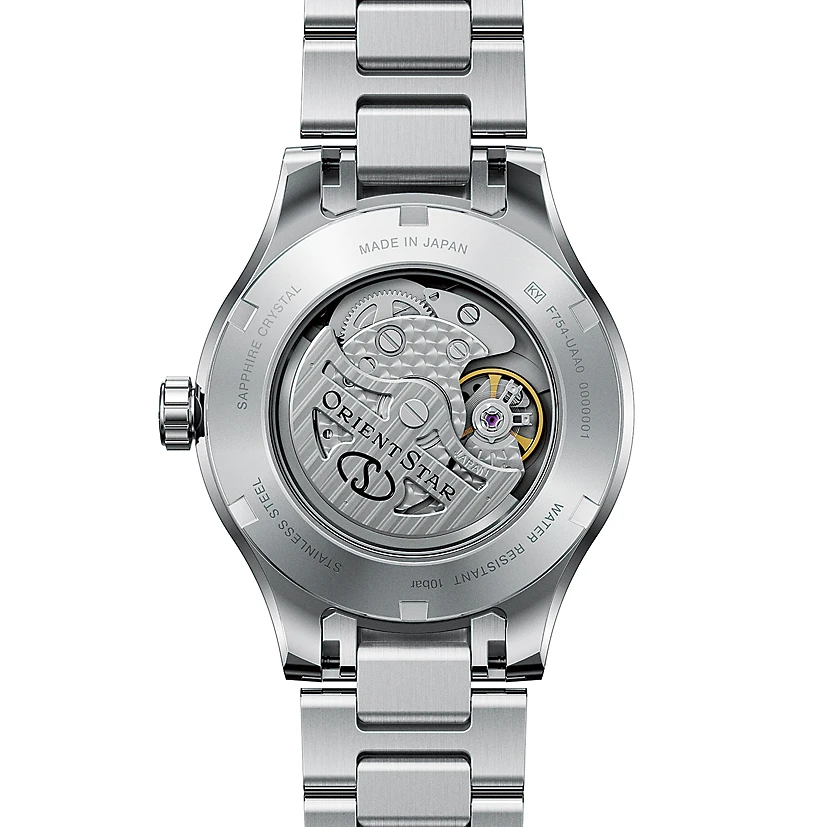
The water resistance is the same 10 atmospheres as existing automatic watches. Furthermore, the crystal is a dual-curve sapphire crystal with anti-reflective (AR) coating on both sides. These features definitely exceed the standard for this price range.
Released as "Orient Star's vision for the next generation of standards," this three-hand watch, as its price range suggests, is strictly an entry-level model. However, its refined construction makes it undoubtedly suitable for everyday use by watch enthusiasts. Discerning readers will surely be amazed by its level of perfection.
Official page for the "Orient Star Skeleton" brand
"Contemporary Collection Three Hand" Official Brand Page