Citizen has released the "Eco-Drive PHOTON" to commemorate the 50th anniversary of its light-powered technology, "Eco-Drive." The multi-layered dial with slits is inspired by the "double-slit experiment," which demonstrates the properties of light. We delve deeper into this unique commemorative model, which elevates the function of capturing light, essential to Eco-Drive, into a design element.
Text by Tsubasa Nojima
[Article published on January 6, 2026]
Eco-Drive, which converts light into power, celebrates its 50th anniversary.
Citizen has unveiled the "Eco-Drive PHOTON" as a new product for 2026. To understand this timepiece, we must first look back at "Eco-Drive," a technology that represents Citizen. Its origins lie in the "Crystron Solar Cell," the world's first analog light-powered watch, released in 1976. The mechanism of converting sunlight into electrical energy and using that power to run a wristwatch has been continuously improved, and in 1994, the name Eco-Drive was born. The following year, in 1995, a model was released that could run for approximately six months on a full charge by adopting a lithium-ion battery. In 1996, it became the first wristwatch to be certified as an Eco Mark product, and it has become a symbolic technology of Citizen. Current Eco-Drive technology achieves high power generation efficiency by receiving and converting not only sunlight but also even faint indoor light into energy.
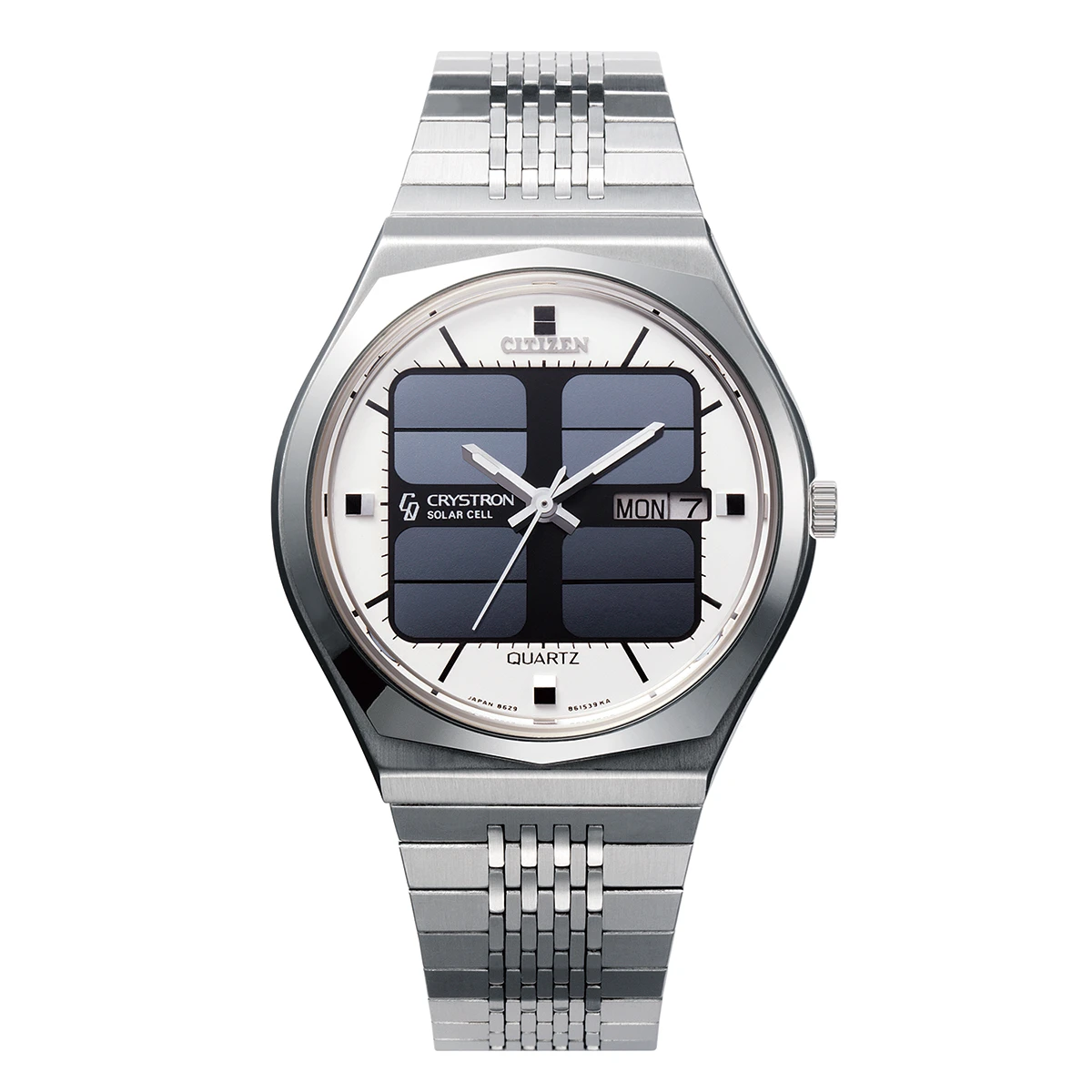
Starting with the original light-powered watch that was the foundation of Eco-Drive, over half a century of evolution, the company has pursued not only performance aspects such as long operating time and thinness, but also design freedom. Light-powered watches need to capture light to generate electricity. In typical Eco-Drive watches, a solar cell is placed beneath the dial, and electricity is generated by passing light through it. Therefore, the dial is required to have two roles: to be the face of the watch and to allow the light necessary for power generation to pass through. The company has so far strived to achieve both power generation performance and design by using dials that express a metallic texture and light-transmitting Japanese paper.
However, the approach taken in this new model is slightly different from previous ones. By deliberately showcasing the light-transmitting structure, it is used as part of the watch's design.
"Eco-Drive PHOTON" commemorates the 50th anniversary of Eco-Drive.
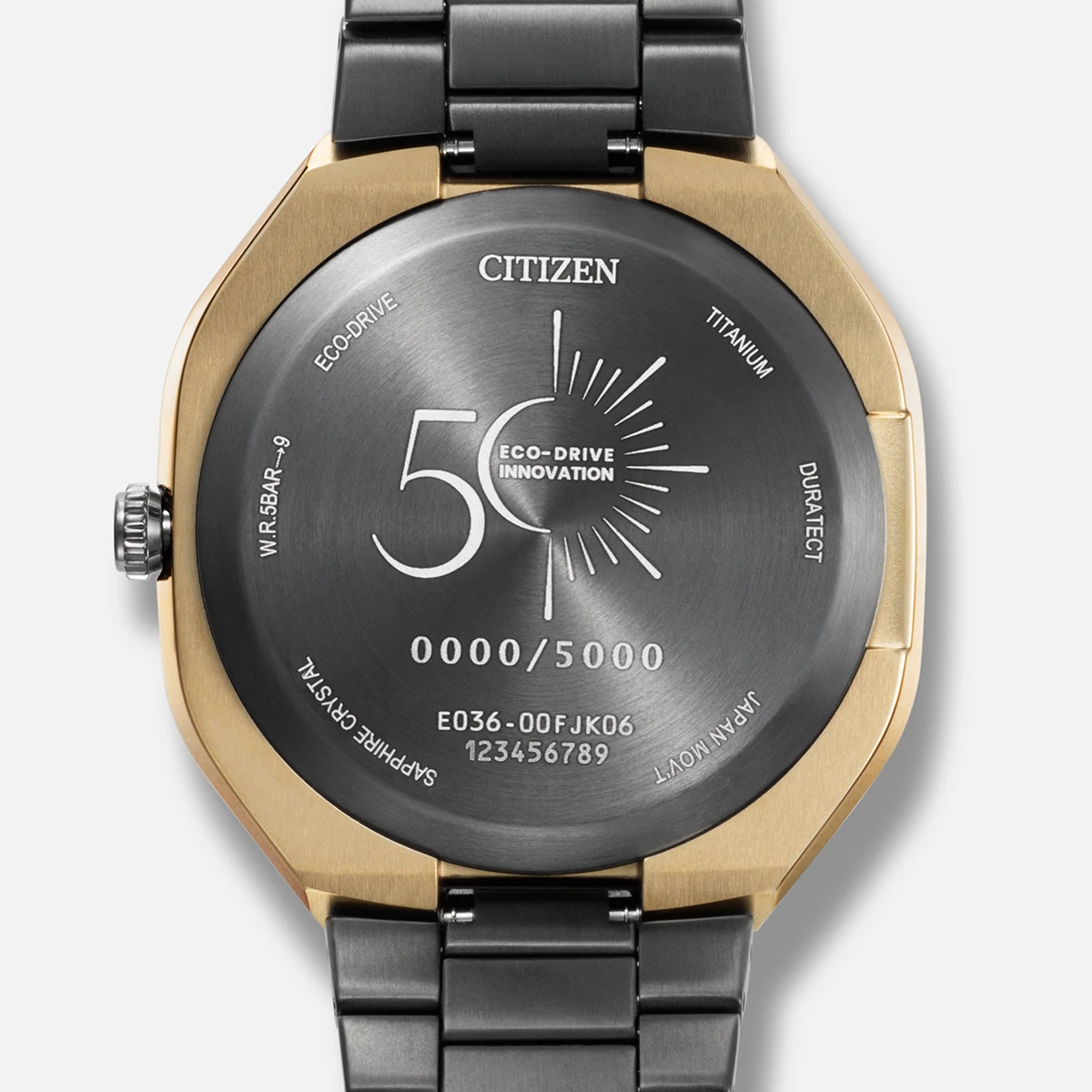
This is how the Eco-Drive PHOTON, a model commemorating the 50th anniversary of Eco-Drive, was born. This model, released by "CITIZEN CREATIVE LAB," comes in two versions: the "Ref. BJ6560-53W" with a silver base color, and the "Ref. BJ6569-59X" which combines black and amber yellow. Each model is limited to 5000 pieces worldwide and has been on sale since October 1, 2026.
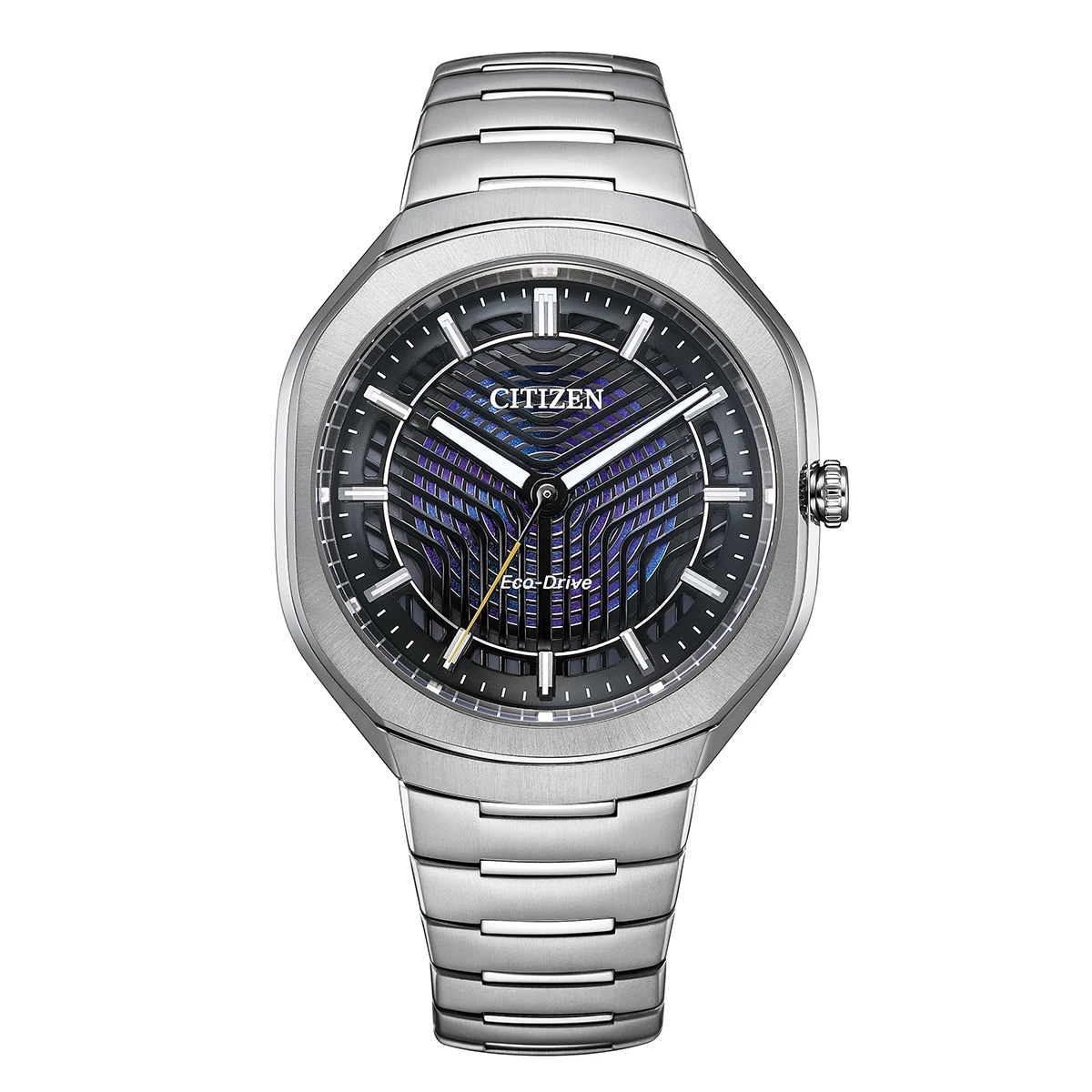
The "Eco-Drive PHOTON" was created to commemorate the 50th anniversary of Eco-Drive. It features a multi-layered dial inspired by double-slit experiments, elevating the Eco-Drive's light-gathering function itself into a design element. It features a light-powered quartz movement (Cal. E036), approximately one year of operation on a full charge, a titanium case (39.6mm diameter, 9.9mm thickness), and 5 ATM water resistance. Limited to 5000 pieces worldwide. Price: ¥148,500 (tax included).
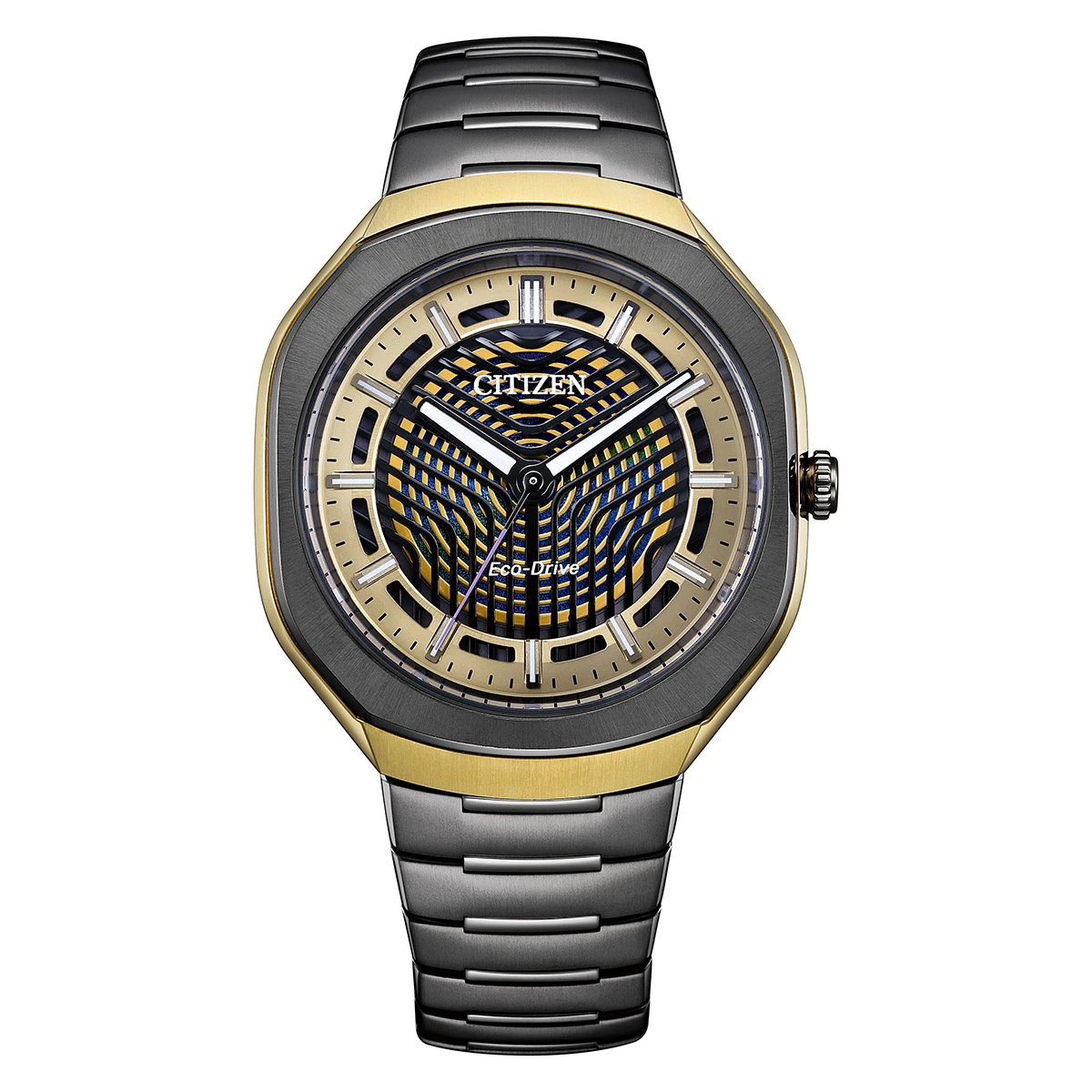
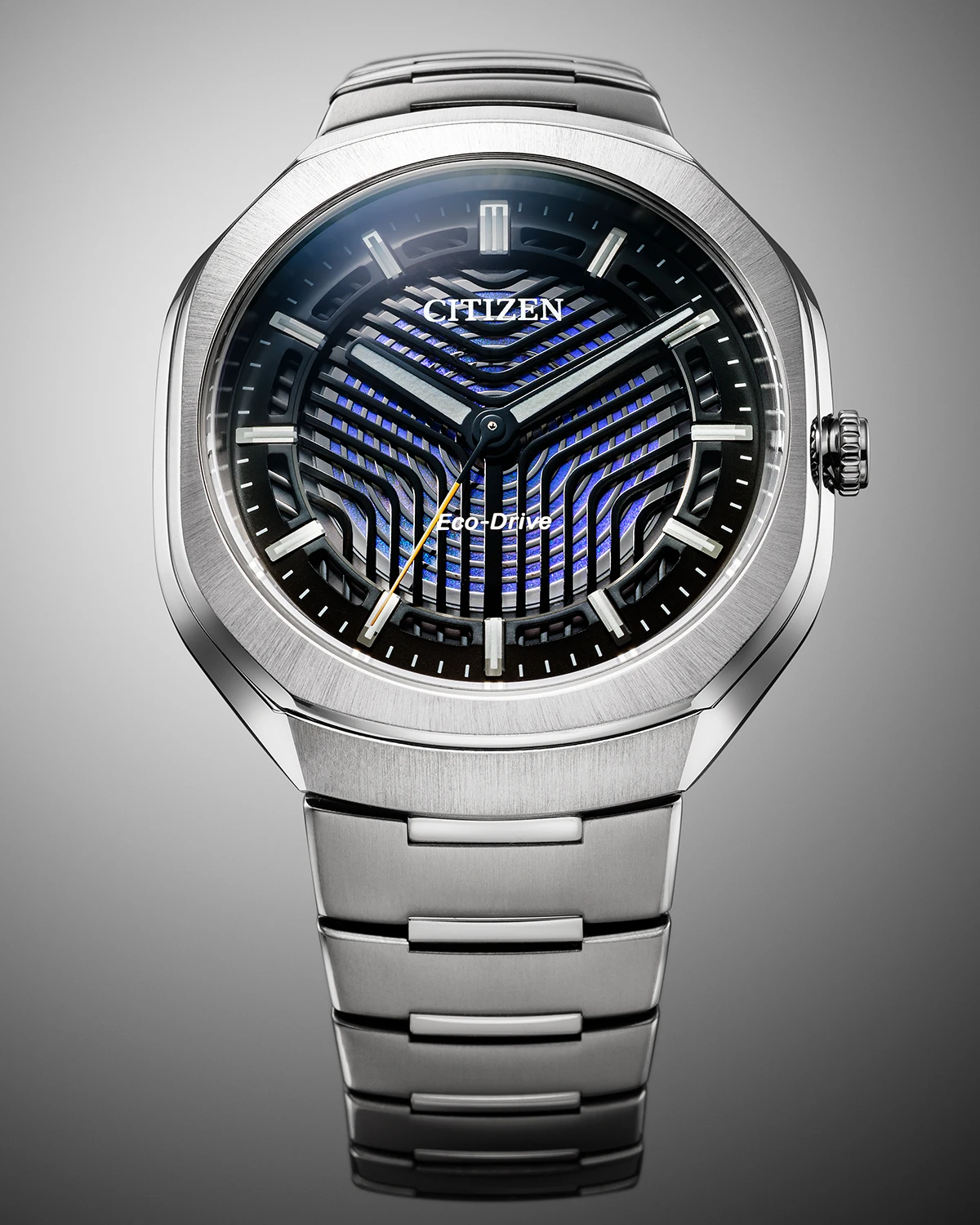
A model combining black and amber yellow. The vibrant colors of the structural color film peek out from behind the slits. The purple second hand adds an accent, giving it a different look from the silver-colored model. Solar-powered quartz (Cal. E036). Approximately 1 year of operation on a full charge. Ti case (diameter 39.6mm, thickness 9.9mm). 5 ATM water resistance. Limited edition of 5000 pieces worldwide. 178,200 yen (tax included).
The model name "PHOTON" refers to the unit by which light energy is exchanged as quanta. As the name suggests, this model features a design that centers around light itself.
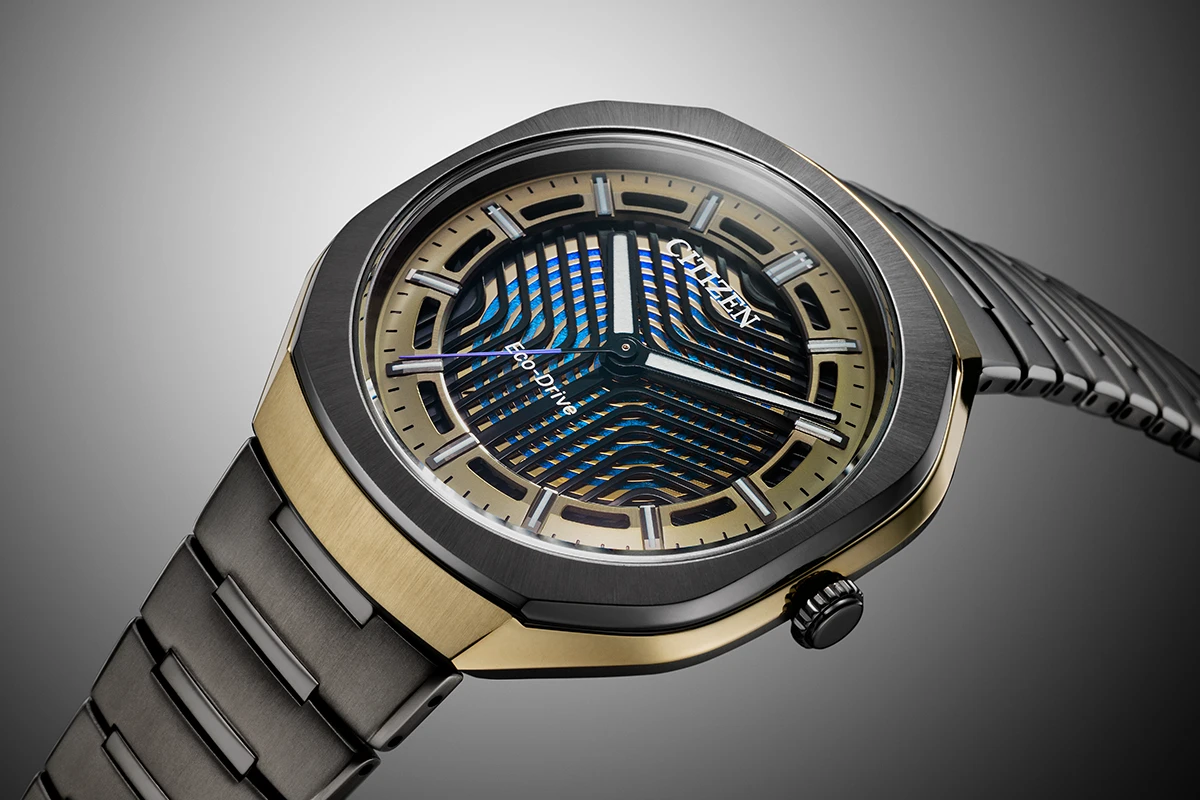
The Ref. BJ6560-53W is a model that features a silver-colored exterior and dial as its base, accented with a yellow second hand. Except for the structural color peeking through the slits, the overall color scheme is subdued, making the complex multi-layered dial design stand out.
The Ref. BJ6569-59X features a striking design combining black with Duratect DLC and Duratect Amber Yellow. The addition of a purple second hand, along with the structural colors, creates a significantly different impression from the silver-colored model, despite sharing the same design.
The case diameter is 39.6mm and the thickness is 9.9mm. Despite its bold and powerful appearance, it is kept in compact dimensions. The movement is equipped with the newly developed Eco-Drive Cal.E036, which is powered by light. Not only does it run for about a year on a single full charge, but by redesigning the circuit, it is now possible to move heavy hands even though it is powered by light.
A dial inspired by the double-slit experiment.
What distinguishes the PHOTON dial is its multiple layers of overlapping slits. The inspiration for this design came from the double-slit experiment, known for demonstrating the properties of light. In this piece, two metal dials with light-transmitting slits are layered on top of each other, with a film using structural color placed beneath them. Structural color is a phenomenon where color is produced not by dyes, but by the reflection and interference of light due to microscopic structures. Furthermore, slits are added to the dial cover, creating a three-dimensional dial with multiple layers.
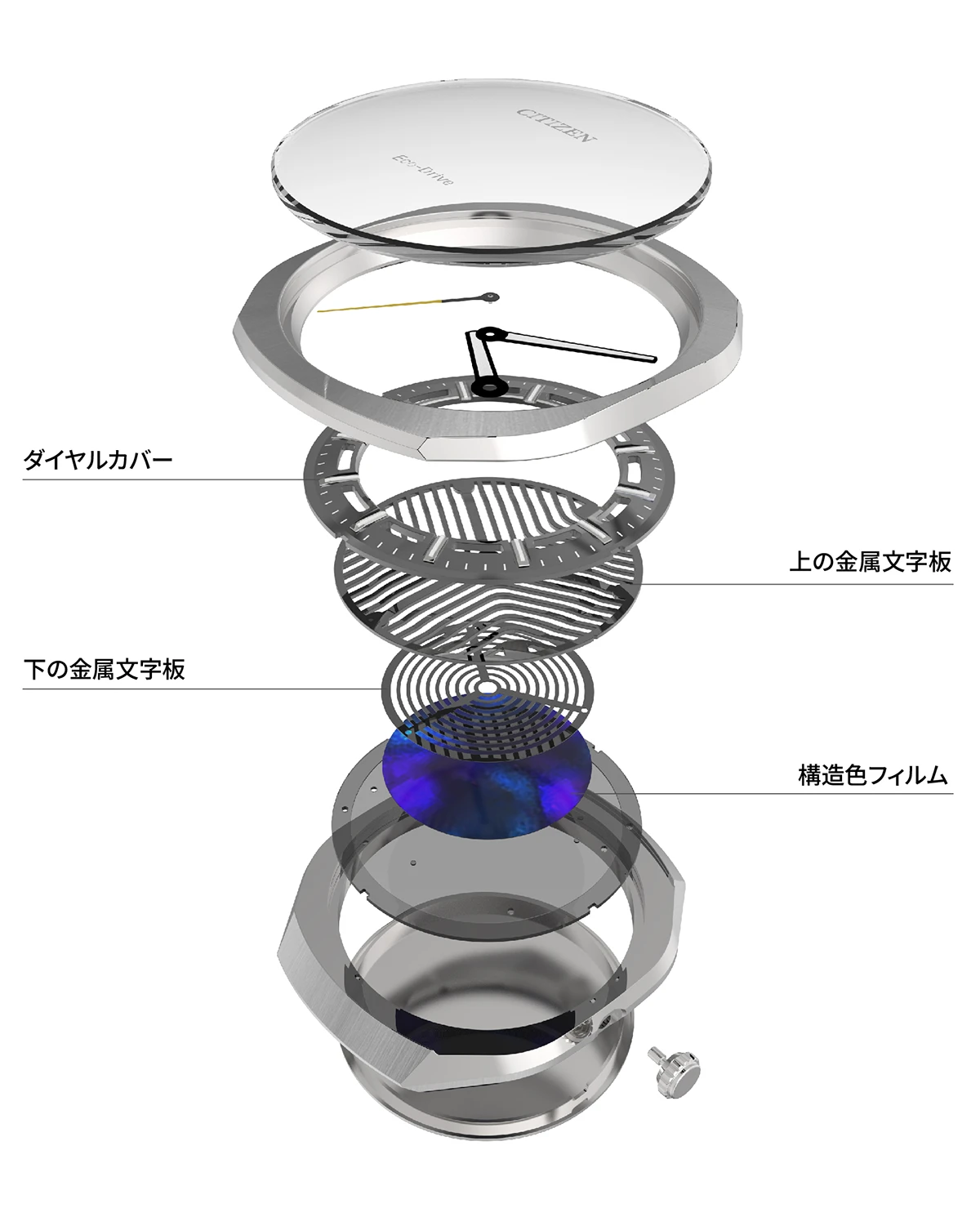
The slits engraved on the metal dial are not a simple pattern; rather, lines placed in different directions overlap to create a striped pattern resulting from light interference. The appearance changes depending on the viewing angle, and colors from the structural color film appear through the gaps, creating a sense of depth that cannot be achieved with a flat dial.
This structure also plays a crucial functional role. By capturing light through the slits, it allows the solar cells placed beneath the structural color film to receive the light, enabling the Eco-Drive to generate power. Many models equipped with Eco-Drive generate power by making the dial itself transparent. Furthermore, the materials and textures of the dial have been improved to the point where this is hardly noticeable from the outside. However, in the case of this model, instead of hiding the constraint that light must be transmitted, it integrates it with the design, challenging the conventional expression of Eco-Drive.
An original titanium exterior encasing a multi-layered dial.
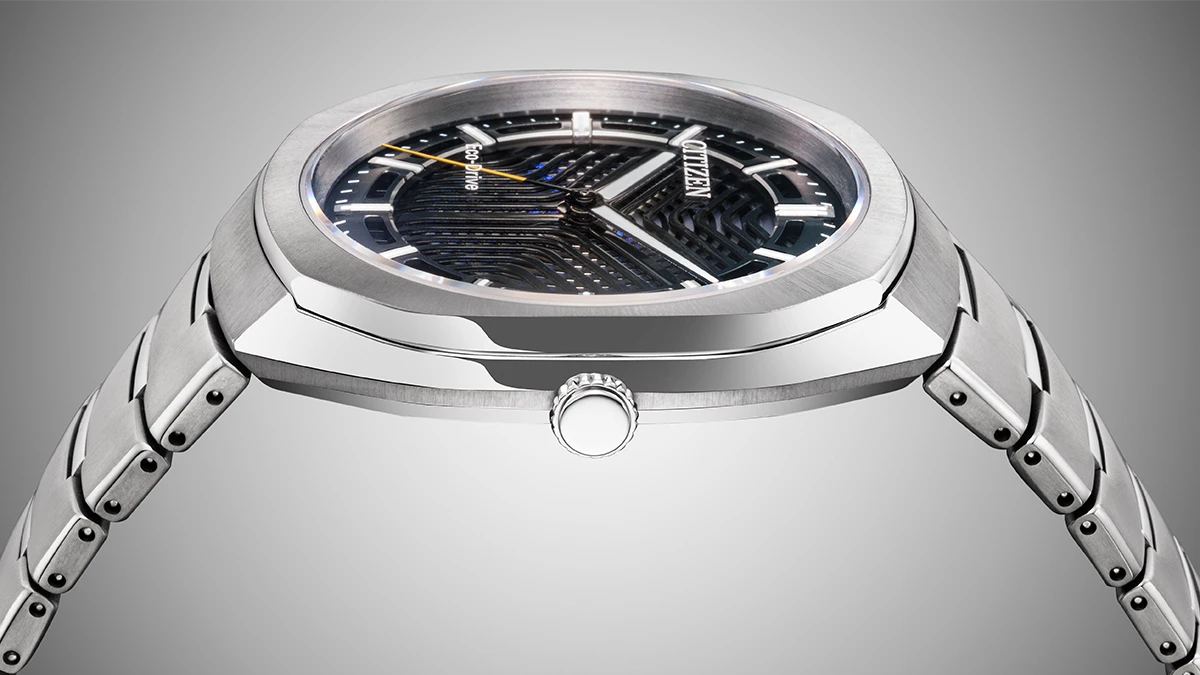
While the strikingly individualistic dial tends to grab the eye, the exterior of the PHOTON also has its own unique appeal. The case is based on an octagon, and it adopts a unified form that smoothly connects from there to the bracelet. While retaining the edges characteristic of a polygonal case, the overall design is unified with soft curves, creating a smooth silhouette that contrasts with the geometric and complex slits of the dial.
The case and bracelet are made of Citizen's proprietary Super Titanium™. This is titanium treated with Citizen's unique surface hardening technology, Duratect, which enhances shine and scratch resistance while maintaining the lightness characteristic of titanium. The bracelet connects smoothly to the case by shortening each link, creating a unified design for the entire exterior.
Furthermore, the buckle features a fit adjuster that allows for three-stage length adjustment, up to approximately 7mm, without the need for tools. The crystal is made of dual-spherical sapphire glass with an anti-reflective coating, and the logo is printed on it, creating a design that makes the logo appear to float. It has a water resistance of 5 atmospheres, making it suitable for everyday use.
Transforming the limitation of Eco-Drive—that it lets light through—into an advantage.
In watches, function and design are closely related. If additional mechanisms such as a calendar or chronograph are included, the movement will restrict the dial layout. For a diver's watch, the case and crystal need to have a certain level of strength and airtightness to enhance water resistance. Similarly, in a solar-powered watch, light must be delivered to the solar cell for power generation. Generally speaking, the ability to integrate these technical constraints into a single watch without making it feel overly restrictive is where a designer's skill truly shines.
However, in this work, the approach was changed, and a method of making the most of the constraints was chosen. In other words, the fact that light is being transmitted is made visually apparent. In addition, by combining the motif of the double-slit experiment, which is related to light, with structural colors that are produced by the reflection and interference of light placed behind it, the design is made to make the most of the existence of light.
PHOTON doesn't hide the fact that it's a light-powered watch. Rather, it actively showcases the functional constraint of Eco-Drive, which requires the capture of light, and transforms it into a design element. This model not only looks back on the 50 years that Eco-Drive has come, but also re-examines the existence of light that underpins that technology, presenting a new vision for wristwatches.