
Approximately 100 years have passed since wristwatches separated from pocket watches and became widely popular. The history of the wristwatch's evolution overlaps with the progress of modern design. The wristwatch is a mirror that reflects the spirit of its time. Through the design of wristwatches, we will also explore the history of design.
Text by Yousuke Ohashi (Yuto Hosoda, Yousuke Ohashi)
Edited by Chronos-Japan (Yuto Hosoda, Yousuke Ohashi)
[Article published in the July 2025 issue of Kronos Japan]
A History of Design as Seen Through Wristwatches
Wristwatch design has evolved differently from that of pocket watches. This evolution is closely intertwined with the history of modern design, often described as a design movement intended to break away from mere ornamentation.
One example is Art Deco. The International Exhibition of Modern Decorative and Industrial Arts in 1925, from which the term originated, was an exhibition that sought new forms of "decoration" that were in line with the times. The directions taken varied, but they differed in that they attempted to capture the machine age with linear forms reminiscent of architecture. Nevertheless, there was also much meticulous handiwork by skilled craftsmen, a tradition that continued from the classical period. In other words, Art Deco was also a fusion of industry and handicraft. Looking at watches, the Cartier "Tank," released in 1917, and the Jaeger-LeCoultre "Reverso," released in 1931, are excellent examples. Both the horizontal case and the exquisite handiwork incorporated into it are extremely Art Deco.
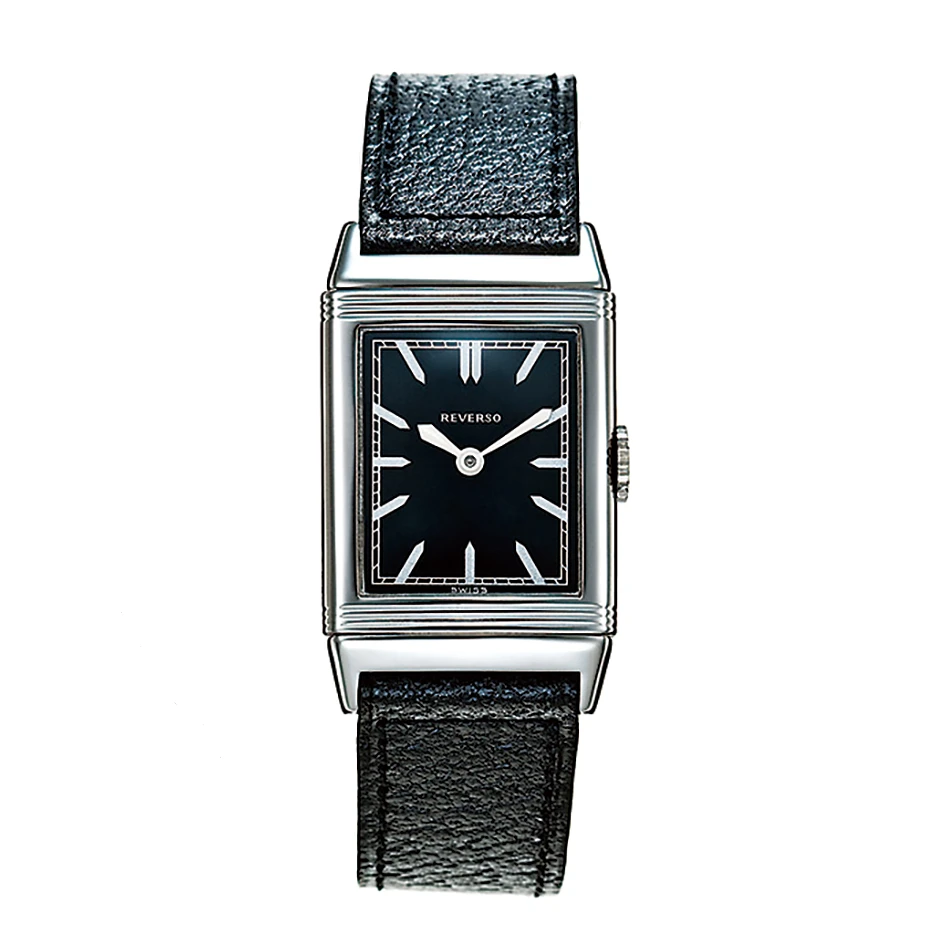
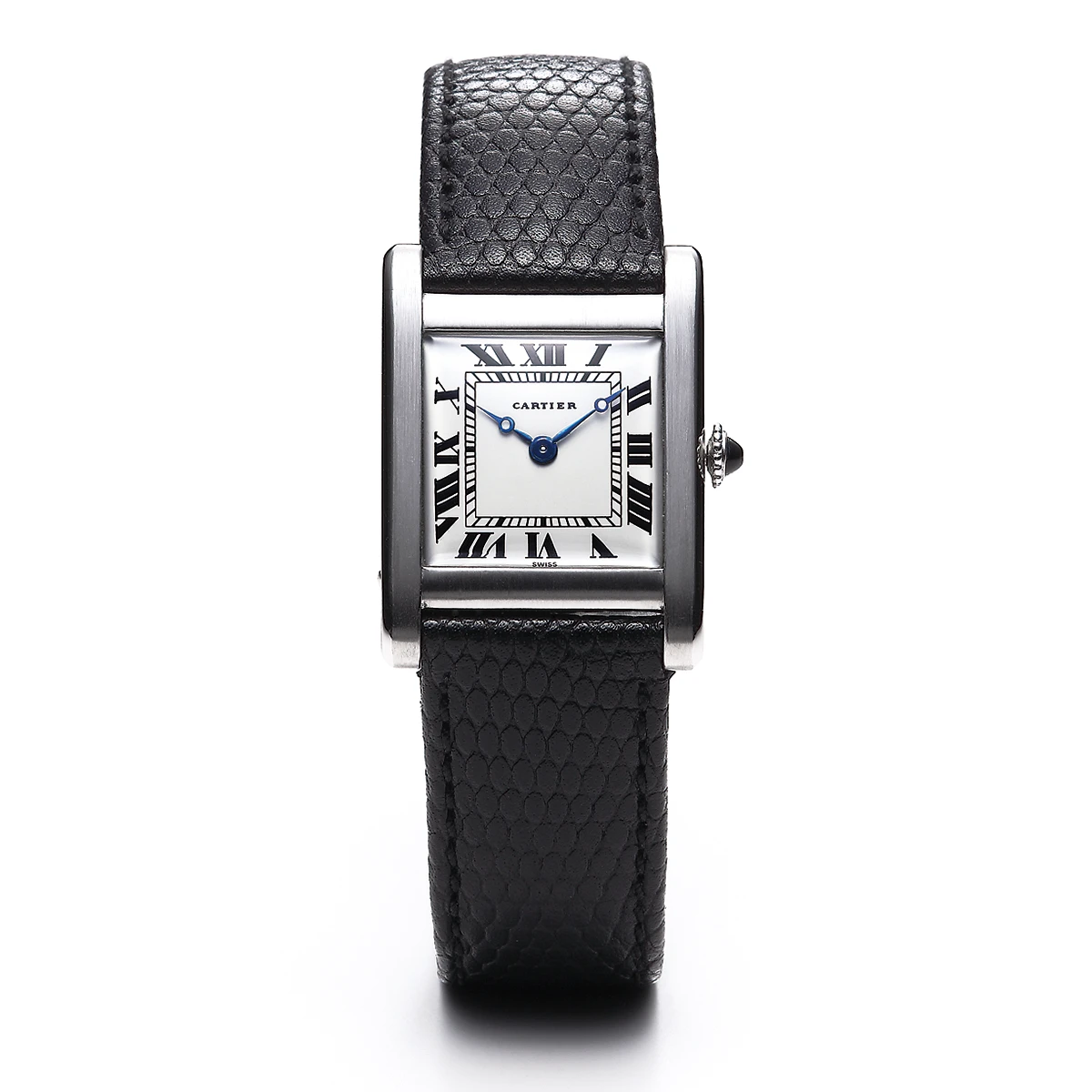
What followed was the modern design movement, often symbolized by the Bauhaus, or Modernism. This was an attempt to improve society with functional, "tasteful," and high-quality designs that eliminated ornamentation. Modernism, which rendered Art Deco outdated, was supported by the further industrialization of society. Le Corbusier symbolizes the relationship between Modernism and watches. Born in La Chaux-de-Fonds, Switzerland, his father was a dial maker, and he had a close relationship with watches. It is not strange to think that he brought the functionality symbolized by watches to architecture. Such Modernism began to be seen in watch dials. One easily recognizable example is the dial of A. Lange & Söhne, which served as the basis for the design of Nomos Glashütte.
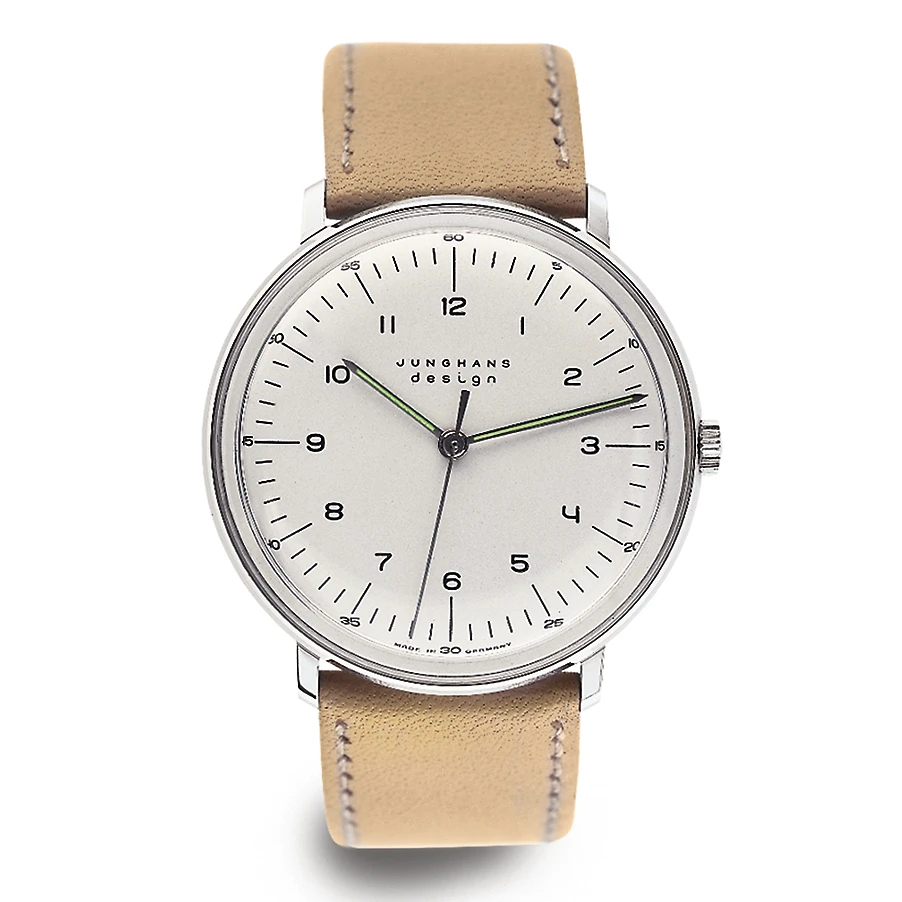
Max Bill, a native of Winterthur in northern Switzerland, attended the Bauhaus in Dessau before its closure by the Nazis, and later became a successful designer. He also worked as a product designer, creating extremely modern kitchen timers and watches for Junghans. However, even without citing these iconic examples, modernism influenced watch design. The easily readable, unadorned bar indices are clearly modern, not Art Deco.
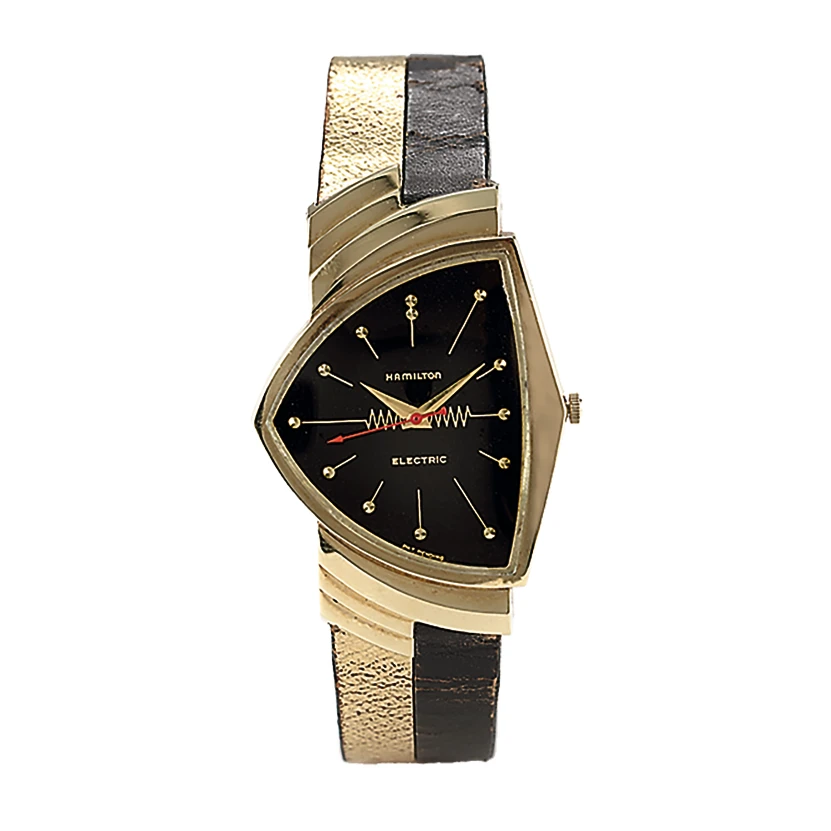
On the other hand, in the United States, the heartland of capitalism, there was a demand for designs that catered to consumer desires rather than designs that were merely "tasteful." These were designs that were "fun to look at," combining playfulness, hope for the future, and luxury. The new profession of industrial designer emerged, weaving these elements into products. In fact, many of the early industrial designers came from the advertising industry or stage design, where they were adept at capturing people's hearts with the appeal of form. America was hit hard by the Great Depression of 1929, but in the 1930s, it discovered a new streamlined style and eventually blossomed into a world of luxurious and hedonistic designs. This trend reached its peak in the 1950s. A prime example is the "Ventura," the world's first battery-powered wristwatch, designed by Richard Arbib, who was active in styling General Motors' "Cadillac," among others.
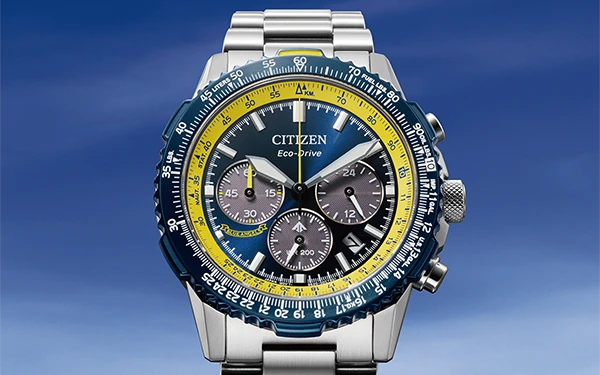
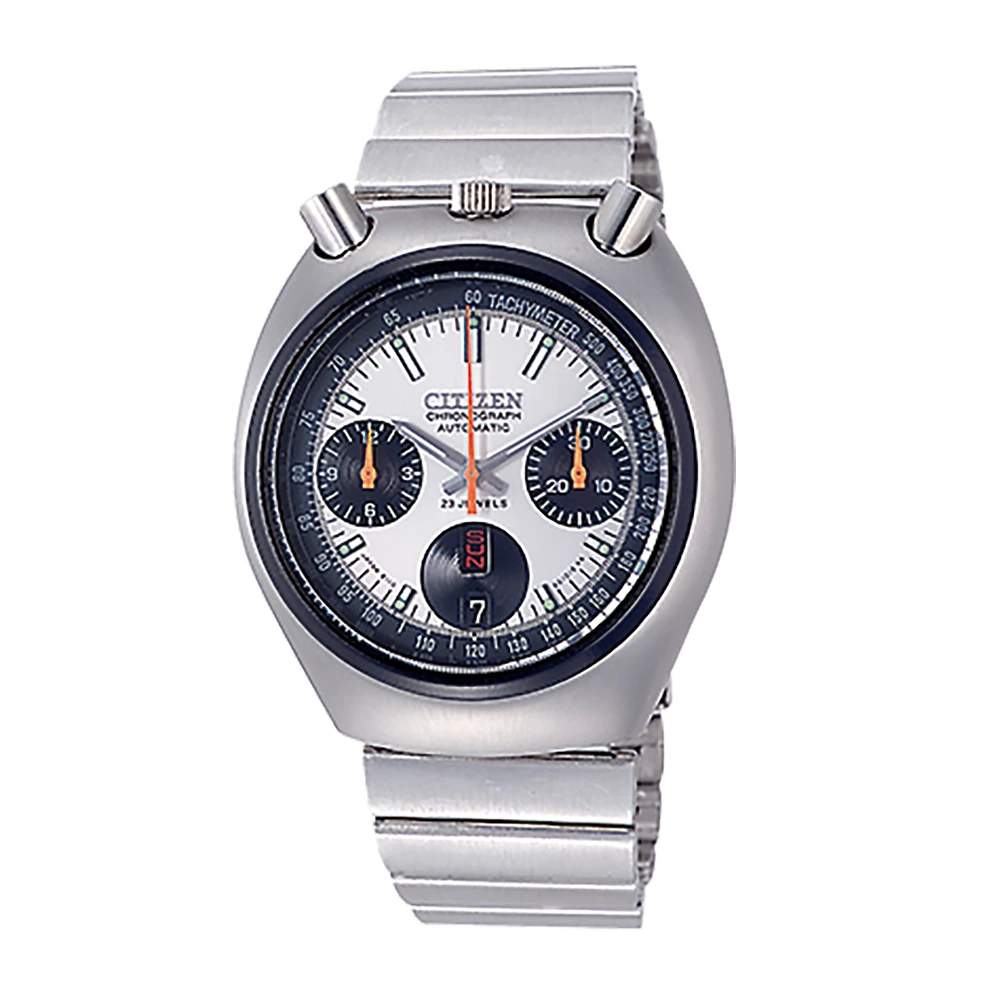
If we consider streamlined shapes as a symbol of the speed at which science has brought about a brighter future, then the conclusion is the space-age design of Apollo 11's arrival on the moon. Eero Saarinen's "TWA Flight Center," with its bold curves, is an architectural structure that presents a new future, moving away from the familiar rectangular shape of buildings. And this kind of space-age design was a perfect match for watch cases. What space-age watches such as Omega's "Flightmaster" and Citizen's "Chronograph Challenge Timer" have in common is a case that excessively emphasizes curves.
And finally, there came postmodern design. To put it simply, this was a critique of modern design, which had become uniform as a result of prioritizing function and eliminating ornamentation. Because this design "movement" was more of a movement than a style, it not only quoted various styles from the past but also revived ornamentation and excelled at incorporating regional characteristics and playfulness into its designs. This style was extremely popular in Japan during the bubble economy of the 1980s.
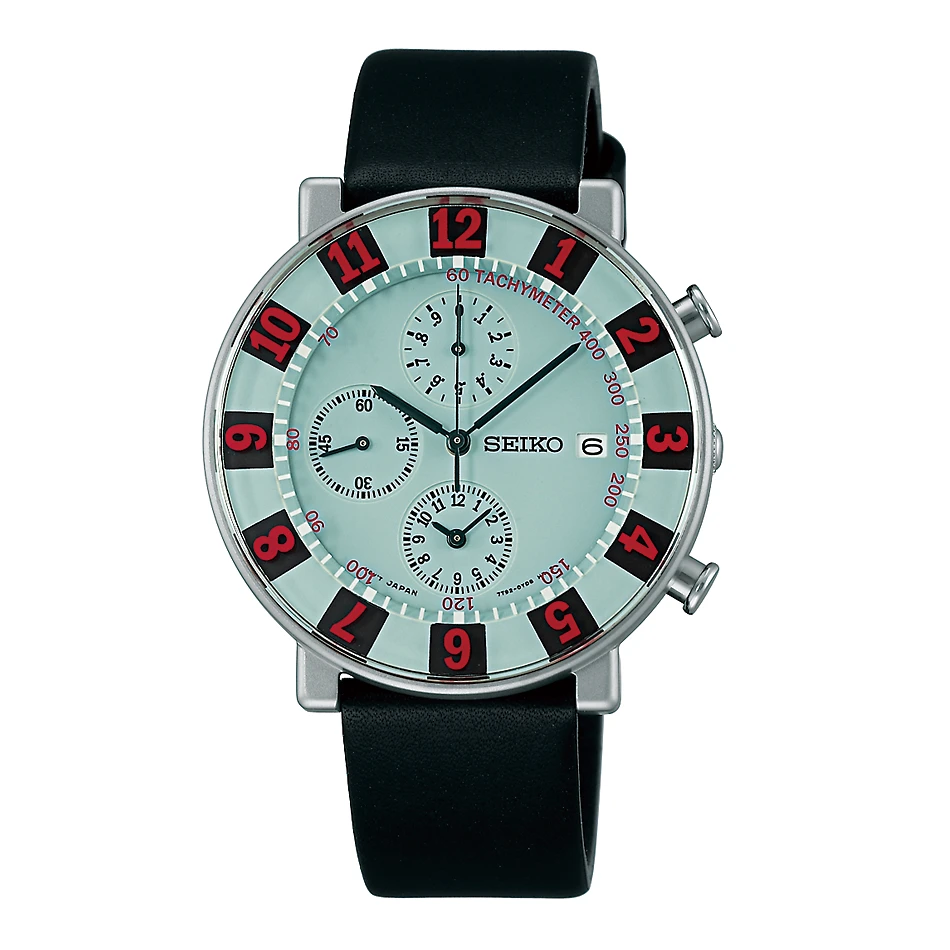
The Centre Pompidou, with its deliberately exposed colorful pipes on the building's surface, is perhaps one of the earliest examples of this trend. Similarly, Memphis, the design collective led by Italian designer Ettore Sottsass, incorporated flamboyant colors and a quirky, humorous sense of design into Seiko chronographs.
Due to constraints on manufacturing methods and size, watch design has not had much direct connection to modern design. However, as demonstrated by models like the Tank and Flightmaster, modern design and watch design have evolved in parallel.
アールデコ
The Art Deco style, which flourished in the 1920s and 30s, is a design style that combines various decorative elements with geometry and symmetry as its core principles. Unlike Art Nouveau, which remained a niche movement, this new style, against the backdrop of post-World War I optimism and industrialization, influenced a wide range of genres, from architecture to watches and jewelry.
モダニズム
Modernism, which emerged from the 19th to the 20th century, is a style that prioritizes functionality and rationality over ornamentation. Led by figures like the Bauhaus and Le Corbusier, this style, based on the principle of "less is more," influenced a wide range of fields, from architecture to furniture and graphics. It is considered the origin of minimalist design.
フィフティーズ
Born against the backdrop of post-war mass consumption, 1950s design is characterized by organic forms and bright colors created by materials such as plastic. The diversity that spread in the 1960s caused this trend to rapidly lose momentum, but the approachable forms and the mass production technology that supported them would later lead to industrial design.
Space Age
The Jet Age and Space Age emerged against the backdrop of the aviation and space development boom of the 1950s and 60s. Streamlined forms, dome shapes, innovative colors, and new materials such as FRP symbolized scientific optimism. In the world of watches, Space Age designs became immensely popular from the late 60s to the 70s.
ポストモダン
Postmodernism emerged in the 1970s as a reaction against the purely functional modernism. It is characterized by a re-evaluation of classical designs and ornamentation, incorporating antitheses such as context, irony, and playfulness. This style spread to architecture, furniture, and graphics, bringing diversity and freedom to design.
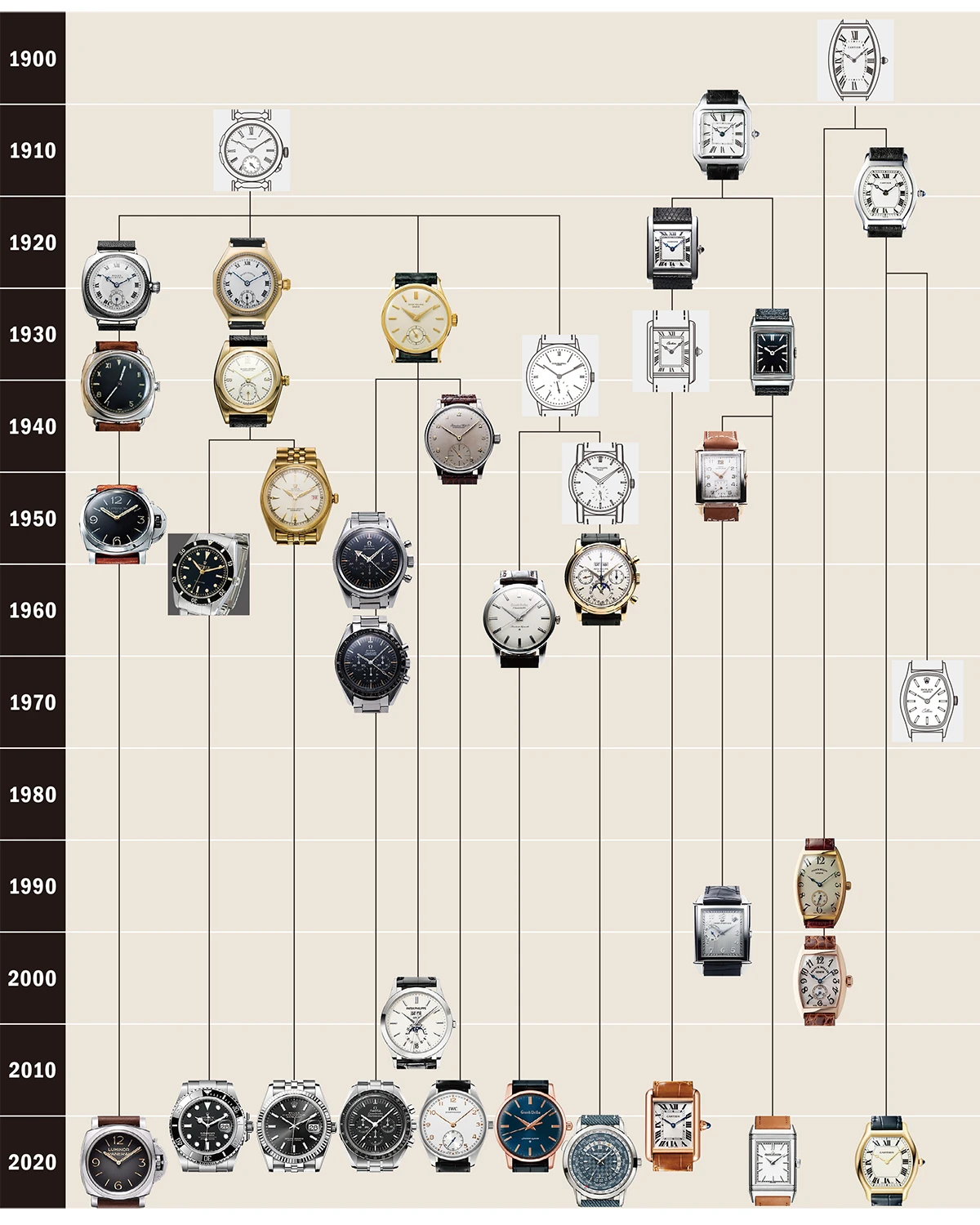
The evolution of case design in classic mechanical watches
Here, we have presented a phylogenetic tree of case designs for classic mechanical watches that originated in the first half of the 20th century. Designs from the 1970s, which are frequently featured in this special issue, and others for which we could not find a plausible origin from 1900-1910, have been intentionally omitted.