
Watch Journalist Yasuhito Shibuya's Useful Watch Industry Chat
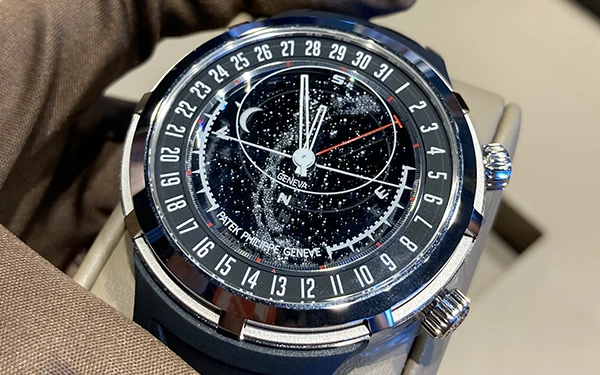
In a previous column, I reported that Patek Philippe had, for the first time in its history, allowed online sales on the websites of its authorized European and American retailers. This time, I would like to use this “incident” as an opportunity to consider the pros and cons of online sales of luxury watches and their future prospects.

Questioning the Pros and Cons of Selling Luxury Watches Online
Before we get into the main topic, let's clarify why Patek Philippe allowed online sales of its products, even if only "temporarily," on the websites of its authorized European and American retailers.
The reason for this was published on April 1st in the FHH Journal, the news page of the Fondation de la Haute Horlogerie (FHH), the organization that will be hosting the new watch fair, in the same place where the company, along with Rolex, Tudor, Chanel, and Chopard, announced on April 14th that they would be withdrawing from Baselworld and launching a new watch fair in Geneva.
It states, "This is to save our family-run authorized retailers, who are our long-time partners and can be considered 'part of the family,' and who are in danger of going out of business due to the city lockdown caused by the COVID-19 issue."
Unlike Japan, where a nationwide state of emergency was declared, the measures taken in Europe and the United States were mandatory lockdowns. Setting aside the merits and demerits of this, businesses in Europe and the United States were forced to close. Instead, unlike Japan, where compensation was hesitant to be provided, stores were immediately compensated for the closures. However, this does not change the fact that watch retailers are in an unprecedented predicament. In response to this situation, Patek Philippe has temporarily lifted the ban on online sales as an emergency measure. However, the stainless steel Nautilus and Aquanaut watches, which are extremely popular and in short supply worldwide, are not included in the sale.
In the first place, this "online sales" is primarily aimed at existing customers, and is probably not an online sales where "delivery by courier and that's it."

There is no "good" for everyone
However, it is a groundbreaking event that the "world's best watch brand" has allowed the online sale of luxury watches, including complicated ones, even if only temporarily.
But will this "emergency evacuation" lead to online sales becoming the norm even after the COVID-19 crisis is over? Will online sales account for a larger proportion of brick-and-mortar stores? And will brick-and-mortar stores decline and eventually disappear, like magazines and books, which are now sold primarily online? And is this even desirable?
The answer is "NO." Why? In the long run, selling luxury watches online has more drawbacks than advantages for consumers, retailers, and watch brands. Let's first consider the reasons for this from a consumer's perspective.
It's a realization that watch fairs and previews of new products have been almost completely canceled this year, but there is nothing more appealing and good than a luxury watch, and you can't really understand its quality or its appeal unless you actually get your hands on it. Unfortunately, no matter how perfect and beautiful the promotional images and videos may be, there are many cases where the real thing disappoints. Conversely, it's not uncommon for the real thing to be even more amazing than the images and videos suggest.