Watch Journalist Yasuhito Shibuya's Useful Watch Industry Chat
On January 7, 2021, LVMH Moët Hennessy Louis Vuitton (LVMH), the world's largest luxury brand, announced that it had completed the acquisition of Tiffany, a major American jewelry company. After many twists and turns, Tiffany has now become a subsidiary of the LVMH Group. This is a good opportunity to summarize the future of Tiffany, particularly its watch business, and look ahead to the past, present, and future of Tiffany's watch business.

(Article published on October 9, 2021)
Tiffany, the great watchmaker
This may seem like old news to those who love antique watches, but Tiffany is actually a great watchmaking house, or rather, it "was."
I have a luxurious English book titled "TIFFANY TIMEPIECES" in my hands. The author, John Loring, served as Tiffany's design director from 1979 to 2009. He has written numerous books on Tiffany and art in general. This book, published in 2004, is one of them. It was a gift from Tiffany & Co. Japan Inc. at the time. The box containing the book is entirely decorated with a photograph of the dial of a Tiffany tourbillon watch. The carriage has been hollowed out, leaving only the tourbillon bridge, revealing the carriage, balance wheel, and hairspring printed on the cover of the book inside. The tourbillon portion is made in a three-dimensional style, creating an elaborate design.
The book showcases many of Tiffany's greatest timepieces, from pocket watches to men's and women's watches and clocks. Each piece is artistic and beautiful. It also includes photos of Patek Philippe's masterpiece wristwatches, co-branded with Tiffany and co-branded by Tiffany, which are highly coveted by collectors. These were released when Tiffany had an exclusive US distributorship with Patek Philippe.

Tiffany was founded on September 18, 1837. It sold stationery and decorative items, a pioneer of what we now call select shops. However, in 1848, in the wake of the chaos of the February Revolution in France, it began manufacturing jewelry, silverware in 1851, and watches in 1853. It was also in this year that the Atlas clock was installed in the store and the corporate color, Tiffany Blue, was adopted. In 1861, Tiffany opened a small watch factory and shop in Switzerland. In 1874, it opened a large, cutting-edge watch factory at the Place Cornavin in Geneva. In other words, it was a great watchmaking house that led the world since the days of pocket watches.

The unfortunate "stray" of the watch business in the 2000s and 2010s
Even in the 20th century, when the era of wristwatches began, Tiffany continued to reign as a top brand in the watch world.
However, in the 2000s, the watch business unfortunately fell into a state of decline.
The catalyst for this was an agreement signed with the Swatch Group, the world's largest watch conglomerate, in December 2007. This agreement stipulated that the watch business would be run as a joint venture between the two companies for 20 years.

However, it seems that there were major misunderstandings and miscommunications between the two companies from the very beginning of this joint venture. Four years later, in 2011, the Swatch Group unilaterally terminated the contract, claiming that "Tiffany had obstructed the business development of this contract." Tiffany countered, claiming that "Swatch Group had failed to establish a sales channel suitable for Tiffany watches." In an unfortunate turn of events, the Swatch Group filed a lawsuit against Tiffany in a Dutch arbitration institution, seeking damages of approximately 450 billion yen.
The dispute ended in December 2012 with a ruling that Tiffany must pay approximately 470 million yen (at the time) plus two-thirds of the arbitration application fee paid by the Swatch Group and legal costs. However, for over five years, Tiffany's watch business was left in limbo, in a disappointing state. This loss must have been significant for the brand.
Will there be any new developments in men's genuine mechanical models?
This unfortunate state of the watch business was resolved in 2013, when Tiffany established the Tiffany Swiss Watch Company in Switzerland and once again embarked on watch manufacturing within the group. In 2015, the first products of the new Tiffany were released, including the CT60 (now discontinued) and East West collections.
Since then, the brand has added iconic models such as the Atlas, the oval-shaped Cocktail, the round Metro, and the square 1837 Makers, bringing it to the present day.
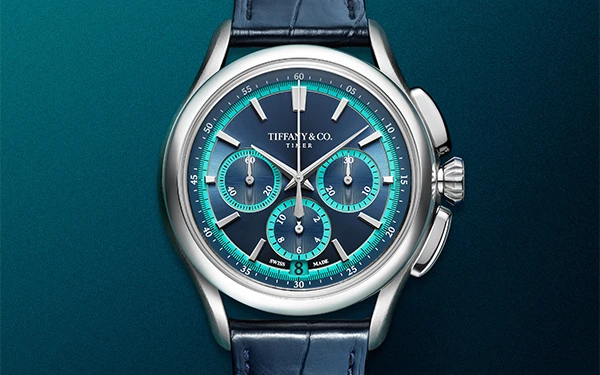
However, from the perspective of watch lovers like the readers of webChronos, the collection is centered around ladies' models, partly because the "CT60," which also had a men's mechanical chronograph model in its lineup, has been discontinued, and frankly speaking, at this point, the appeal of the watches is limited beyond their design.
However, as mentioned at the beginning, Tiffany is a watch brand with a great history and track record dating back to the dawn of timepieces. While the majority of its fans are women, given its history and track record as a watch brand, and the demand for wristwatches as wedding gifts in the Japanese market, it is only natural that they will develop mechanical and sports models that are different from the mechanical models of the 1837 Makers, and we look forward to seeing them.
The LVMH Group's acquisition of Tiffany likely stems from an interest not only in the jewelry market, but also in the watch market, where latent demand has unfortunately not been fully uncovered since 2007. When the watch business was rehabilitated and revived in 2015, the author heard from the top management of the watch business at the time that orders exceeded the expectations of those involved. Furthermore, within the LVMH Group, the watch business is one of the few businesses with potential for growth. Depending on subsequent management, this acquisition could be a major opportunity for Tiffany's watch business to make great strides.
As a watch journalist and a watch enthusiast, I cannot help but hope that this acquisition will mark a revolutionary development in Tiffany's watch business.

Shibuya Yasuhito/Shibuya Yasuhito
As an editor of a product information magazine, he began covering Geneva and Basel in 1995. As an editor and writer, he has been there 25 times since then. He is currently planning, covering, editing, and writing about not only smartwatches but also all kinds of things and events other than watches.