
Cartier has expanded its "Cartier Watchmakers of Tomorrow" awards, which have been held since 1995, by adding a jewelry category, creating the "Cartier Talents of Tomorrow" awards to recognize young talent in both watchmaking and jewelry. The common theme for both categories is "Cartier's Wild Animals." In the watchmaking category, participants will showcase their unique ideas and skills through works using the Cal.1847 MC movement, while in the jewelry category, they will present brooches.
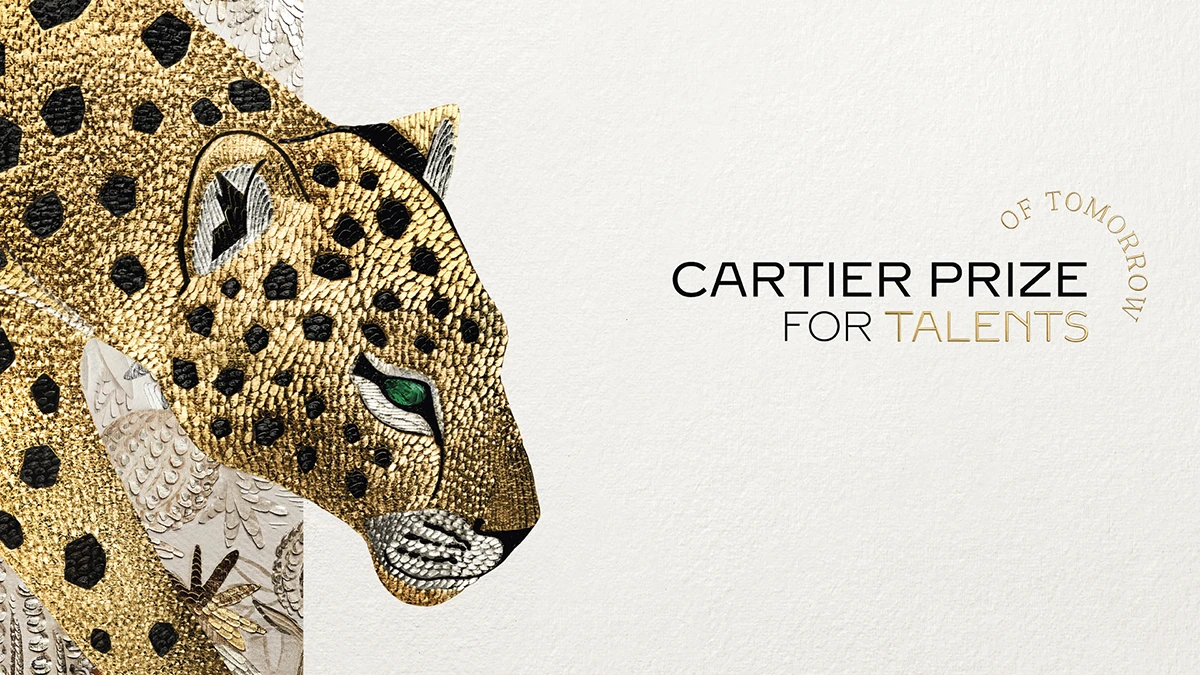
The "Cartier Talents of Tomorrow" award has been established to nurture young talent.
Cartier has established the "Cartier Talents of Tomorrow" awards to recognize young talent in the fields of watchmaking and jewelry. This award is an evolution of the "Cartier Watchmakers of Tomorrow" awards, which have been held since 1995 and in which young watchmakers submit proposals for reconstructing movements based on a theme each year, thereby honing their skills, creativity, and originality. The new awards include a jewelry award, further expanding the efforts to cultivate skills and creativity.
This year's competition, presented under a new framework, will feature "Cartier's Wild Animals" as a common theme for both categories. In the Watchmaking Award, participants will showcase their unique ideas and skills through works using the Cal.1847 MC movement, while in the Jewelry Award, they will present their work through brooches. The entry period is from October 1st to November 30th, 2026, with the awards ceremony scheduled for spring 2027.
Cartier has a long history of supporting talent across a wide range of fields. The Cartier Foundation for Contemporary Art, established in 1984, supports artists from creation to exhibition. Furthermore, the Cartier Women's Initiative supports female entrepreneurs who are making a positive impact on society by providing grants and training opportunities.
In the fields of watches and jewelry, Cartier has been committed to training artisans and passing on skills through specialized training institutions. The "Cartier Watchmaking Institute," established in Switzerland in 1993, provides training in watchmaking, polishing, micro-technology, and mechanical technology to apprentices and artisans at Cartier's manufacture, and has trained approximately 200 apprentices to date. In 2002, the "Cartier Jewelry Institute" was opened in Paris. Here, in addition to teaching traditional jewelry skills, it also plays a role in passing on artisanal techniques, such as threading pearls and wax carving of animal motifs, which are not yet formally taught in an educational system, from artisan to artisan.
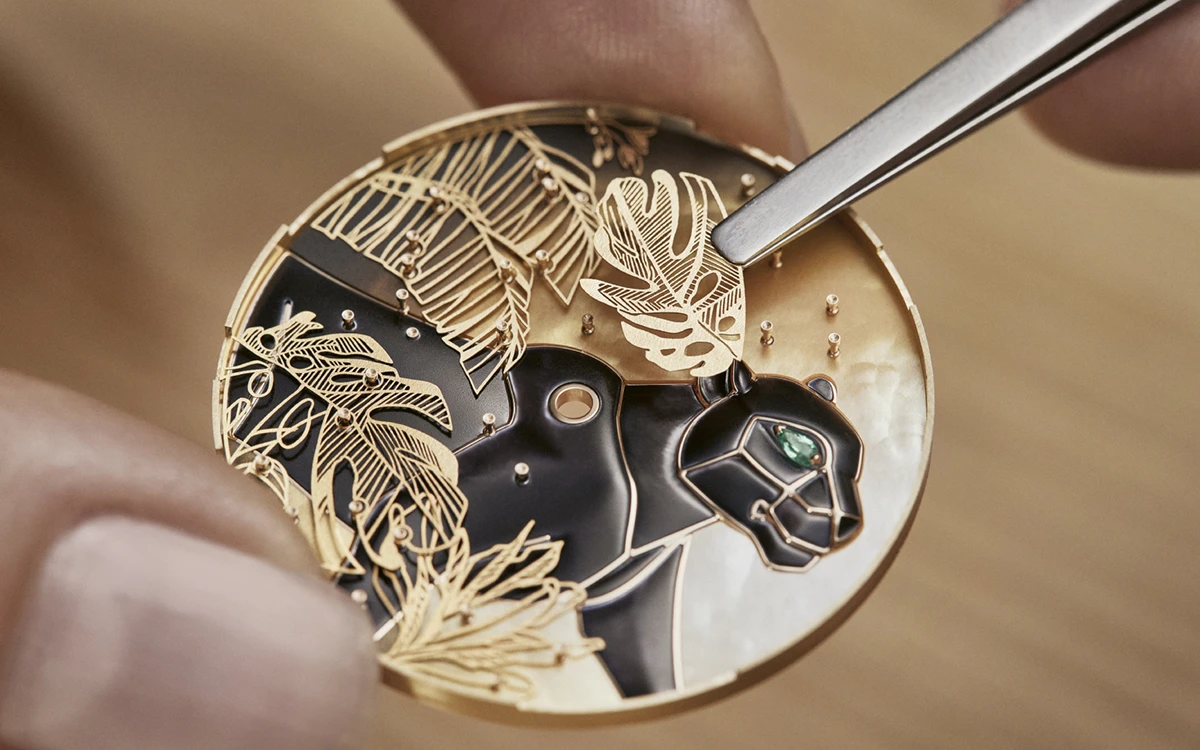
The theme for each section is "Cartier's Wild Animals."
This year's common theme for both the Watchmaking Award and the Jewelry Award is "Cartier's Wild Animals." From the panther to the tiger and crocodile, animal motifs have played a central role in Cartier's creations for many years. This exploration continues today, and the rich world of animals is reflected in the "Panthère Métiers d'Art Watch" unveiled at Watches & Wonders Geneva 2026 and in the new jewelry collection. Participants are free to explore the realm of design and creation using these wild animals as motifs, proposing original works that utilize their unique ideas and skills.

The watchmaking award requires participants to create a timepiece using Cartier's in-house movement, Cal. 1847 MC, that expresses "Cartier's wild animals." Eligible participants include students studying at vocational schools in Switzerland, France, Belgium, and Germany, apprentices working in watchmaking workshops, and participants in the work-study program. Starting this year, participation from Sweden, Denmark, and Finland is also open, opening up opportunities for young people from a wider region.
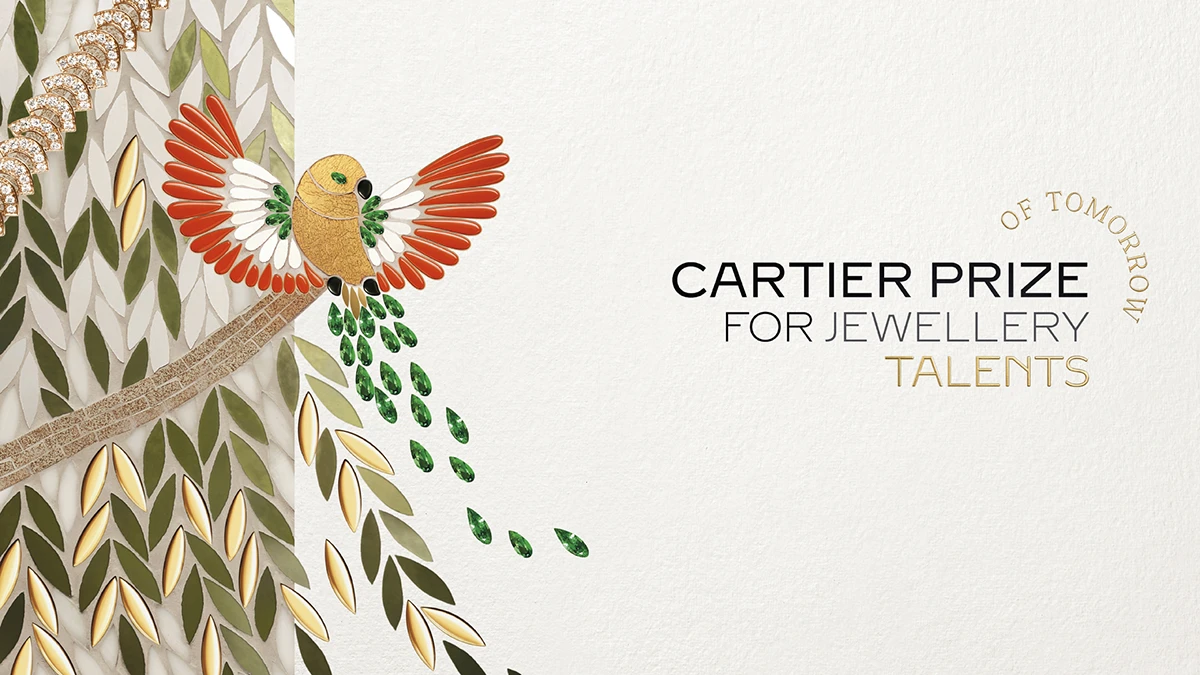
The newly established jewelry award challenges participants to express the allure of wild animals through brooches. The competition is open to students who have completed at least two years of training in jewelry-specialized curricula in France, Italy, and Switzerland. In addition to students studying at specialized schools, those who acquire skills through internships at jewelry workshops or work-study programs are also eligible to participate.
Selection process and a distinguished panel of judges
Selected candidates will dedicate up to 80 hours of practical work to creating their pieces during a three-month production period. During this time, they will receive individual guidance from a mentor of their own choosing from outside Cartier. Along with the completed work, they will submit a development logbook outlining the main stages of the creation process, accompanied by sketches and photographs.
The judging panel will select the top three in each category based on high technical skill and bold creativity. The judges for the watch awards include vintage watch expert Roy Davidoff, Cartier Collections director Pascal Lepoux, International Watch Museum curator Nathalie Marieroni, High Watch Foundation Vice President Pascal Labessoux, and independent watchmaker Kari Voutilainen.
The judges for the jewelry awards will be Alexa Abitbol, Director of Cartier High Jewelry Manufacture; François Curiel, President of Christie's Europe; Hervé Deventre, jewelry journalist; Mathieu Rousset-Perrier, cultural heritage curator at the Musée des Arts Décoratifs in Paris; and Laurent Laroche, CEO of Christofol.