Seiko Watch Corporation held "Karakuri no Mori" 2026, an exhibition where visitors can experience the mechanisms of mechanical watches, at LIGHT BOX STUDIO in Minami-Aoyama, Tokyo. The exhibition is part of "Seiko Seed," an initiative to cultivate the enjoyment of watches. The venue features a variety of installations that can be enjoyed by viewers, each interpreted from the unique perspective of different creators. The exhibition runs until November 23rd.
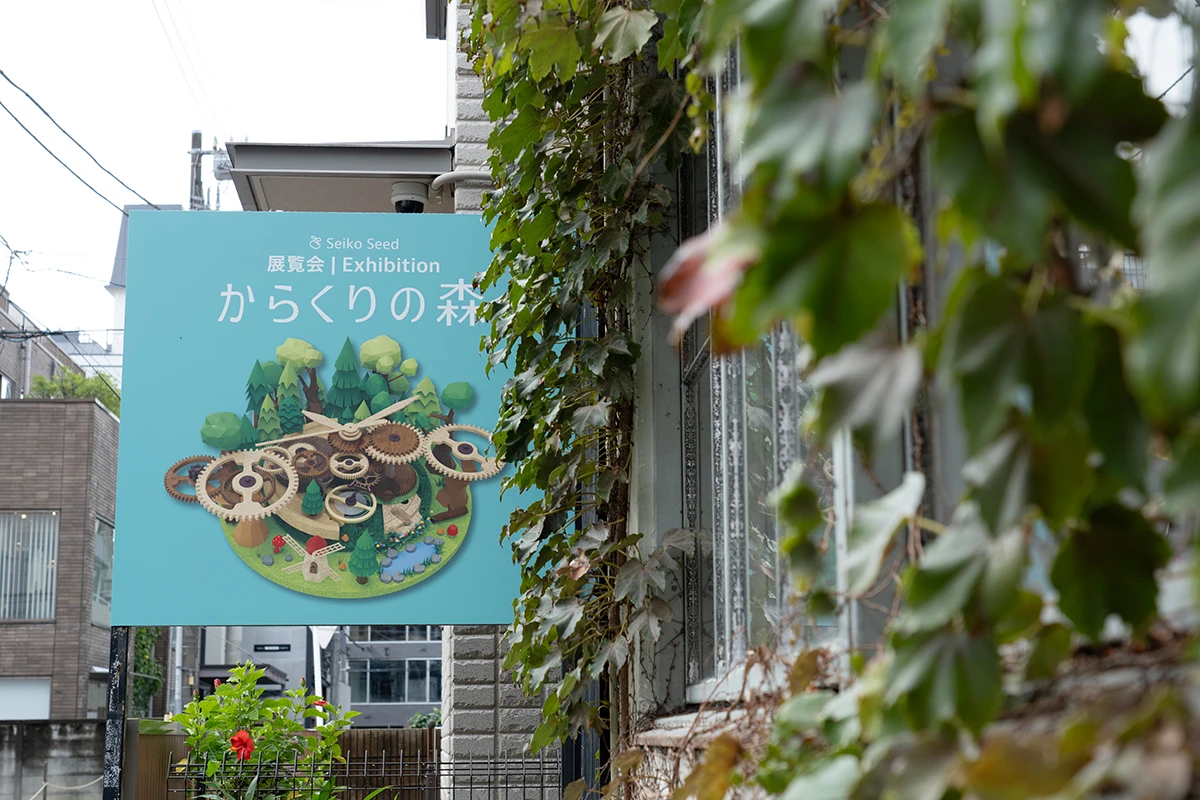
A history of over 110 years in mechanical watch manufacturing and the journey of "Seiko Seed"
Seiko Watch Corporation held "Karakuri no Mori" 2026 as part of its "Seiko Seed" initiative, which aims to cultivate new appeal and value in watches. This exhibition is positioned as a place to convey the characteristics of mechanical wristwatches and the potential of the technology embodied in their movements. Since completing Japan's first domestically produced wristwatch, "Laurel," in 1913, the company has continued to develop its own unique mechanisms for over 110 years. This initiative has been held repeatedly since its inception in the autumn of 2022, and this year marks its fifth edition.
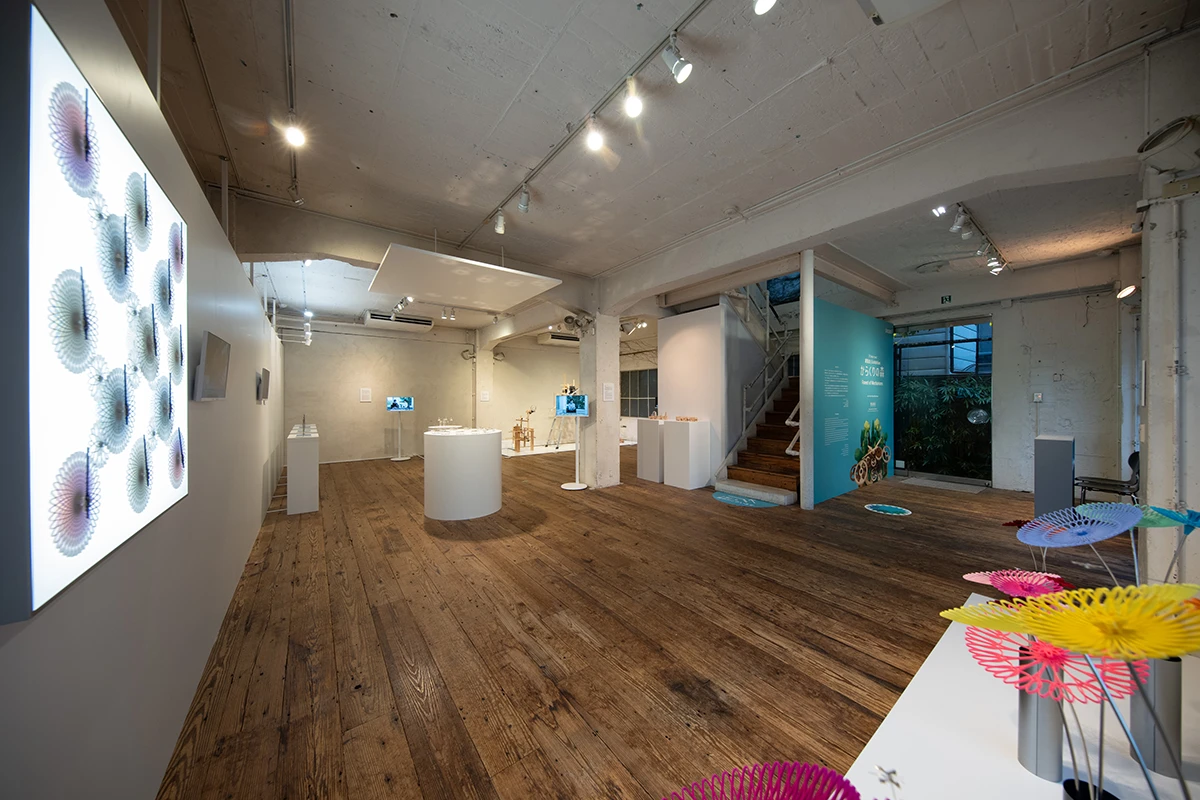
Artistic expression of the mechanism by external creators and in-house designers gathered on the first floor.
The first floor of the venue features works inspired by the mechanisms of mechanical watches. One of them is "Move Movementment" by Yu Aramaki. The part corresponding to the second hand is extended from the dial, and a delicate motif is attached to its tip. As it slowly rotates, the work allows viewers to appreciate the pure physical motion itself.
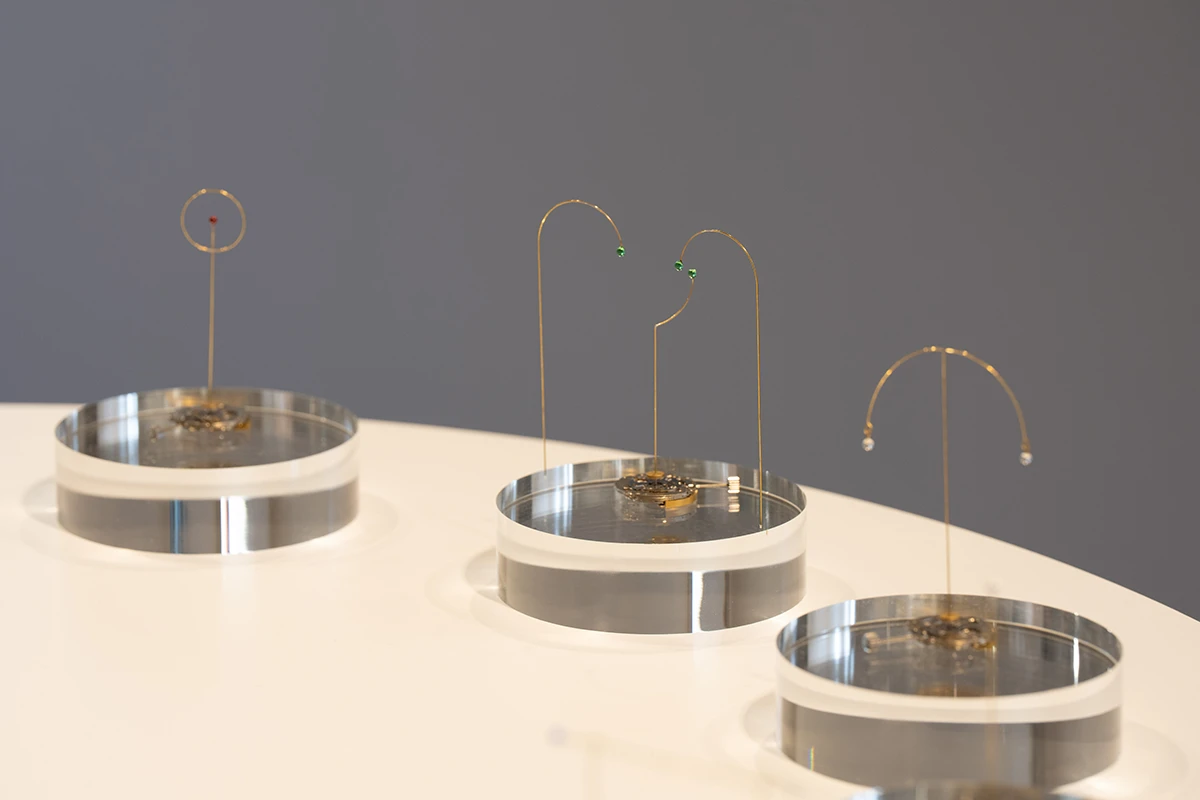
The tip of the second hand, which extends far from the dial, is adorned with delicate motifs, and the 12 motifs rotate slowly and gracefully as the second hand moves.
The work by Koyo Suzuki is titled "Flowers of Time, Patterns of Time." He focused on the escape wheel, which makes up the escapement mechanism. This part has a unique shape due to the pursuit of weight reduction and inertia reduction. He likened these gear train components to flowers. The work stands in space as an independent mechanism that actually keeps time.
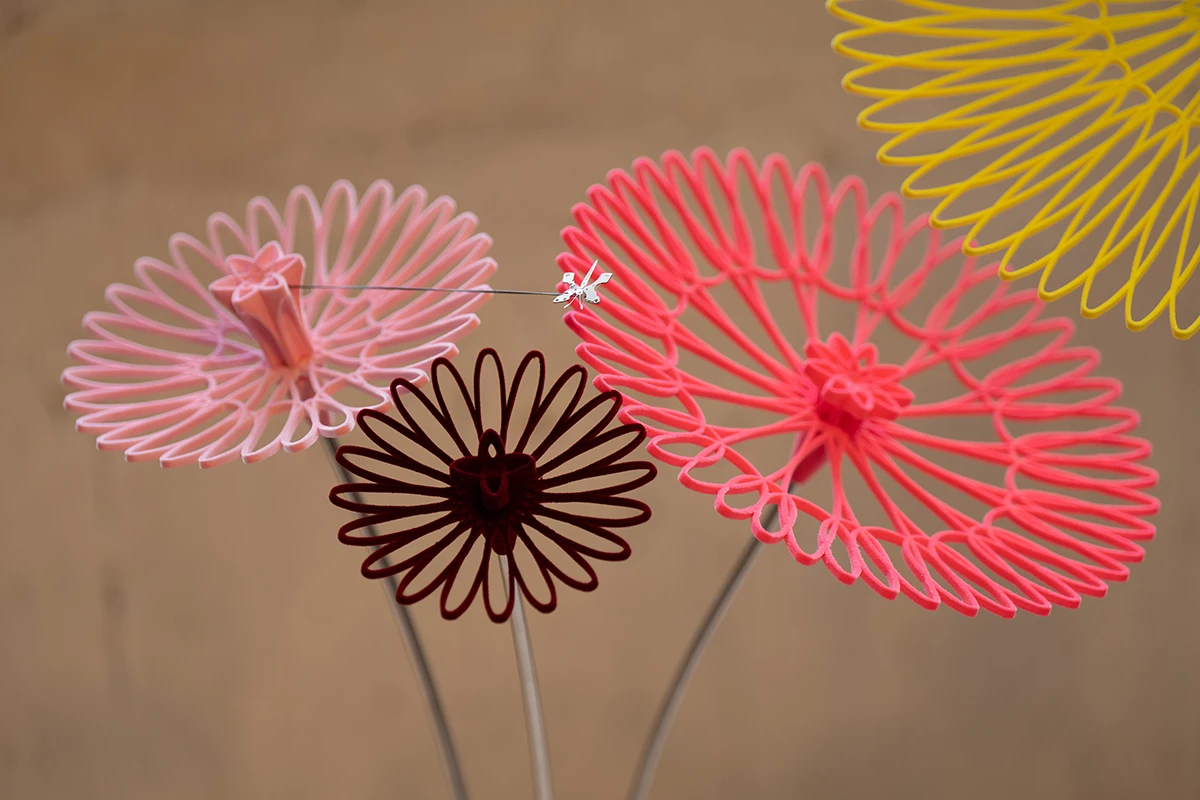
This installation draws inspiration from the uniquely shaped escape wheels that control the speed of clocks, and the functional beauty of gears born from the pursuit of ultimate lightness. While presenting a beautiful, spreading "flower"-like appearance, it is actually a working gear system. Furthermore, the insects fluttering around the flower, crafted from the tiny parts of a clock movement, are also intricately made.
"The Dance of Time," by Takako Goda and Rei Hamada of the Seiko Watch Design Center, is a work that recreates the winding principle of an automatic winding rotor using wind power. Three figures, each in a different pose, dance with both grace and power.
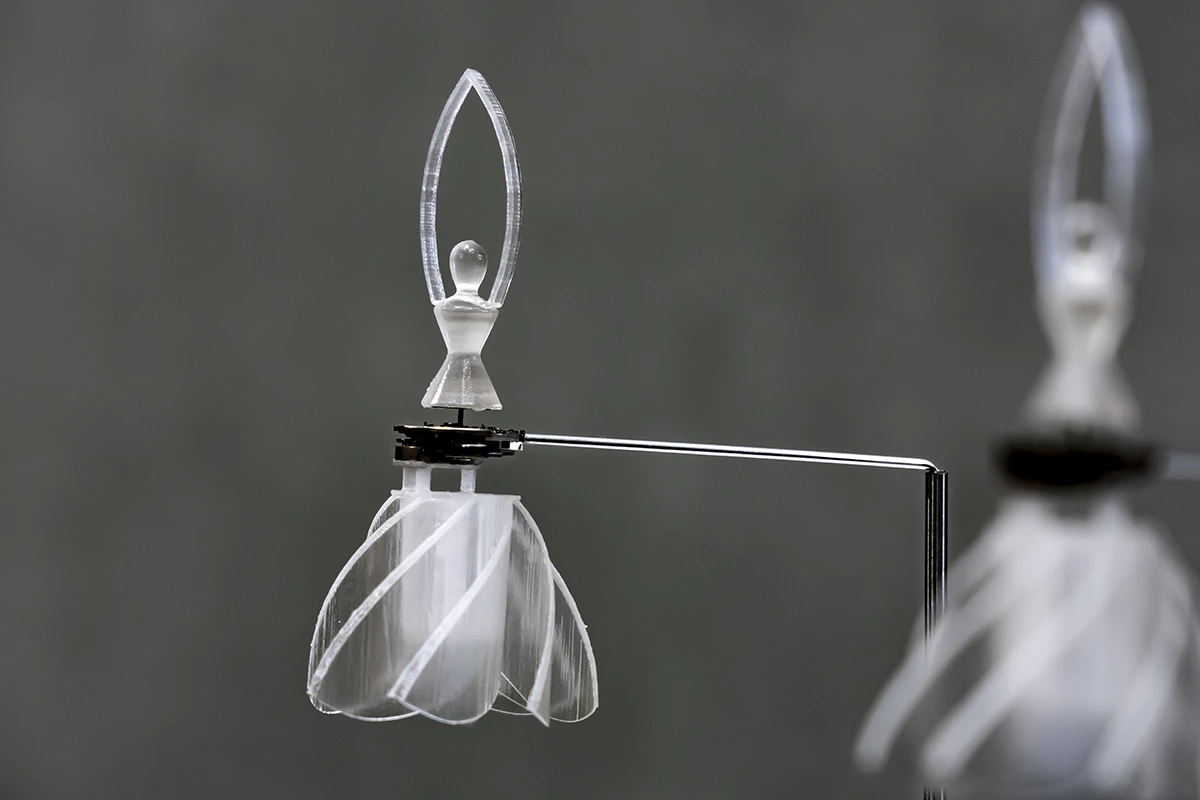
The rotor rotates in response to the wind, and that power is transmitted to the figures at the front, causing them to dance vividly. To show that they are not simply being carried around by the wind but are driven by the power of an internal mechanism, the upper and lower halves are designed to rotate in opposite directions.
Unraveling the internal structure and design philosophy of mechanical watches on the second floor.
Upstairs, on the second floor, an exhibit delves into the inner workings of mechanical watches. A large model in the center of the floor features a mechanism where turning a handle activates the gears, allowing visitors to intuitively understand the energy transfer process.
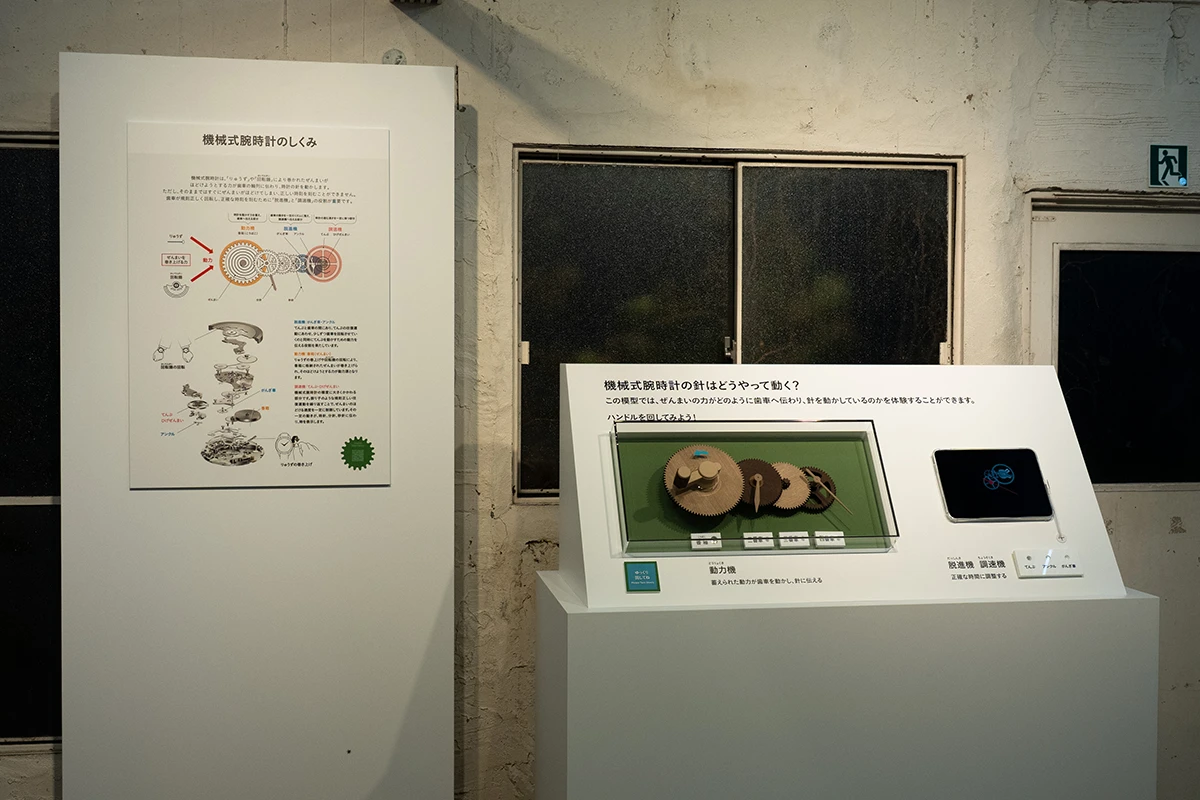
A commentary corner explaining the background of the activities has also been set up. Panels introducing the philosophy of "Seiko Seed" and the history of "Karakuri no Mori" are lined up. The design philosophy of the Seiko Watch Design Center is also touched upon. For enthusiasts, this will be a good opportunity to rediscover the essence of mechanical watches from a structural perspective.
Why not go and experience the charm of the microcosm created by mechanical watches?
Seiko Watch "Karakuri no Mori" 2026
Venue: LIGHT BOX STUDIO
Address: 5-16-7 Minamiaoyama, Minato-ku, Tokyo
Tel: 03-5464-5628
Period: October 30th (Fri) - November 23rd (Mon), 2026
Time: 11: 00 to 20: 00
Admission: Free
*Entry until 19:45. Open every day during the exhibition period.*