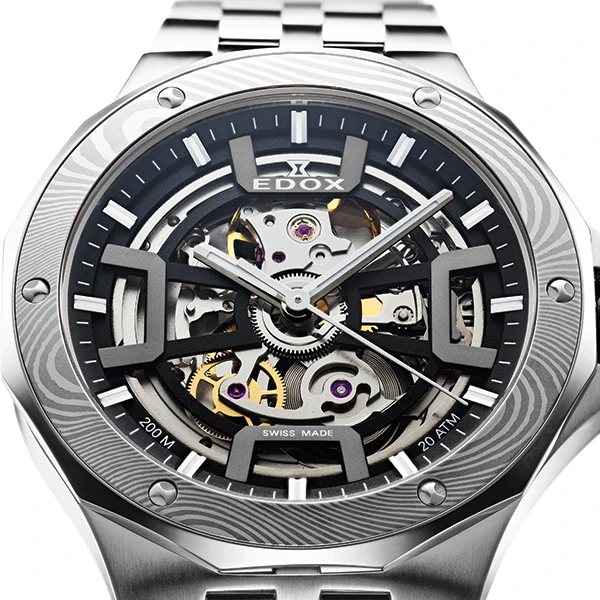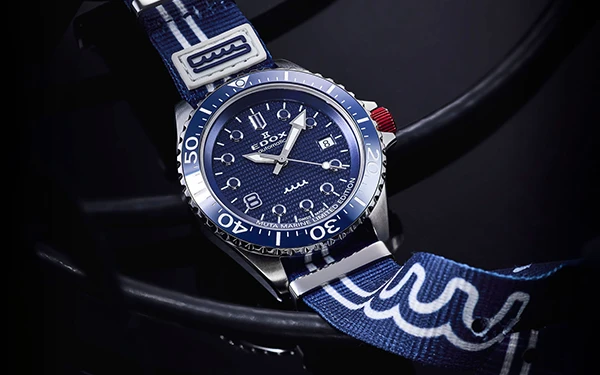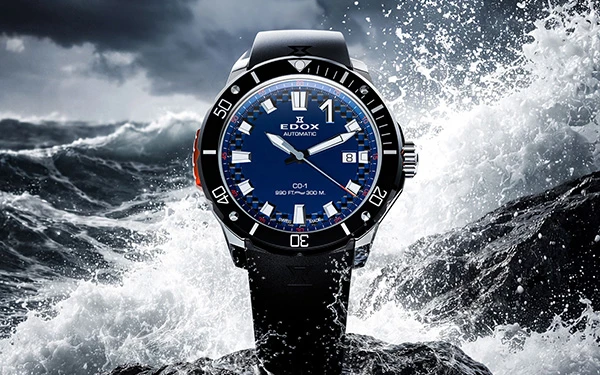
Edox has revived a design that symbolizes the 1970s, a turning point in watch design. The new "Delfin Original 1973 Automatic" from the company is a timepiece that evokes the boldness, passion, and experimental spirit unique to that era in the present day.
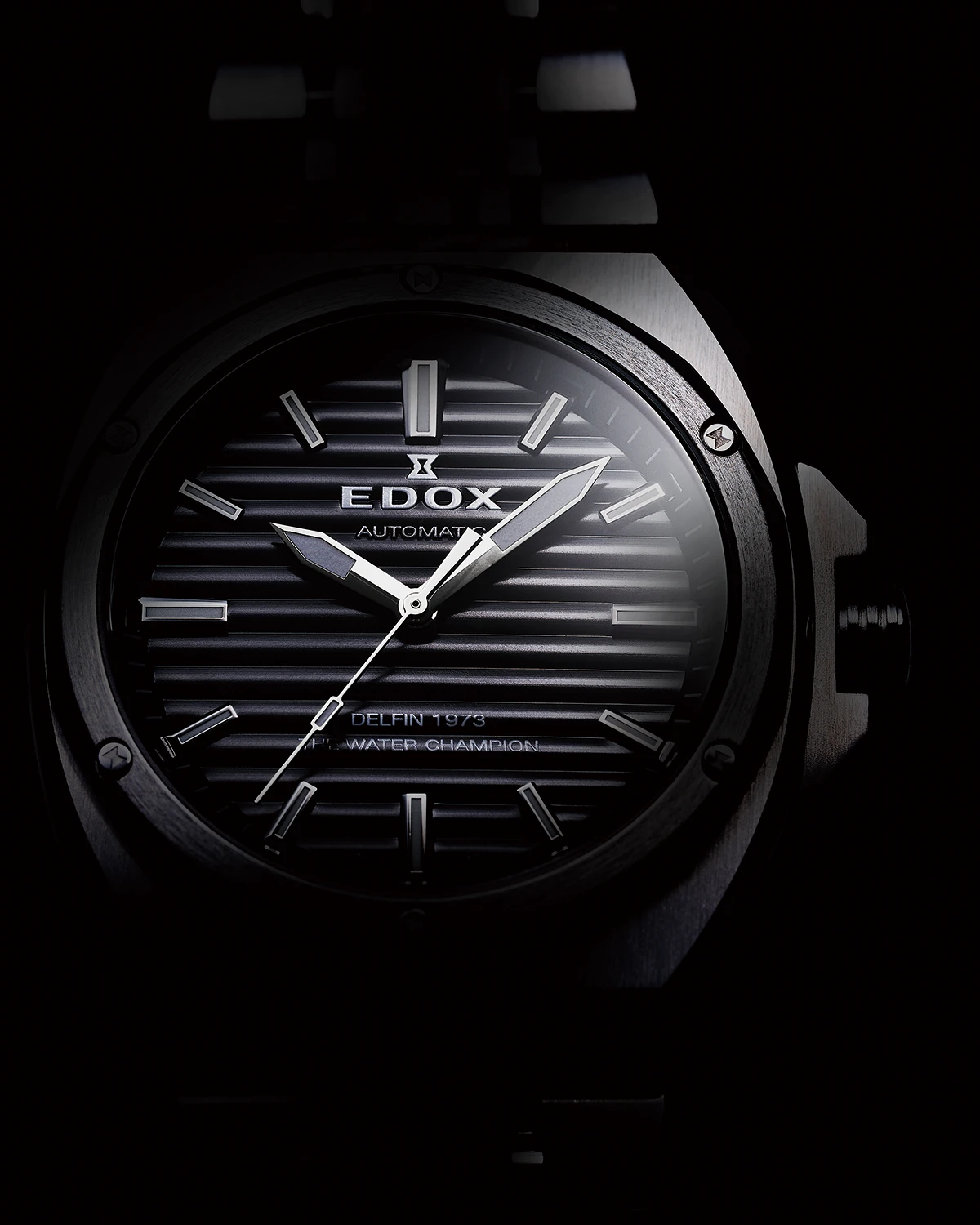
The latest addition to the "Delfin" lineup offers a significantly different impression from the existing collection. While retaining the 12-sided bezel of the 1973 model, it features a modern finish with a patterned dial and a 9-link bracelet. Automatic movement (Cal. EDOX80). 26 jewels. 28,800 vibrations/hour. Power reserve of approximately 38 hours. Stainless steel case (41mm diameter, 11.7mm thickness). 20 ATM water resistance. 247,500 yen (tax included).
Photographs by Masanori Yoshie
Written by Tsubasa Nojima
Text by Tsubasa Nojima
Edited by Yuto Hosoda (Chronos Japan)
The cushion case and multi-link bracelet emphasize the 1970s style.
The 1970s can be considered a turning point for wristwatches. Having reached maturity as a tool for telling time, wristwatches began to expand their possibilities by exploring new designs. During this era, so-called luxury sports watches with integrated bracelet cases, dynamic case designs, and space-age designs flourished, as watches raced through the turbulent period of transition from mechanical to quartz movements.
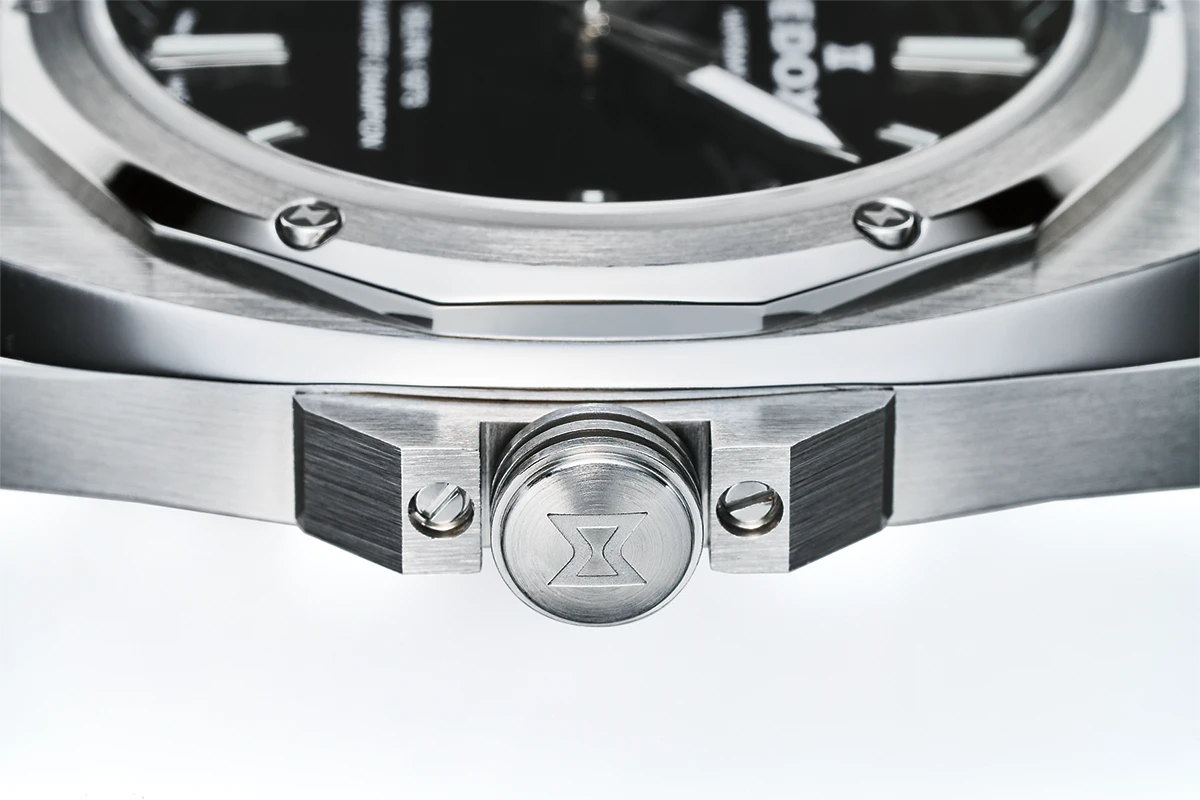
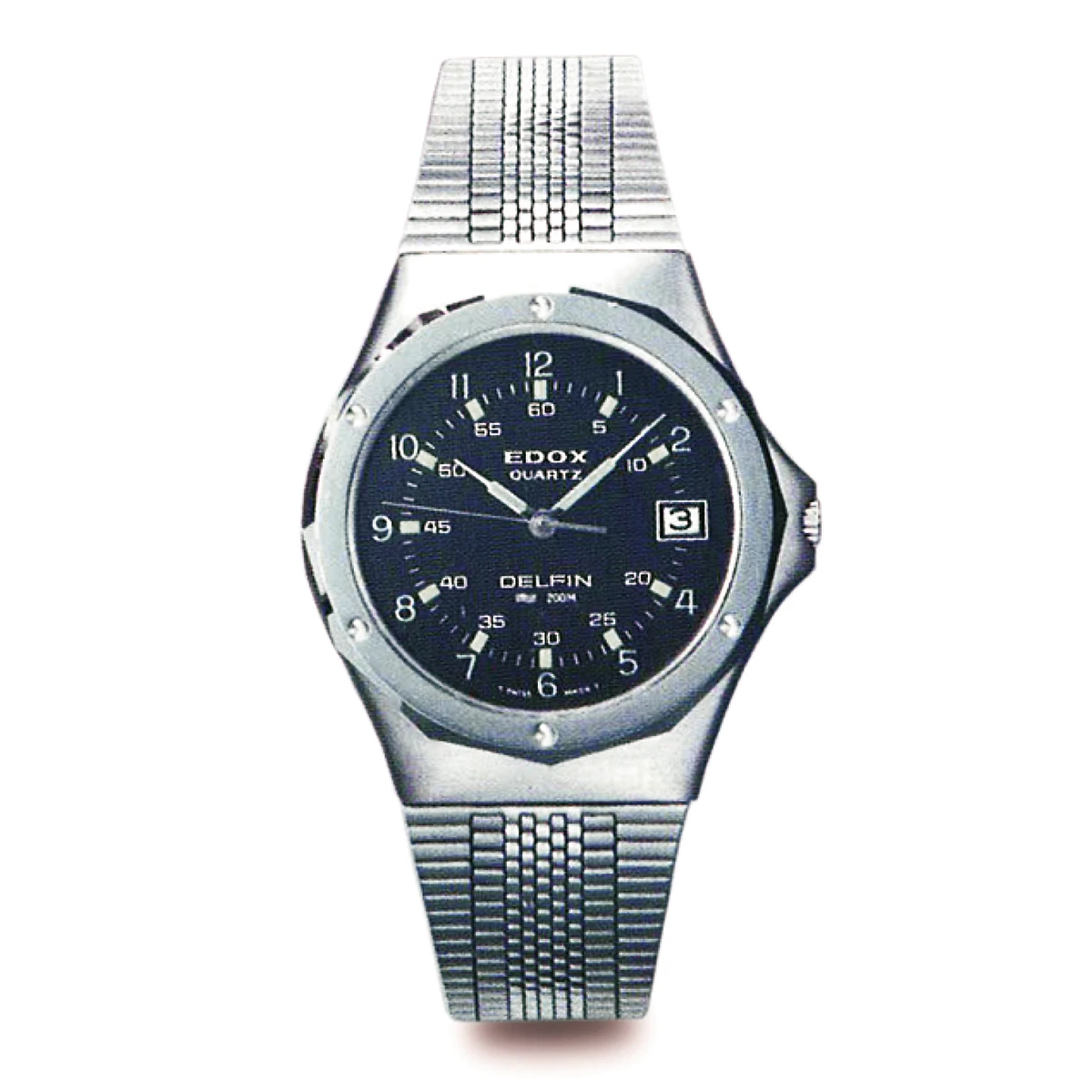
The "Delfin Original 1973 Automatic" is Edox's latest creation that captures the atmosphere of that era. The current "Delfin" collection gives the strong impression of an avant-garde sports watch composed of modern design codes. However, this latest model is given details that set it apart. The main source of inspiration is an archive piece from 1973. In addition to the original's 12-sided bezel, it inherits the lugless cushion case seen in Delfins from the 1970s, reviving a nostalgic yet fresh atmosphere.
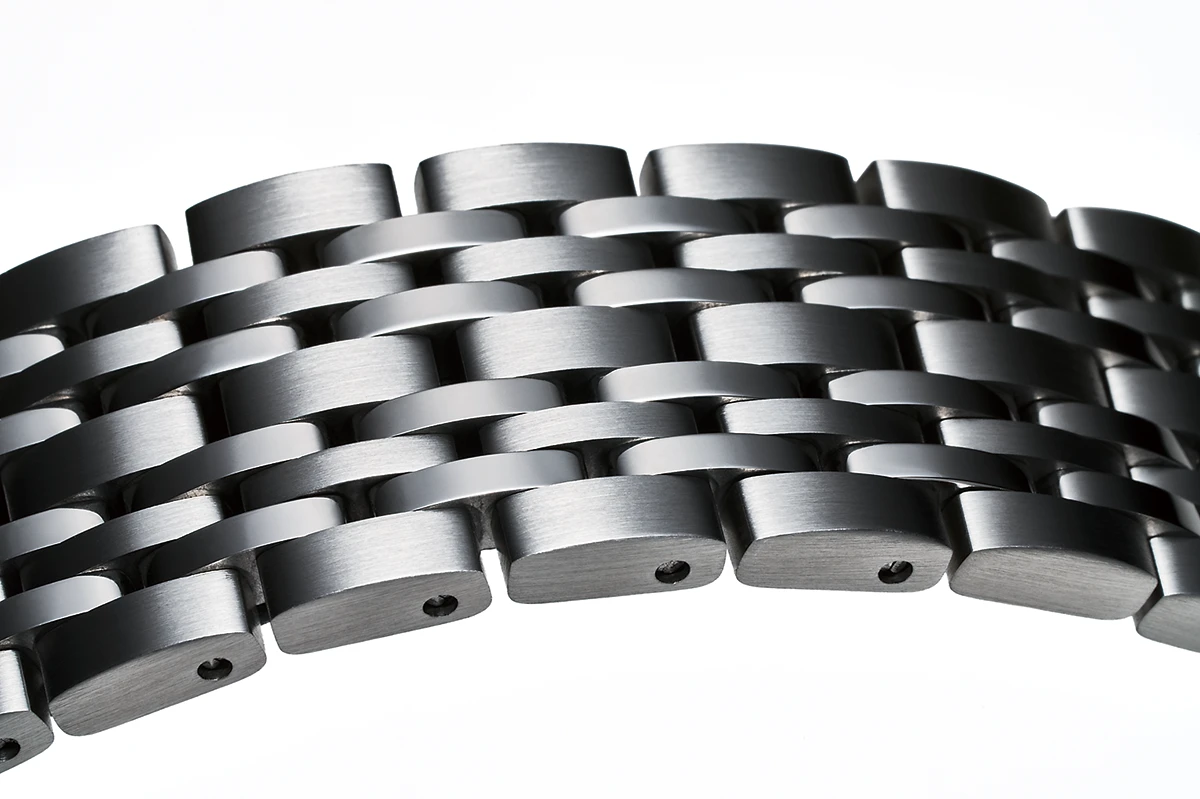
What's interesting is that this model isn't just a simple reissue, but has been updated to reflect current trends. The straight-line case is composed of sharp edges that speak to modern manufacturing precision, and the nine-link bracelet adds a subtle touch of elegance to its sporty look.
The dial, adorned with a linear pattern, creates shadows and depth reminiscent of shimmering water as light hits it. It lacks a date display and features a refined center-seconds layout with bar indices and sword-shaped hour and minute hands. While simple, it boasts details that enhance both aesthetics and practicality, such as three-dimensional indices, a flange with minute markers, and Super-LumiNova for improved visibility in the dark.
The movement is the Cal.EDOX80, a mechanical automatic winding movement. It's based on Sellita's Cal.SW200, an industry standard trusted by many brands. The rotor and balance wheel can be admired through the transparent case back.
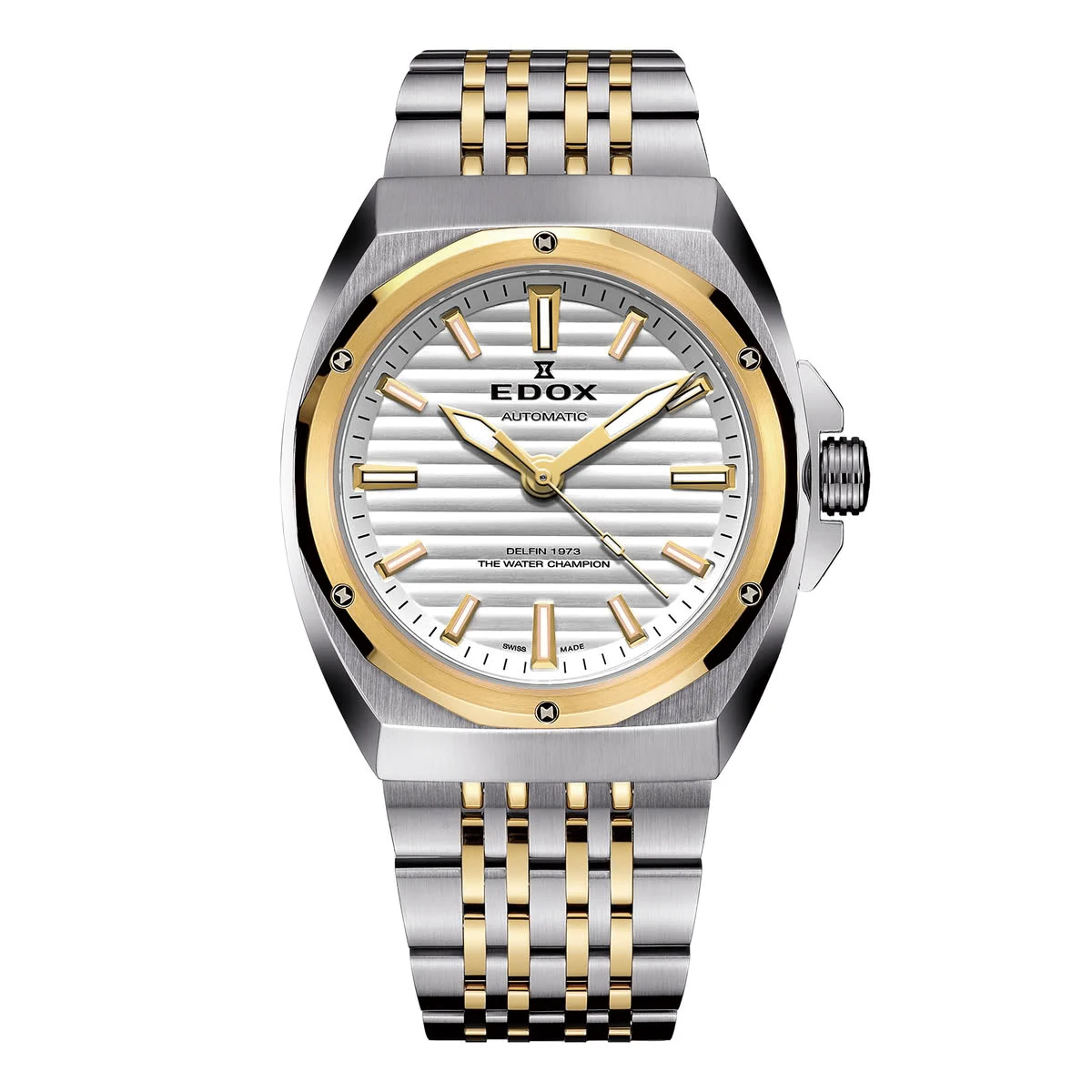
This variation features a bezel and part of the bracelet treated with yellow gold PVD, combined with a silver dial. It exudes a glamorous appearance, much like a dress watch. Automatic movement (Cal. EDOX80). 26 jewels. 28,800 vibrations/hour. Power reserve approximately 38 hours. Stainless steel + yellow gold PVD case (41mm diameter, 11.7mm thickness). 20 ATM water resistance. ¥269,500 (tax included).
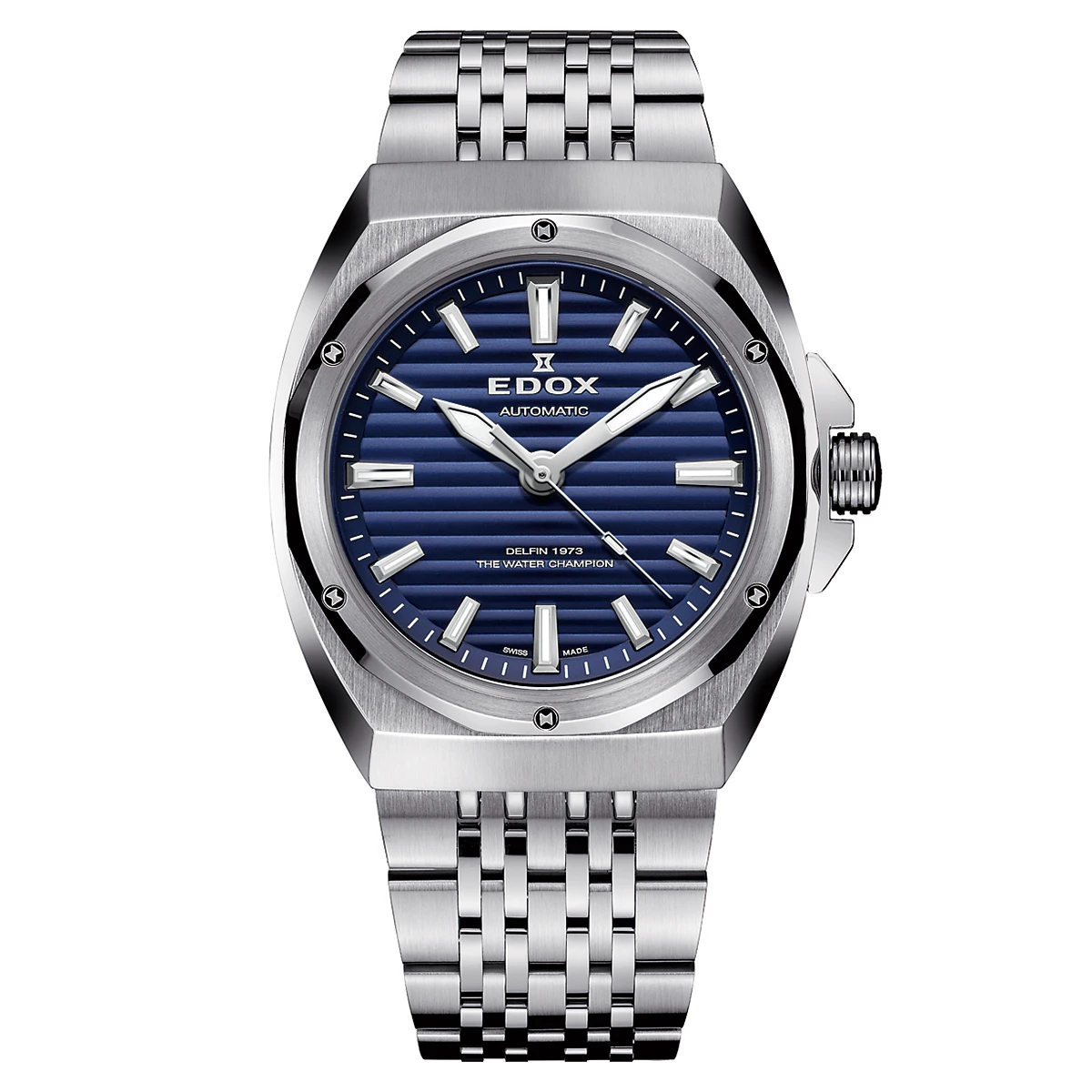
This model features a popular blue dial. The color scheme is perfect for summer, befitting a diver's watch. The shading created by the linear pattern applied across the entire dial enhances the vibrant color. Automatic movement (Cal. EDOX80). 26 jewels. 28,800 vibrations/hour. Power reserve approximately 38 hours. Stainless steel case (41mm diameter, 11.7mm thickness). 20 ATM water resistance. ¥247,500 (tax included).
The wide variety of options is one of its attractions. The dial comes in four colors: black, silver, blue, and green. A two-tone model with a yellow gold PVD coating on part of the exterior is also available for the silver dial.
The 1970s were the most free and ambitious era for watch design. Why not experience the atmosphere of that time, full of possibilities, right on your wrist?